Tidbits of History, June 19

June 19 is World Sauntering Day
National Dry Martini Day
Juneteenth..see 1865

1586 -English colonists left Roanoke Island on June 19, 1586, after failing to establish England’s first permanent settlement in North America.

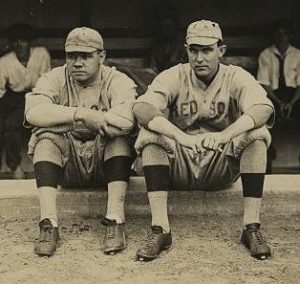
1846 -– The first officially recorded, organized baseball game was played under Alexander Cartwright’s rules on Hoboken, New Jersey’s Elysian Fields with the New York Base Ball Club defeating the Knickerbockers 23-1. Cartwright umpired.

1862 – The U.S. Congress in 1862 prohibited slavery in United States territories, nullifying Dred Scott v. Sandford.

1865 -– Over two years after the Emancipation Proclamation, slaves in Galveston, Texas, United States, are finally informed of their freedom. The anniversary is still officially celebrated in Texas and 41 other states as Juneteenth.

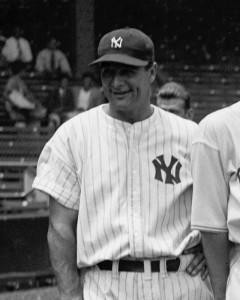
BD of Lou Gehrig, June 19
Birthday of Lou Gehrig (June 19, 1903), American baseball great, first baseman for the New York Yankees (1923-1939). Died of amyotrophic lateral sclerosis (ALS), now called Lou Gehrig’s disease. In his retirement speech, Gehrig said he thought he was “the luckiest man on the face of the earth”.

From Today in Science
In 1941, Cheerios whole grain oat cereal was invented to provide a more convenient and better tasting alternative to cooked oatmeal. Each piece of the O-shaped cereal is 1/2-inch diameter, and weighs .0025 ounce. Each little “O” puffs itself out, like popcorn, as it explodes from the barrel of a puffing gun at high temperature. It was first called Cheerie Oats when General Mills invented it, but that name had to be changed in 1945, to avoid a conflict with a competitor who suggested they had exclusive rights to use the word “oats” in a commercial name.

The Civil Rights Act of 1964 was approved after surviving an 83-day filibuster in the United States Senate. The most fervent opposition to the bill came from Senator Strom Thurmond (D-SC) and Senator Robert Byrd (D-W.Va.)

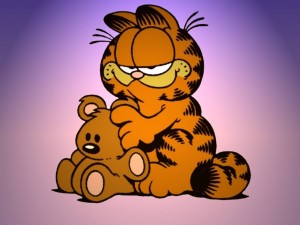
June 19, 1978 Garfield
Garfield, holder of the Guinness World Record for the world’s most widely syndicated comic strip, made its debut in 1978.

Tidbits of History, June 18

June 18 is Father’s Day see 1910

Go Fishing Day
International Panic Day
International Picnic Day
National Splurge Day
National Sushi Day

Waterloo Day, anniversary of the Battle of Waterloo, lost by Napoleon in 1815.

William Penn founded Philadelphia as the capital of the Province of Pennsylvania in 1682.

The charter of the Massachusetts Bay Colony was revoked via a scire facias writ issued by an English court on June 18, 1684 for the colony’s interference with the royal prerogative in founding Harvard College and other matters.
In English law, a writ of scire facias (Latin, meaning literally “make known”) was a writ founded upon some judicial record directing the sheriff to make the record known to a specified party, and in the case of letters, patents, and grants, requiring the defendant to show cause why the patent or grant should not be annulled and vacated.

Samuel Wallis, an English sea captain, sighted Tahiti June 18, 1767 and is considered the first European to reach the island. It is located 2,376 nautical miles south of Hawaii.

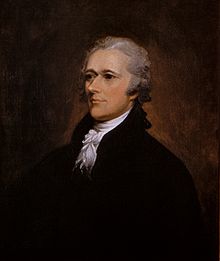
author of Federalist PaperPublication of Federalist Paper #79: The Judiciary Department written by Alexander Hamilton in 1788.

War of 1812: The U.S. Congress declared war on Great Britain, Canada, and Ireland on this day in 1812.

The Battle of Waterloo resulted in the defeat of Napoleon Bonaparte by the Duke of Wellington and Gebhard Leberecht von Blücher, forcing him to abdicate the throne of France for the second and last time in 1815.

Susan B. Anthony was fined $100 for attempting to vote in the 1872 presidential election. She was arrested for voting in Rochester, New York in violation of state laws that allowed only men to vote. Anthony argued that she had the right to vote because of the recently adopted Fourteenth Amendment to the U.S. Constitution, part of which reads, “No State shall make or enforce any law which shall abridge the privileges or immunities of citizens of the United States.”

1910 – The first Father’s Day was celebrated in Spokane, Washington in 1910.

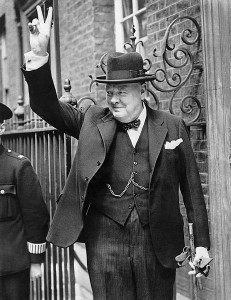
Churchill, June 18, 1940“Finest Hour” speech by Winston Churchill on June 18, 1940.
‘What General Weygand has called the Battle of France is over: the Battle of Britain is about to begin. Upon this battle depends the survival of Christian civilisation. Upon it depends our own British life, and the long continuity of our institutions and our Empire. The whole fury and might of the enemy must very soon be turned on us. Hitler knows that he will have to break us in this island or lose the war. If we can stand up to him, all Europe may be freed and the life of the world may move forward into broad, sunlit uplands. But if we fail, then the whole world, including the United States, including all that we have known and cared for, will sink into the abyss of a new Dark Age made more sinister, and perhaps more protracted, by the lights of perverted science. Let us therefore brace ourselves to our duty and so bear ourselves that, if the British Empire and its Commonwealth last for a thousand years, men will still say: “This was their finest hour” ‘.

Tidbits of History, June 17

June 17 is Eat Your Vegetables Day
National Apple Strudel Day
National Cherry Tart Day

Bunker Hill Day in honor of the Battle of 1775.

Sir Francis Drake claimed a land he calls Nova Albion (modern California) for England on June 17, 1579.

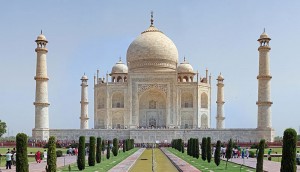
June 17 death of Mumtaz Mihal On June 17, 1631, Mumtaz Mahal died during childbirth. Her husband, Mughal emperor Shah Jahan I, spent the next 17 years building her mausoleum, the Taj Mahal.
1673 – French explorers Jacques Marquette and Louis Jolliet reached the Mississippi River and become the first Europeans to make a detailed account of its course.

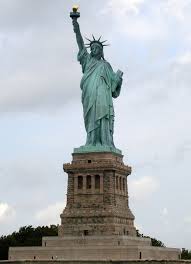
dedicated Oct 28, 1886June 17, 1885 – The Statue of Liberty arrived in New York Harbor.

Watergate scandal: On June 17, 1972, five White House operatives are arrested for burgling the offices of the Democratic National Committee, in an attempt by some members of the Republican party to illegally wiretap the opposition.

From Today in Science:
Birthday of George Cormack (June 17, 1870), Co-inventor of Wheaties cereal. In 1921, a health clinician in Minneapolis, while mixing a batch of bran gruel for his patients, spilled some of the mix on a hot stove where it sizzled into a crisp flake. After tasting the very first Wheaties prototype, he took the idea to the Washburn Crosby Company, where the head miller, George Cormack, took on the task of trying to strengthen the flakes to keep them from turning to dust inside a cereal box. Cormack tested 36 varieties of wheat before he developed the perfect flake. It was introduced in test marketing in Nov 1924. Originally named Washburn’s Gold Medal Whole Wheat Flakes, the name Wheaties was chosen by a company wide contest won by Jane Bausman, the wife of the export manager. Numerous other entries included Nutties and Gold Medal Wheat Flakes.

Save

Tidbits of History, June 16

June 16 is Fresh Veggies Day
National Fudge Day

1755 – French and Indian War: the French surrender Fort Beauséjour to the British, leading to the expulsion of the Acadians. Fort Beauséjour is a large, five-bastioned star fort on the Isthmus of Chignecto in eastern Canada, a neck of land connecting the present-day province of New Brunswick with that of Nova Scotia.

June 16, 1816 – Lord Byron read Fantasmagoriana to his four house guests at the Villa Diodati: Percy Shelley, Mary Shelley, Claire Clairmont, and John Polidori. He then challenged each guest to write a ghost story, which culminated in Mary Shelley writing the novel Frankenstein, John Polidori writing the short story The Vampyre, and Byron writing the poem Darkness.

Abraham Lincoln delivered his House Divided speech in Springfield, Illinois on June 16, 1858.

“A house divided against itself cannot stand….
I believe this government cannot endure, permanently half slave and half free.
I do not expect the Union to be dissolved — I do not expect the house to fall — but I do expect it will cease to be divided.
It will become all one thing or all the other.”

From “Today in Science”:
In 1903, Pepsi-Cola Co. registered the Pepsi-Cola trademark with the U.S. Patent Office. Pharmacies at the time were favorite gathering places. To increase business at his store’s soda fountain, pharmacist Caleb D. Bradham created a soft drink. In the summer of 1898, he mixed carbonated water, sugar, vanilla, oils, pepsin, and kola nut extract. Customers at in his pharmacy in New Bern, N.C., liked the beverage and called it Brad’s Drink. As its popularity grew, Bradham changed the name to Pepsi-Cola. The name emphasized the pepsin and kola nut extract it contained for their supposed health benefits. Pepsin, an enzyme, was thought to aid in digestion, and caffeine, an alkaloid found in kola nuts, was believed to bestow beneficial energy.

Also from “Today in Science”:
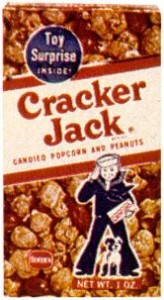
Cracker Jack invented June 16In 1893, Cracker Jack was invented by R.W. Rueckheim, a unique popcorn, peanuts, and molasses confection which he introduced at the World’s Columbian Exposition, Chicago’s First World Fair. The company he formed with his brother Louis as a partner was called F.W. Rueckheim and Brother. In 1896, Louis discovered the process for keeping the molasses-covered popcorn morsels from sticking together. This secret formula is still in use to this day. In 1912, “A Prize in Every Box” was introduced with toys inserted into every package. In 1918, Sailor Jack and his dog, Bingo, first appeared on packages. Sailor Jack was modeled after F.W. Rueckheim’s young grandson, Robert.
Save

Tidbits of History, June 15

June 15 is World Gin Day
Smile Power Day
Fly a Kite Day

Father’s Day

Feast day of Saint Bernard, born about 1020 in France, died in June of 1081. Patron saint of mountaineers, skiers, skateboarding, backpacking and the Alps. Legend has it that he decided to devote himself to the service of the Church and refused an honorable marriage proposed by his father. It is said that he had to sneak out of the castle on the night before an arranged wedding, and that during his flight from the castle, he threw himself from his window, only to be captured by angels and lowered gently to the ground 40 feet below. As an archdeacon, Bernard set up a hospice at the highest point of a pass across the Pennine Alps, 8000 feet above sea level. The pass was used by French and German pilgrims on their way to Rome and was subject to avalanches, and snow drifts. It is because of this that the rescue St. Bernard dogs were named.

Magna Carta Day , anniversary of the day in 1215 that King John signed the Magna Carta.

In 1752, Benjamin Franklin proved that lightning is electricity (traditional date, the exact date is unknown).

1775 – American Revolutionary War: George Washington was appointed commander-in-chief of the Continental Army.

1776 – Delaware Separation Day Delaware voted to suspend government under the British Crown and separate officially from Pennsylvania.

1804 – New Hampshire approves the Twelfth Amendment to the United States Constitution, ratifying the document. The Twelfth Amendment refined the process whereby a President and a Vice President are elected by the electors of the Electoral College.

Arkansas headerArkansas admission day in 1836 as the twenty-fifth state

  • Capital: Little Rock
  • Nickname: The Natural State/Wonder State/Land of Opportunity
  • Bird: Mockingbird
  • Flower: Apple Blossom
  • Tree: Pine
  • Motto: The People Rule

See our page about Arkansas for more interesting facts and trivia about Arkansas.

1846 – The Oregon Treaty established the 49th parallel as the border between the United States and Canada, from the Rocky Mountains to the Strait of Juan de Fuca.

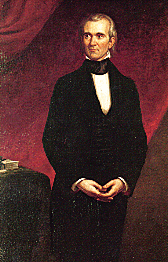
James K. Polk May 11 ,184614Death of ‎James K. Polk , eleventh President of the United States on June 15, 1849. He died in Nashville, Tennessee at age 53. He lived only 103 days after leaving the presidency.

Arlington National Cemetery was established. George Washington Parke Custis, grandson of Martha Washington, acquired the land that now is Arlington National Cemetery in 1802, and began construction of Arlington House. The estate passed to Custis’ daughter, Mary Anna, who had married United States Army officer Robert E. Lee. Upon her death, the Arlington estate passed to her eldest son, George Washington Custis Lee. On July 16, 1862, Congress passed legislation authorizing the U.S. federal government to purchase land for national cemeteries for military dead, and put the U.S. Army Quartermaster General Montgomery C. Meigs in charge of this program. Within weeks, his staff reported that Arlington Estate was the most suitable property in the area. The property was high and free from floods (which might unearth graves), it had a view of the District of Columbia, and it was aesthetically pleasing. It was also the home of the leader of the armed forces of the Confederate States of America, and denying Robert E. Lee use of his home after the war was a valuable political consideration. Meigs formally authorized establishment of burials on June 15, 1864.

Tidbits of History, June 14

June 14 is Flag Day
Pop Goes the Weasel Day
National Strawberry Shortcake Day

June 14, 1642 – First compulsory education law in America was passed by Massachusetts.

American Revolutionary War: the Continental Army was established by the Continental Congress on June 14, 1775, marking the birth of the United States Army.

Flag Day established June 14 1777 – The Stars and Stripes was adopted by Congress as the Flag of the United States. (Celebrated as Flag Day)

author of Federalist PaperPublication of Federalist Paper #78: The Judiciary Department written by Alexander Hamilton in 1788.

In 1789, whiskey distilled from maize was first produced by American clergyman, the Rev Elijah Craig. It is named Bourbon because Rev. Craig lived in Bourbon County, Kentucky.

Julia Tyler, born June 14Birthday of Julia Gardiner Tyler (June 14, 1816), second wife of ‎John Tyler, first lady 1844-1845. John Tyler fathered eight children with his first wife, Letitia and seven more with his second wife, Julia.

1846 – Bear Flag Revolt begins – Anglo settlers in Sonoma, California, start a rebellion against Mexico and proclaim the California Republic.

Donald J Trump, President1946 – Birthday of ‎President Donald J. Trump, forty-fifth president of the U.S.A.

In 1951, the Univac-1 was unveiled in Washington, DC. and dedicated as the world’s first commercial computer. The Univac was manufactured for the U.S. Census Bureau by Remington Rand Corp. The massive computer was 8 feet high, 7-1/2 feet wide and 14-1/2 feet long. It could retain a maximum of 1000 numbers and was able to add, subtract, multiply, divide, sort, collate and take square and cube roots. Its transfer rate to and from magnetic tape was 10,000 characters per second. This was five years after the ENIAC, the first electronic computer in the U.S., was completed.

1954 – ‎U.S. President Dwight D. Eisenhower signed a bill into law that placed the words “under God” into the United States Pledge of Allegiance.

Disneyland Monorail System opened to the public in Anaheim, California on June 14, 1959, the first daily operating monorail system in the Western Hemisphere.

On June 14, 1972, the insecticide DDT was banned from use in the U.S. after 31 Dec 1972, by executive order of the Environmental Protection Agency.

Save

Tidbits of History, June 13

June 13 is Sewing Machine Day
Kitchen Klutzes of America Day
According to: foodimentary.com Today’s Food History:

on this day in…

1789 Mrs. Alexander Hamilton served a new dessert treat for General George Washington. The highlight of the dinner party was ice cream! And all this time you thought Dolley Madison was responsible.
1817 Richard Lovell Edgeworth died. An Anglo-Irish inventor, among his many inventions and innovations were a turnip cutter, various improvements in agricultural machines, and a velocipede.
1893 African American inventor T.W. Stewart received a patent for a mop.
2010 Jimmy Dean died at age 81. A country music singer he also founded Jimmy Dean Meat Co. in 1969, well known for its Jimmy Dean Sausage brand.

National Lobster Day
Cupcake Lover’s Day

1373 – Anglo-Portuguese Alliance between England (succeeded by the United Kingdom) and Portugal. It is the oldest alliance in the world which is still in force.

June 13, 1525 – Martin Luther married Katharina von Bora, against the celibacy rule decreed by the Roman Catholic Church for priests and nuns.

Georgia provincial governor James Oglethorpe began an unsuccessful attempt to take Spanish Florida during the Siege of St. Augustine on June 13, 1740.

Lewis and Clark Expedition: scouting ahead of the expedition, Meriwether Lewis and four companions sight the Great Falls of the Missouri River on June 13, 1805.

Birthday of Charles Algernon Parsons (1854), inventor of the steam turbine.

“The British engineer Charles Algernon Parsons thought up an excellent way of publicizing his newly devised steam turbine. He waited for Queen Victoria’s Diamond Julilee in 1897, at which time there was a stately review of the British Navy. Parson’s turbine-powered ship Turbinia”, going thirty-five knots with scarcely any vibration of noise, suddenly skimmed past the navy. It was an effective demonstration, and the navies of the world at once began bidding for turbine engines.”

From Asimov, Isaac. Isaac Asimov’s Book of Facts. New York, Bell Publishing Company, 1981

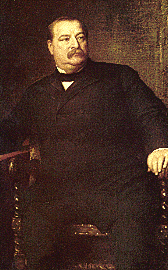
Grover ClevelandOn June 13, 1893, ‎President Grover Cleveland noticed a rough spot in his mouth and on July 1 he underwent a secret, successful surgery to remove a large, cancerous portion of his jaw; operation was not revealed to US public until 1917, nine years after the president’s death.

June 13, 1898 – Yukon Territory was formed, with Dawson chosen as its capital.

June 13, 1966 – The United States Supreme Court ruled in Miranda v. Arizona that the police must inform suspects of their rights before questioning them.

1967 – U.S. President Lyndon B. Johnson nominated Solicitor-General Thurgood Marshall to become the first black justice on the U.S. Supreme Court.

1994 – A jury in Anchorage, Alaska, blames recklessness by Exxon and Captain Joseph Hazelwood for the Exxon Valdez disaster, allowing victims of the oil spill to seek $15 billion in damages.

Save

Tidbits of History, June 12

June 12 is Red Rose Day
National Peanut Butter Cookie Day
International Cachaça Day (a Brazilian distilled spirit made from sugarcane juice.)
National Jerky Day

American Revolution: British general Thomas Gage declared martial law in Massachusetts on June 12, 1775. The British offer a pardon to all colonists who lay down their arms. There would be only two exceptions to the amnesty: Samuel Adams and John Hancock, if captured, were to be hanged.

Birthday of G.H.W.Bush, June 12, 1924Birthday of ‎George H W Bush (June 12, 1924), forty-first President of the United States, father of ‎George W Bush, forty-third President of the United States.

On June 12, 1939, the Baseball Hall of Fame opened in Cooperstown, New York.

Civil rights leader Medgar Evers was murdered in front of his home in Jackson, Mississippi by Ku Klux Klan member Byron De La Beckwith on June 12, 1963. According to Wikipedia:

In the early morning of June 12, 1963, just hours after President John F. Kennedy’s nationally televised Civil Rights Address, Evers pulled into his driveway after returning from a meeting with NAACP lawyers. Emerging from his car and carrying NAACP T-shirts that read “Jim Crow Must Go”, Evers was struck in the back with a bullet fired from an Enfield 1917 rifle; the bullet ripped through his heart. He staggered 30 feet (9.1 meters) before collapsing. He was taken to the local hospital in Jackson, Mississippi where he was initially refused entry because of his race. His family explained who he was and he was admitted; he died in the hospital 50 minutes later.

The state twice prosecuted De La Beckwith for murder in 1964, but both trials ended with hung juries. He was eventually convicted of the crime in 1994, almost 30 years after the murder. He died in prison on January 21, 2001.

In 1967, The United States Supreme Court in Loving v. Virginia declared all U.S. state laws which prohibit interracial marriage (miscegenation) to be unconstitutional.

1987 – Cold War: At the Brandenburg Gate ‎U.S. President Ronald Reagan publicly challenges Mikhail Gorbachev to “tear down this (the Berlin) Wall.

In 1991, Russians elected Boris Yeltsin as the president of the republic.

June 12, 1994, Nicole Brown Simpson and Ronald Goldman were murdered outside her home in Los Angeles, California. O.J. Simpson was later acquitted of the killings, but is held liable in wrongful death civil suit.

Save

Tidbits of History, June 11

June 11 is National German Chocolate Cake Day
German chocolate cake, originally German’s chocolate cake, is a layered chocolate cake…filled and topped with a coconut-pecan frosting. It owes its name to an English-American chocolate maker named Samuel German, who developed a formulation of dark baking chocolate that came to be used in the cake recipe. The recipe for the cake was developed by a Mrs. George Clay of Dallas, Texas and was published as the “Recipe of the Day” in The Dallas Morning News on June 3, 1957 and became quite popular. General Foods, which owned the Baker’s brand at the time, took notice and distributed the cake recipe to other newspapers in the country. Sales of Baker’s Chocolate are said to have increased by as much as 73% and the cake would become a national staple. The possessive form (German’s) was dropped in subsequent publications, forming the “German Chocolate Cake” identity and giving the false impression of a German origin.

According to calculations by Eratosthenes, Troy was sacked and burned on June 11, 1184 B. C.

Alexander the Great died in the palace of Nebuchadnezzar II in Babylon on June 11, 323 B.C. He was 32 years old and his cause of death has been speculated to be poisoning, malaria, pancreatitis, typhoid, or West Nile virus. It was reported that Alexander’s health may have been in general decline after years of heavy drinking and severe wounds.

Catherine of AragonOn June 11, 1509, Henry VIII of England married Catherine of Aragon, his first wife.  She was the daughter of Isabella I of Castile and Ferdinand II of Aragon who supported and financed Christopher Columbus’ explorations.

Birthday of Ben Jonson (June 11, 1572), English playwright and poet, contemporary of William Shakespeare. One quote from Johnson is “The road to Hell is paved with good intentions.” ‘Father Christmas’ first appeared in his 1616 play first performed at the court of King James I. Ben Jonson was buried standing up in Westminster Abbey. Because he could only afford to buy a tiny amount of space in the abbey, Jonson was buried in an upright position. Now is he buried in Poets’ Corner where so many other famous English writers are interred.

In 1742, Benjamin Franklin invented the Franklin stove. The wood fuel burns on an iron surface over a cold air duct which heats air which then passes through baffles in the back wall. The heated air is released through vents on each side of the stove. Rather than patent it, he chose to write about it in a book so that others could freely copy his design. As he wrote, “That as we enjoy great Advantages from the Inventions of others, we should be glad of an Opportunity to serve others by any Invention of ours, and this we should do freely and generously. From: June 11 – Today in Science.

In 1770, the British explorer, Captain James Cook, ran aground on the Great Barrier Reef.

June 11, 1776 – The Continental Congress appointed Thomas Jefferson, John Adams, Benjamin Franklin, Roger Sherman, and Robert R. Livingston to the Committee of Five to draft a declaration of independence. Speaking of these “old white men”, Jefferson was 33 years old; Adams was 41; Franklin was 70; Sherman was 55; and Livingston was 30.

In 1793, the first American patent for a stove designed of cast iron was granted to Robert Haeterick of Pennsylvania.

Birthday of Jacques-Yves Cousteau (1910), French oceanographer, marine biologist. Co-Inventer of the aqualung which made SCUBA diving possible.

1935 – Inventor Edwin Armstrong gave the first public demonstration of FM broadcasting in the United States at Alpine, New Jersey.

The Presbyterian Church of America was founded at Philadelphia on June 11, 1936.

Escape from Alcatraz, June 11, 19621962 – Frank Morris, John Anglin and Clarence Anglin allegedly became the only prisoners to escape from the prison on Alcatraz Island .

‎President John F. Kennedy addressed Americans from the Oval Office in 1963, proposing the Civil Rights Act (passed in 1964) that would revolutionize American society. It proposed equal access to public facilities, to end segregation in education and to guarantee federal protection for voting rights.

1982 – the movie “ET the Extra-Terrestrial” was released.

Save

Tidbits of History, June 10

June 10 is Iced Tea Day
Ballpoint Pen Day
National Black Cow Day (*A root beer float)
Herbs & Spices Day

1768 British customs officials seize John Hancock’s ship,“The Liberty”, on the suspicion that Hancock had illegally unloaded cargo without paying duties a month earlier.

June 10, 1805: First Barbary War: Yussif Karamanli signed a treaty ending hostilities with the United States. In 1801 Yusuf had demanded a tribute of $225,000 from President Jefferson. When his demands were refused, he declared war on the U.S. The U.S. Navy blockaded Tripoli’s harbors. Threatened with invasion and replacement by his brother, Yusuf signed a peace treaty.

The first class of the United States Naval Academy in Annapolis, Maryland students graduated on this date in 1854.

US Marines landed in Cuba on June 10, 1898, in the Battle of Guantánamo Bay, starting the Spanish-American War.

Anniversary of the establishment of Alcoholics Anonymous in 1935 by William G. Wilson and Dr. Robert Smith.

Franklin RooseveltOn June 10, 1940, U.S. President Franklin D. Roosevelt denounced Italy’s actions with his “Stab in the Back” speech at the graduation ceremonies of the University of Virginia. His son, FDR, Jr., was graduating with a law degree.

Equal Pay Act of 1963 aimed at abolishing wage disparity based on sex. It was signed into law on June 10, 1963 by John F. Kennedy as part of his New Frontier Program.

The Rockefeller Commission issued a single report in 1975, which delineated some CIA abuses including mail opening and surveillance of domestic dissident groups. Rockefeller panel reports on 300,000 illegal CIA files on Americans.

Apple II, June 10, 1977June 10, 1977, the Apple II, one of the first personal computers, went on sale.