Tidbits of History, June 9

June 9 is Donald Duck Day (see 1934)
National Strawberry-Rhubarb Pie Day
International Young Eagles Day

In the year 53, the Roman Emperor Nero married Claudia Octavia.  She was a great-niece of the Emperor Tiberius, paternal first cousin of the Emperor Caligula, daughter of the Emperor Claudius, and stepsister and first wife of the Emperor Nero.

And in the year 68, on his 15th anniversary, the Roman Emperor Nero committed suicide, after quoting Homer’s Iliad, thus ending the Julio-Claudian Dynasty and starting the civil year known as the Year of the Four Emperors (Galba, Otho, Vitellius, and Vespasian).

On June 9, 1534, Jacques Cartier became the first European to discover the Saint Lawrence River.

In 1732, James Oglethorpe was granted a royal charter for the colony of the future U.S. state of Georgia.

On June 9, 1772, the British schooner Gaspée was burned off the coast of Rhode Island. Per Wikipedia:

The Gaspée Affair was a significant event in the lead-up to the American Revolution. HMS Gaspée, a British customs schooner that had been enforcing unpopular trade regulations, ran aground in shallow water on June 9, 1772, near what is now known as Gaspee Point in the city of Warwick, Rhode Island, while chasing the packet boat Hannah. A group of men led by Abraham Whipple and John Brown attacked, boarded, looted, and torched the ship.

Birthday of John Howard Payne (June 9, 1791), American songwriter, composer of “Home, Sweet Home”.

‘Mid pleasures and palaces
Though I may roam
Be it ever so humble
There’s no place like home


On June 9, 1856, five hundred Mormons left Iowa City, Iowa, and headed west for Salt Lake City carrying all their possessions in two-wheeled handcarts.

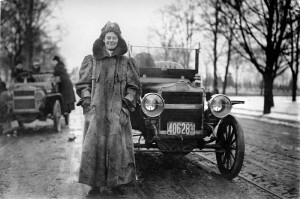
Alice Ramsey, June 9, 19091909-06-09 – Alice Huyler Ramsey, a 22-year-old housewife and mother from Hackensack, New Jersey, became the first woman to drive across the United States. With three female companions, none of whom could drive a car, in fifty-nine days she drove a Maxwell automobile the 3,800 miles from Manhattan, New York, to San Francisco, California. She is reported to have said, “Good driving has nothing to do with sex. It’s all above the collar.”
William Jennings Bryan resigns as Woodrow Wilson’s Secretary of State on June 9, 1915, over a disagreement regarding the United States’ handling of the sinking of the RMS Lusitania. Bryan pointed out that by traveling on British vessels “an American citizen can, by putting his own business above his regard for this country, assume for his own advantage unnecessary risks and thus involve his country in international complications”.

On June 9, 1934 – Donald Duck made his debut in The Wise Little Hen. See article at the free dictionary.com

McCarthyism: Joseph Welch, special counsel for the United States Army, lashed out at Senator Joseph McCarthy on June 9, 1954, during hearings on whether Communism had infiltrated the Army, giving McCarthy the famous rebuke, “You’ve done enough. Have you no sense of decency, sir, at long last? Have you left no sense of decency?”

June 9, 1959 – The USS George Washington was launched. It is the first submarine to carry ballistic missiles.

June 9, 1968, U.S. President Lyndon B. Johnson declared a national day of mourning following the assassination of Senator Robert F. Kennedy.

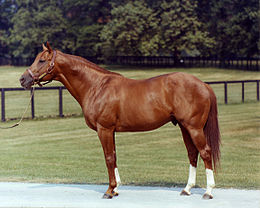
Secretariat wins Kentucky Derby, May 5, 19731973 – In horse racing, Secretariat won the Triple Crown.
Save

Tidbits of History, June 8

June 8 is Best Friends Day
Name Your Poison Day
National Jelly-Filled Doughnut Day

June 8, 632 – Muhammad, Islamic prophet, died in Medina and was succeeded by Abu Bakr who becomes the first caliph of the Rashidun Caliphate.

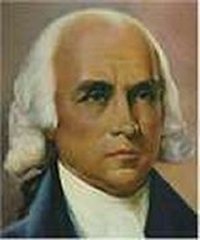
James Madison, born March 16, 1751In 1789, James Madison introduced twelve proposed amendments to the United States Constitution in the House of Representatives; by 1791, ten of them were ratified by the state legislatures and become the Bill of Rights; another was eventually ratified in 1992 to become the 27th Amendment.
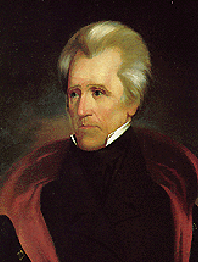
June 8, 1794, Robespierre inaugurated the French Revolution’s new state religion, the Cult of the Supreme Being, with large organized festivals all across France. Though he was no admirer of Catholicism, he had a special dislike for atheism. He thought that belief in a supreme being was important for social order, and he liked to quote Voltaire: “If God did not exist, it would be necessary to invent him”. With Robespierre’s death at the guillotine on July 28, 1794, the cult disappeared.

June 8, 1845, death of Andrew JacksonJune 8,1845: Death of ‎Andrew Jackson , seventh President of the United States. He died at Nashville, Tennessee aged 78. On the last day of his presidency, Jackson admitted that he had but two regrets, that he “had been unable to shoot Henry Clay or to hang John C. Calhoun.” His death was due to chronic tuberculosis, dropsy, and heart failure.

Ida Saxton McKinley, born June 8, 1847Birthday of Ida Saxton McKinley (1847), wife of
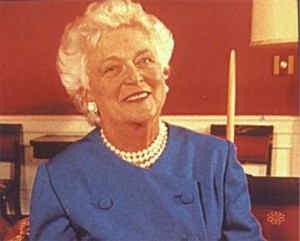
William McKinley,
first lady 1897-1901

In 1856, a group of 194 Pitcairn Islanders, descendants of the mutineers of HMS Bounty, arrived at Norfolk Island, commencing the Third Settlement of the Island.

June 8, 1887, Herman Hollerith applied for US patent #395,791 for the ‘Art of Applying Statistics’ – his punched card calculator.

On June 8, 1906, ‎President Theodore Roosevelt signed the Antiquities Act into law, authorizing the President to restrict the use of certain parcels of public land with historical or conservation value.

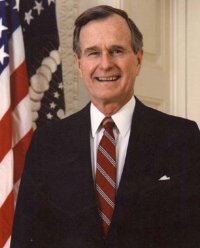
Barbara Pierce Bush, born June 8, 1925Birthday of Barbara Pierce Bush (1925), wife of ‎George H.W. Bush, mother of ‎George W. Bush, first lady 1989-1993. She died on Apr 17, 2018.
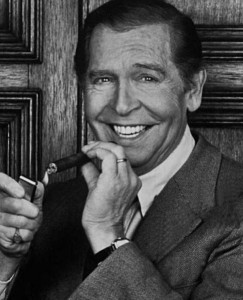
Milton BerleMilton Berle hosted the debut of Texaco Star Theater on June 8, 1948. It aired until 1956. Milton Berle became known as “Mr. Television”.
George Orwell’s Nineteen Eighty-Four was published on June 8, 1949.

Birthday of Tim Berners-Lee (June 8, 1955), English computer scientist who invented the World Wide Web and director of the World Wide Web Consortium, (W3C) which oversees its continued development. In 1984, he took up a fellowship at CERN, to work on distributed real-time systems for scientific data acquisition and system control. While there, he proposed (1989) a global hypertext project, to be known as the World Wide Web, which permitted people to collaborate by sharing knowledge in a web of hypertext documents. On 6 Aug 1991, the first World Wide Web site was made available to the Internet at large, giving information on a browser and how to set up a Web server.

June 8, 2009, General Motors filed for chapter 11 bankruptcy. It was the fourth largest United States bankruptcy in history.

Tidbits of History, June 7

June 7 is National Chocolate Ice Cream Day

Daniel Boone Day: On June 7, 1769, frontiersman Daniel Boone first saw the forests and valleys of present-day Kentucky. For more than a century, the Kentucky Historical Society has celebrated June 7 as “Boone Day.”

June 7, 1776, Richard Henry Lee presented the “Lee Resolution” to the Continental Congress. It declared the United Colonies to be independent of the British Empire. The motion was seconded by John Adams and led to the United States Declaration of Independence.

Asian cholera reached Quebec in 1832, brought by Irish immigrants, and killed about 6,000 people in Lower Canada.

Birthday of Eugène Henri Paul Gauguin (1848),leading French Post-Impressionist artist. Examples of Gauguin’s works can be seen at WikiArt

In 1862, the United States and Britain agreed to suppress the slave trade.

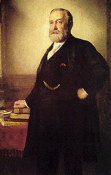
B Harrison, died Mar 13, 1901Benjamin Harrison became the first President of the United States to attend a baseball game on June 7, 1892. The Cincinnati Reds beat the Washington Senators 7-4 in 11 innings.

In 1892 – Homer Plessy, an American Creole was arrested for refusing to leave his seat in the “whites-only” car of a train; he lost the resulting court case, Plessy v. Ferguson. It was overturned in Brown v Board of Education in 1954. Plessy was 7/8 white or, according to the language of the time, an octoroon.

George Sampson patents clothes dryer on June 7, 1892. George Samson wrote in his patent:

My invention relates to improvements in clothes-driers. The object of my invention is to suspend clothing in close relation to a stove by means of frames so constructed that they can be readily placed in proper position and put aside when not required for use.

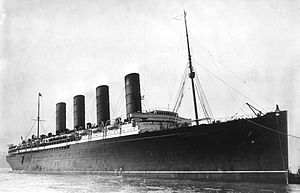
RMS Lusitania, launched June 7 1906Cunard Line’s RMS Lusitania was launched June 7, 1906 from the John Brown Shipyard, Glasgow (Clydebank), Scotland.
Birthday of Virginia Apgar (1909), American physician, anesthesiologist, and researcher who developed the Apgar score, a method of evaluating newborn infants to assess well-being. The five criteria include appearance, pulse, reflex irritability or grimace, activity, and respiratory effort. Each criteria is given a score of 0, 1, or 2. The baby is assessed at one and five minutes following birth.

In 1914, the Alliance was the first vessel to pass through the Panama Canal.

June 7,1965 – The Supreme Court of the United States handed down its decision in Griswold v. Connecticut, effectively legalizing the use of contraception by married couples.

Tidbits of History, June 6

June 6 is National Gardening Exercise Day
National Yo-Yo Day

June 6, 1586 – Francis Drake’s forces raid St. Augustine in Spanish Florida as part of Drake’s “Great Expedition”. Drake was the second to circumnavigate the globe. He was a hero to the English but a pirate to the Spaniards.

Birthday of Nathan Hale (June 6, 1755), American soldier of the American Revolution whose last words were: “I regret that I have but one life to give for my country.” He had been attempting to gather intelligence when he was captured by the British and executed.

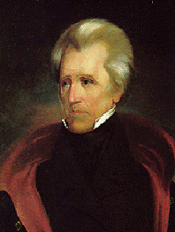
Andrew JacksonOn June 6, 1833, In Ellicott’s Mills, Maryland, President Andrew Jackson boarded a Baltimore & Ohio Railroad train for a pleasure trip to Baltimore. Jackson, who had never been on a train before, was the first president to take a ride on the “Iron Horse,” as locomotives were known then.

1844 – The Young Men’s Christian Association (YMCA) was founded in London in 1834.

The electric iron was invented in 1882 by Henry W. Seeley, a New York inventor. Seeley patented his “electric flatiron” on June 6, 1882. His iron weighed almost 15 pounds and took a long time to warm up. Other electric irons had also been invented, including one from France (1882), but it used a carbon arc to heat the iron.

June 6, 1932 – The Revenue Act of 1932 was enacted, creating the first gas tax in the United States, at a rate of 1 cent per US gallon.

In 1934 – New Deal: the U.S. President Franklin D. Roosevelt signed the Securities Act of 1933 into law, establishing the U.S. Securities and Exchange Commission.

June 6, 1944 – World War II: the Battle of Normandy began. D-Day, code named Operation Overlord, commenced with the landing of 155,000 Allied troops on the beaches of Normandy in France. The allied soldiers quickly broke through the Atlantic Wall and pushed inland in the largest amphibious military operation in history.

June 6, 1968 – Robert F. Kennedy, Democratic Party senator from New York and brother of 35th President John F. Kennedy, died from gunshot wounds inflicted on June 5.

June 6, 1988 – Japanese-American internees (promise broken, May 1989)
President Ronald Reagan signed into law the Civil Liberties Act, which apologized for the internment on behalf of the U.S. government and authorized a payment of $20,000 to each individual camp survivor. The legislation admitted that government actions were based on “race prejudice, war hysteria, and a failure of political leadership”. The U.S. government eventually disbursed more than $1.6 billion in reparations to 82,219 Japanese Americans who had been interned and their heirs

Tidbits of History, June 5

June 5 is World Environment Day
National Running Day
National Gingerbread Day
National Ketchup / Catsup Day Both words are derived from the Chinese ke-tsiap, a pickled fish sauce. It made its way to Malaysia where it became kechap and ketjap in Indonesia. Catsup and katchup are acceptable spellings used interchangeably with ketchup, however, ketchup is the way it is popularly used today.

Anniversary of the baptism of Adam Smith, (June 5, 1723), Scottish economist and philosopher, author of “Wealth of Nations”

Great Lakes’ steamers – The Canadian-built Frontenac was launched on Sept 7, 1816. The Ontario was launched in the spring of 1817. The Ontario began active service first in April, 1817 and the Frontenac made its first trip on June 5th, 1817.

June 5, 1851, Harriet Beecher Stowe’s anti-slavery serial, Uncle Tom’s Cabin, or Life Among the Lowly, started a ten-month (40-week) serial published in The National Era, an abolitionist periodical published in Washington, D.C.

Birthday of John Maynard Keynes (1883), English economist, financial expert and author.

Birthday of William Boyd (June 5, 1895), better known as Hopalong Cassidy. Boyd portrayed Hopalong Cassidy in 66 films and then on TV in the 1950s. His horse was named Topper.

Marshall Plan: In a speech at Harvard University on June 5, 1947, the United States Secretary of State, George Marshall, called for economic aid to war-torn Europe.

Elvis Presley introduced his new single, “Hound Dog”, on The Milton Berle Show on June 5, 1956, scandalizing the audience with his suggestive hip movements.

2001 – Tropical Storm Allison made landfall on the upper-Texas coastline as a strong tropical storm and dumps large amounts of rain over Houston, Texas. The storm causes $5.5 billion in damages, making Allison the second costliest tropical storm in U.S. history.

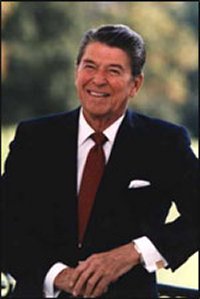
Death of Ronald Reagan, June 5, 20042004 – Death of Ronald Wilson Reagan , fortieth President of the United States. He died in Bel Air, California at age 93 from pneumonia, complicated by Alzheimer’s disease.

Tidbits of History, June 4

June 4 is Applesauce Cake Day
Hug Your Cat Day
Old Maid’s Day
National Eggs Benedict Day
National Cheese Day

On this date in 1411, King Charles VI granted a monopoly for the ripening of Roquefort cheese to the people of the village of Roquefort-sur-Soulzon,  as they had been producing it for centuries. Roquefort is known as the “cheese of kings and popes”.
Roquefort is produced from January through July, during the milking period of the Lacaune breed of ewes. It is made with raw milk and must be matured in the famous natural caves of the village of Roquefort, which are perfectly ventilated through natural chimneys called “fleurines”, enabling the blue mold to develop in the cheese paste.

In 1760,  New England planters arrived to claim land in Nova Scotia, Canada, which had been taken from the Acadians.  Some of the displaced Acadians landed in Louisiana and eventually became known as “Cajuns”.

June 4, 1783 – The Montgolfier brothers publicly demonstrate their montgolfière (hot air balloon).

Captain George Vancouver claims Puget Sound for the Kingdom of Great Britain on June 4, 1792.

June 4, 1794- Congress passed Neutrality Act, which banned Americans from serving in armed forces of foreign powers.

Following Louisiana’s admittance as a U.S. state on April 30th, 1812, the Louisiana Territory was renamed the Missouri Territory on June 4, 1812.

June 4, 1855 – Major Henry C. Wayne departed New York aboard the USS Supply to procure camels to establish the U.S. Camel Corps.

On June 4, 1876 – An express train called the Transcontinental Express arrived in San Francisco, California, via the First Transcontinental Railroad only 83 hours and 39 minutes after leaving New York City.

Henry Ford completed the Ford Quadricycle, his first gasoline-powered automobile, and gives it a successful test run on June 4, 1896.

June 4, 1920: The Trianon TreatyHungary lost 71% of its territory and 63% of its population when the Treaty of Trianon is signed in Paris on June 4, 1920.

In 1937, the first shopping carts were introduced at the Humpty Dumpty supermarket in Oklahoma City, invented by the store owner Sylvan Goldman. With the aid of a mechanic, Fred Young, Goldman designed the first shopping cart based on the folding chair. Wheels were placed where the bottoms of the chair legs were. In place of the chair seat, Young and Goldman, stacked two metal baskets on top of each other. This cart could be stored by folding it up like a folding chair. In 1947, Goldman made a big improvement in the design of his shopping cart with carts that could be stored by simply nesting one cart into another by pushing the front of each cart into the folding back of the one in front of it. This basic design is still in use today.

June 4, 1939: The Motorschiff St. Louis, a ship carrying 963 Jewish refugees, was denied permission to land in Florida, in the United States, after already being turned away from Cuba. They were also turned away in Canada. Forced to return to Europe, more than 200 of its passengers later died in Nazi concentration camps.

June 4, 1940 – The Dunkirk evacuation ends – British forces complete evacuation of 338,000 troops from Dunkirk in France. To rally the morale of the country, Winston Churchill delivered his famous “We shall fight on the beaches…” speech.

Tidbits of History, June 3

June 3 is Repeat Day

According toNational Day Calendar.com

Observed on June 3rd, National Repeat Day could be an opportunity for some and a bad omen for others.

Repeating a foot massage or a day with a dear friend would make this holiday special.  Repeating a root canal or Hurricane Katrina are not suggested for this day.

It is also National Doughnut Day.  Doughnuts are a good explanation for National Repeat Day.

Another way to celebrate is by repeating some of the simple tasks of the day.  Wash the dishes twice.  Make the same meal for lunch as you do for supper.  Watch the same movie twice.  The 1993 film Groundhog Day comes to mind.  Send duplicate text messages.

Have a great day! Have a great day!

June 3 is also National Egg Day
and National Chocolate Macaroon Day

Chimborazo Day celebrates the highest point on Earth, the point closest to the Moon.   Mount Chimborazo, Ecuador, tops out at 20,702 feet, almost two miles lower than Everest. But that’s only compared to sea level. If we take the equatorial bulge into account—in other words, if we measure what peak is farthest from the center of the Earth—Chimborazo sticks more than 7,000 feet farther into space than any of the Himalayas do, since they’re located thousands of miles north of the Equator.

Shavuot, a Jewish holiday celebrating the day that God gave the Torah to the nation of Israel assembled at Mount Sinai.

On this day in 1539, Hernando de Soto claimed Florida for Spain.

Samuel de Champlain completed his third voyage to New France at Tadoussac, Quebec on June 3, 1608.

Mission San Carlos Borromeo de Carmelo founded in California by Father Junipero Serra on this day in 1770. Now called the Carmel Mission at Carmel-by-the-sea, California, near Monterey.

June 3, 1781, Jack Jouett began his midnight ride to warn Thomas Jefferson and the Virginia legislature of an impending raid by Banastre Tarleton.

John Adams, October 30, 1735June 3, 1800, U.S. President John Adams moved to Washington, DC. He was the first President to live in what later became the capital of the United States. John Adams’ blessing is engraved in the mantel in the State Dining Room of the White House. The benediction reads, “I Pray Heaven To Bestow The Best Of Blessings On This House And All that shall hereafter Inhabit it. May none but Honest and Wise Men ever rule under This Roof.” The words are taken from a letter written to Abigail Adams by Adams in 1800 and were engraved on the mantel in 1945 during the administration of Franklin D. Roosevelt.

Jefferson DavisBirthday of Jefferson F. Davis (June 3, 1808), president of the Confederate States.

In 1851, the New York Knickerbockers became the first baseball team to wear uniforms which consisted of straw hats, white shirts and blue long trousers.

The first long-distance electric power transmission line in the United States was completed, running 14 miles (23 km) between a generator at Willamette Falls and downtown Portland, Oregon on June 3, 1889.

June 3, 1932 – Lou Gehrig and his teammate Tony Lazzeri hit four home runs in one game, and hit for the natural cycle, respectively. These two feats are both less common than a perfect game, which has occurred twenty-one times in one-hundred and twenty years.

June 3,1937: The Duke of Windsor married Wallis Simpson.  “Duke of Windsor” was a title in the United Kingdom. It was created on 8 March 1937, for Prince Edward, former King Edward VIII, following his abdication in December 1936.

1942 The Aleutian Islands Campaign was a military campaign conducted by the United States in the Aleutian Islands, part of the Alaska Territory…in World War II, starting on 3 June 1942. A small Japanese force occupied the islands of Attu and Kiska, but the remoteness of the islands and the difficulties of weather and terrain meant that it took nearly a year for a far larger U.S./Canadian force to eject them. The islands’ strategic value was their ability to control Pacific Great Circle routes. This control of the Pacific transportation routes is why U.S. General Billy Mitchell stated to the U.S. Congress in 1935, “I believe that in the future, whoever holds Alaska will hold the world. I think it is the most important strategic place in the world.” The Japanese reasoned that control of the Aleutians would prevent a possible U.S. attack across the Northern Pacific. Similarly, the U.S. feared that the islands would be used as bases from which to launch aerial assaults against the West Coast.

On June 3, 1965, Edward White became the first American astronaut to do a “space walk” when he left the Gemini 4 capsule.

Tidbits of History, June 2

June 2 is National Bubba Day National Bubba Day is celebrated across the United States each year on June 2nd. According to Wikipedia, “bubba” is a relationship nickname formed from brother and given to boys, especially eldest male siblings, to indicate their role in the  family.

National Rocky Road Day

I Love My Dentist Day

International Sex Workers’ Day (aka International Whore Day)

In the year 455, the Sack of Rome: Vandals entered Rome, and plundered the city for two weeks.

The first Récollet missionaries arrived at Quebec City, from Rouen, France in 1615. The Récollet are more commonly known as the Franciscans. The Recollect friars are said to have brewed the first beer in New France in 1620.

On June 2, 1692, Bridget Bishop was the first person to go to trial in the Salem witch trials in Salem, Massachusetts. Found guilty, she was hanged on June 10.

Birthday of Martha Washington, June 2,Birthday of Martha Dandridge Custis Washington (June 2, 1731), First Lady 1789-1797, wife of George Washington.

June 2, 1774, Intolerable Acts: Amendment to original Quartering Act enacted, allowed governor in colonial America to house British soldiers in uninhabited houses, outhouses, barns, or other buildings if suitable quarters not provided.

Helen Taft, June 2ndBirthday of Helen Herron Taft (June 2, 1861), wife of William Howard Taft; first lady from 1909-1913.

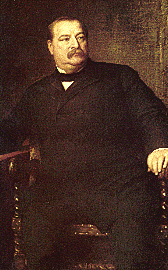
Frances ClevelandJune 2, 1886 – The U.S. President Grover Cleveland married Frances Folsom in the White House, becoming the only president to wed in the executive mansion.

Birthday of Edwin J. Shoemaker (June 2, 1907), American inventor and engineer who created the recliner chair and started the La-Z-Boy furniture company.

June 2, 1924 – The U.S. President Calvin Coolidge signed the Indian Citizenship Act (aka the Snyder Act) into law, granting citizenship to all Native Americans born within the territorial limits of the United States.

In 1928, Kraft’s Velveeta Cheese was invented. It was packaged using the 1921 invention of a tinfoil lining that could house the cheese inside a wooden box. Its special cooking properties quickly caught on. When melted, it was as smooth as velvet (hence its name), and it would never curdle when heated.

June 2, 1953 – The coronation of Queen Elizabeth II, who was crowned Queen of the United Kingdom, Canada, Australia, New Zealand and Her Other Realms and Territories & Head of the Commonwealth, the first major international event to be televised. She wore three different crowns on this day – one on the way to Westminster Abbey, one to be crowned Queen, and one for the procession from the Abbey.

June 2, 1997 – In Denver, Colorado, Timothy McVeigh was convicted on 15 counts of murder and conspiracy for his role in the 1995 bombing of the Alfred P. Murrah Federal Building in Oklahoma City, Oklahoma. He was executed four years later.

Tidbits of History, June 1

June 1 is
National Hazelnut Cake Day
Dare Day
Flip a Coin Day

Heimlich Maneuver Day (For instructions see Perform the Heimlich)
In 1974 – The Heimlich maneuver for rescuing choking victims is published in the journal Emergency Medicine. Named for Henry Judah Heimlich, the maneuver is a technique of abdominal thrusts. Dr. Heimlich is also recognized as the inventor of the Heimlich Chest Drain Valve and a system of portable oxygen for ambulatory patients. (Heimlich is the uncle of Anson Williams, who is known for his portrayal as Warren “Potsie” Weber on the 70s hit TV show Happy Days.)

Friar John Cor records the first known batch of Scotch Whisky on June 1, 1495.

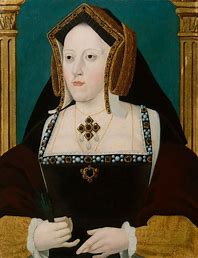
June 1, 1533 – Anne Boleyn was crowned Queen of England.  She was executed in 1536.

On June 1, 1660, Mary Dyer was hanged for defying a law banning Quakers from the Massachusetts Bay Colony.

1774 – The British government ordered the Port of Boston closed.

Benedict Arnold, a general in the Continental Army during the American Revolutionary War, was court-martialed for malfeasance on June 1, 1779. He was cleared of all but two minor charges in 1780.

Kentucky header Kentucky Statehood Day; joined the Union in 1792 as the fifteenth state. It was originally a part of Virginia. Officially named the Commonwealth of Kentucky.

  • Capital: Frankfort
  • Nickname: Bluegrass State
  • Bird: Cardinal
  • Fruit: Blackberry
  • Gemstone: Freshwater Pearl
  • Flower: Goldenrod
  • Tree: Tulip Poplar
  • Motto: United we stand, divided we fall

See our page for Kentucky for more interesting facts and trivia about Kentucky.

Tennessee HeaderTennessee Statehood Day; joined the Union in 1796 as the sixteenth state. Initially part of North Carolina; then became known as the Southwest Territory from 1790-1796.

  • Capital: Nashville
  • Nickname: Volunteer State
  • Bird: Mockingbird
  • Fruit: Tomato
  • Flower: Iris
  • Tree: Tulip Poplar
  • Motto: Agriculture and commerce
  • Slogan: Tennessee: America at its Best

See our page for Tennessee for more interesting facts and trivia about Tennessee.

Birthday of Brigham Young (June 1, 1801), American Mormon leader; founder of Salt Lake City

June 1, 1812 – The U.S. President James Madison asked the Congress to declare war on the United Kingdom.

1813 – James Lawrence, the mortally-wounded commander of the USS Chesapeake, gives his final order: “Don’t give up the ship!”

In 1831 – James Clark Ross discovered the Magnetic North Pole.

15buchananDeath of James Buchanan, fifteenth President of the United States on June 1, 1868. He died at his home “Wheatland” in Lancaster, Pennsylvania at age 77 of respiratory failure.

In 1890 – The United States Census Bureau begins using Herman Hollerith’s tabulating machine to count census returns. Hollerith developed a mechanical tabulator based on punched cards. He was the founder of the Tabulating Machine Company which later became IBM. Most of the 1890 Census materials were destroyed in a 1921 fire.

June 1, 1916, Louis Brandeis was appointed to the United States Supreme Court. He was nominated by President Woodrow Wilson. It was written of him that “Brandeis was a militant crusader for social justice whoever his opponent might be. He was dangerous not only because of his brilliance, his arithmetic, his courage. He was dangerous because he was incorruptible.” Using his social conscience, Brandeis became a leader of the Progressive movement, and used the law as the instrument for social change. Starting in 1890, he helped develop the “right to privacy” concept.

1938 – Baseball helmets were worn for the first time.

On June 1,1943, British Overseas Airways Corporation Flight 777 was shot down over the Bay of Biscay by German Junkers Ju 88s, killing 17 including the actor Leslie Howard and leading to speculation that its shooting down was an attempt to kill the British Prime Minister Winston Churchill.

Zimbabwe, formerly RhodesiaZimbabwe came into existence on June 1, 1970. It was formerly known as Rhodesia.

1980 – Cable News Network (CNN) begins broadcasting. It was founded by Ted Turner and is part of the Turner Broadcasting System.

Tidbits of History for the Month of June

The month of June, the sixth month in the Gregorian calendar, was named (according to legend) for Juno, wife of Jupiter, the goddess of women and of marriage.  If this is true, it is an appropriate name since June is a favored month for weddings.  Some authorities, however, claim that the month was named for “Juniores”. the lower branch of the Roman senate or that it was associated with the consulate of Junius Brutus.

Many traditional events are associated with this month.  Among the most famous are the great flower festivals of the world.  June has long been commencement time, when young people are graduated from schools and colleges.  It is also the month when the British celebrate the official, not the real, birthday of Queen Elizabeth in order to assure favorable weather for the public ceremonies.  The most ancient of festivals are those associated with Midsummer Eve in northern countries where bonfires have added to the merrymaking and festivities from time immemorial.

The Month of June flower = roseThe special flower for this month is the rose.

The gems are the moonstone, the pearl, and the alexandrite.

…from Gregory, Ruth W. Anniversaries and Holidays, Third Edition;. Chicago: American Library Association, 1975.

The solstice occurs around the 21st of the month, but it may occur on either the 20th or the 22nd. (June 20 in 2025). It is the summer solstice in the northern hemisphere and the winter solstice in the southern hemisphere.

Flag Day is on the 14th of the month.
Midsummer is celebrated in Sweden on the third Friday.
Father’s Day is celebrated in the United States on the June 15th this year.

June is also known as:

  • Aquarium Month
  • Candy Month
  • Dairy Month
  • Fight the Filthy Fly Month
  • National Accordion Awareness Month
  • National Adopt a Cat Month
  • National Fresh Fruit and Vegetables Month
  • National Iced Tea Month
  • National Papaya Month
  • Rose Month
  • Turkey Lovers Month

Probably the best known “June” song is “June is Bustin’ Out All Over” from Rodgers and Hammerstein’s Carousel:

Six states attained statehood in June:
On the 1st of the month, Kentucky and Tennessee celebrate becoming states.
On the 15th is the anniversary of statehood for Arkansas.
On the 20th commemorates statehood for West Virginia
On June 21 for New Hampshire.
And on the 25th is Statehood Day for Virginia.