Tidbits of History, June 29

June 29 is:

National Almond Buttercrunch Day
Camera Day
Hug Holiday – originally designed to encourage hugging or other demonstrations of affection to those who are sick, or elderly or in the hospital.  Has evolved into hugging anyone who needs a hug!!

Waffle Iron Day

Massachusetts declared itself an independent commonwealth on June 29, 1652.

June 29, 1767 – The British Parliament approved the Townshend Revenue Acts. The acts imposed import duties on glass, lead, paint, paper and tea shipped to America.

The Virginia constitution was adopted and Patrick Henry was made governor in 1776.

Privates John Collins and Hugh Hall of the Lewis and Clark Expedition of 1804 were found guilty by a court-martial consisting of members of the Corps of Discovery for getting drunk on duty. Collins received 100 lashes on his back and Hall received 50.

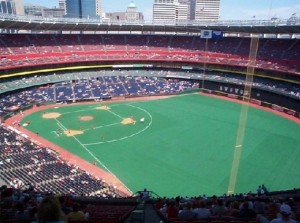
1897 – The Chicago Cubs scored 36 runs in a game against Louisville, setting a record for runs scored by a team in a single game.

The Ukraine proclaimed independence from Russia in 1917.

1941 – Joe DiMaggio got a base hit in his 42nd consecutive game. He broke George Sisler’s record from 1922.

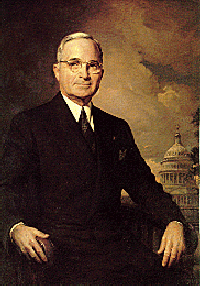
Harry S. Truman, died December 261950 – U.S. President Harry S. Truman authorized a sea blockade of Korea.

The U.S. Supreme Court ruled in 1972 that the death penalty could constitute “cruel and unusual punishment.” The ruling prompted states to revise their capital punishment laws.

1995 – The shuttle Atlantis and the Russian space station Mir docked, forming the largest man-made satellite ever to orbit the Earth.

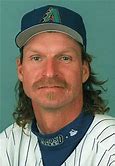
Randy JohnsonIn 2004, Randy Johnson of the Arizona Diamondbacks became the fourth pitcher in major league history to record 4,000 career strikeouts.
The Apple iPhone went on sale on June 29, 2007.

Tidbits of History, June 28

June 28 is Insurance Awareness Day
National Tapioca Day
Paul Bunyan Day

National Ceviche Day – Ceviche is a seafood dish popular in the coastal regions of the Americas, especially Central and South America. The dish is typically made from fresh raw fish cured in citrus juices, such as lemon or lime, and spiced with ají or chili peppers.

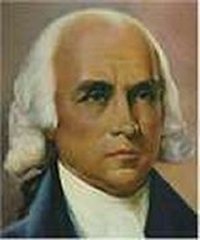
James Madison, died June 28, 1836Death of James Madison, Jr. , (June 28, 1836) fourth President of the United States, at Montpelier, Virginia. He was 85 years old and died of rheumatism and heart failure. He is known as “the Father of the Constitution” and author of the Bill of Rights. He was one of the authors of the Federalist Papers.

The U.S. Congress made Labor Day a U.S. national holiday in 1894.

The U.S. Congress passed the Spooner bill, in 1902. It authorized a canal to be built across the isthmus of Panama.

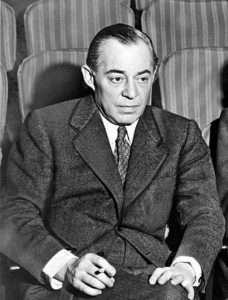
Richard RodgersOn June 28, 1902, Richard Rodgers, the American composer who was a major force in 20th century musical comedy, was born. With 43 Broadway musicals and over 900 songs to his credit, Rodgers was one of the most significant American composers of the 20th century, and his compositions had a significant impact on popular music. He is best known for his songwriting partnerships with the lyricists Lorenz Hart, with whom he wrote several musicals throughout the 1920s and 1930s, including Pal Joey, A Connecticut Yankee, On Your Toes and Babes in Arms, and Oscar Hammerstein II, with whom he wrote musicals through the 1940s and 1950s such as Oklahoma!, Carousel, South Pacific, The King and I, and The Sound of Music. Rodgers was the first person to win what are considered the top American entertainment awards in television, recording, movies and Broadway – an Emmy, a Grammy, an Oscar, and a Tony Award — now known collectively as an EGOT. In addition, he was awarded a Pulitzer Prize, making him one of only two people to receive all five awards (Marvin Hamlisch is the other).
1914 – Archduke Franz Ferdinand of Austria, the heir to the Austrian-Hungarian throne, was assassinated in Sarajevo along with his wife, Duchess Sophie. His death led to Austria-Hengary’s declaration of war against Serbia which started World War I.

Anniversary of the signing in 1919 of the Treaty of Versailles, ending World War I and establishing the League of Nations.

President Franklin D Roosevelt ordered a gold vault to be built at Fort Knox, Kentucky in 1935

2000 – Six-year-old Elián González returned to Cuba from the U.S. with his father. The child had been the center of an international custody dispute.

2004 – The U.S. turned over official sovereignty to Iraq’s interim leadership. The event took place two days earlier than previously announced to thwart insurgents’ attempts at undermining the transfer.

Save

Save

Tidbits of History, June 27

June 27 is Sunglasses Day
National “Happy Birthday to You” Day

National “Decide to Be Married” Day

National Orange Blossom Day

1693 – “The Ladies’ Mercury” was published by John Dunton in London. It was the first women’s magazine and contained a “question and answer” column that became known as a “problem page.” It was published for four weeks.

1787 – Edward Gibbon completed “The Decline and Fall of the Roman Empire.” It was published the following May. It traced Western civilization from the Roman Empire to the fall of Byzantium.

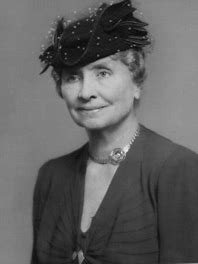
Helen Keller born June 27, 1880Birthday of Helen Adams Keller (June 27, 1880), American author, political activist, and lecturer. She was the first person who was blind and deaf to earn a bachelor of arts degree. Helen was born able to see and hear. She fell ill at 19 months old with what might have been scarlet fever or meningitis.

The New York stock market crashed on June 27, 1893. By the end of the year 600 banks and 74 railroads had gone out of business. See the Panic of 1893. The unemployment rate rose to 18.4%.

1929 – Scientists at Bell Laboratories in New York revealed a system for transmitting television pictures.

On June 27, 1942, the FBI announced the capture of eight Nazi saboteurs who had been put ashore from a submarine on New York’s Long Island.

1950 – Two days after North Korea invaded South Korea, U.S. President Truman ordered the Air Force and Navy into the Korean conflict. The United Nations Security Council had asked for member nations to help South Korea repel an invasion from the North.

The world’s first cash dispenser was installed at Barclays Bank in Enfield, England in 1967. The device was invented by John Sheppard-Barron. The machine operated on a voucher system and the maximum withdrawal was $28.

The United States National Do Not Call Registry, was formed to combat unwanted telemarketing calls and administered by the Federal Trade Commission, enrolled almost three-quarters of a million phone numbers on its first day, June 27, 2003.

Tidbits of History, June 26

June 26 is Beautician’s Day
Forgiveness Day
National Chocolate Pudding Day

United Nations Charter Day commemorating the signing of the charter in five official languages – Chinese, English, French, Russian and Spanish

From Today in Science
In 1498, the bristle toothbrush was invented in China. Coarse hairs taken from the back of a hog’s neck were used for the bristles, attached at right angles to a bone or bamboo handle (similar to the modern type). The best bristles came from hogs raised in the colder climates of China and Siberia, where the animals grew stouter and firmer hair. Since 3000 BC, ancient civilizations had been cleaning teeth with a “chew-stick” by using a thin twig with a frayed end.

June 26, 1721, Dr Zabdiel Boylston gave first smallpox inoculations in America. He lived in Boston, Massachusetts and he performed the first surgical operation by an American physician, the first removal of gall bladder stones in 1710, and the first removal of a breast tumor in 1718. He was a great-uncle to John Adams.

The Lewis and Clark Expedition reached the mouth of the Kansas River at Kaw Point on June 26, 1804, after completing a westward trek of nearly 400 river miles.

The bicycle was patented by W.K. Clarkson, Jr. on this date in 1819.

1844 – John Tyler took Julia Gardiner as his bride, thus becoming the first U.S. President to marry while in office.

Christmas declared a holiday, June 26On June 26, 1870, the Christian holiday of Christmas was declared a federal holiday in the United States.
The first section of the Boardwalk in Atlantic City, NJ, was opened to the public in 1870.

June 26, 1896 – First movie theater in US opened, charging 10 cents for admission

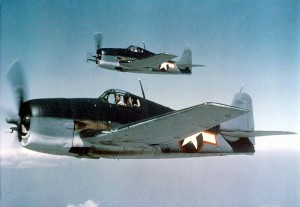
Hellcat, June 26The Grumman F6F Hellcat fighter was flown for the first time on June 26, 1942.
June 25, 1948 – The Berlin Airlift began as the U.S., Britain and France started ferrying supplies to the isolated western sector of Berlin.

1961 – A Kuwaiti vote opposed Iraq’s annexation plans.

1963 – U.S. President John Kennedy announced “Ich bin ein Berliner” (I am a Berliner) at the Berlin Wall.

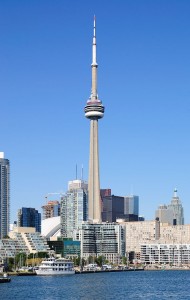
CN Tower, June 261976 – The CN (Canadian National) Tower in Toronto, Canada, opened on June 26, 1976.

On June 26, 1985 Wilbur Snapp, a ballpark organist, was ejected from a game at the Jack Russell Stadium in Clearwater, Florida, for playing “Three Blind Mice” in response to what he thought was a bad call from the umpire, Kevin O’Connor. The umpire pointed up to Snapp, who was sitting at his organ behind first base, then thumbed him out of the game. Snapp stepped away from his keyboard, but spent the remainder of the game twisting balloons into mice for the delighted fans, who began singing “Three Blind Mice.”

1987 – The movie “Dragnet” opened in the U.S.

1998 – The U.S. Supreme Court ruled that employers are always potentially liable for supervisor’s sexual misconduct toward an employee.

Tidbits of History, June 25

June 25 is Log Cabin Day
Color TV Day
National Columnists Day
National Catfish Day
National Strawberry Parfait Day

June 25, 1630- The fork was introduced to American dining by Gov Winthrop of Massachusetts.

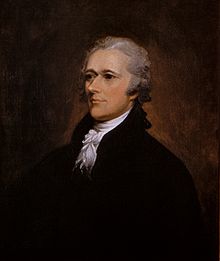
author of Federalist PaperPublication of Federalist Paper #81: The Judiciary and the Distribution of the Judicial Authority written by Alexander Hamilton in 1788.

Virginia header Virginia Ratification Day
On June 25, 1788 Virginia became the tenth state.

  • Capital: Richmond
  • Nickname: Old Dominion
  • Bird: Cardinal
  • Flower: Dogwood
  • Tree: Flowering Dogwood
  • Motto: Thus always to tyrants

See our page for Virginia for more interesting facts and trivia about Virginia.

Custer Day, Aniversary of “Custer’s Last Stand” at the Battle of Little Big Horn in Montana in 1876. Lt. Col. Custer and the 210 men of U.S. 7th Cavalry were killed by Sioux and Cheyenne Indians

June 25, 1950 – North Korea invaded South Korea, initiating the Korean War.

The Cuban government seized 2.35 million acres under a new agrarian reform law in 1959.

The U.S. Supreme Court ruled (in 1962) that the use of unofficial, non-denominational prayer in public schools was unconstitutional.

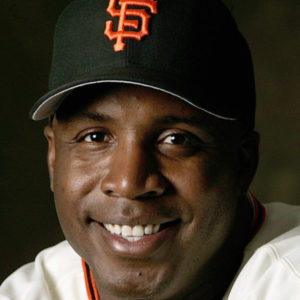
On June 25, 1968 – Barry BondsBobby Bonds (San Francisco Giants) hit a grand-slam home run in his first game with the Giants. He was the first player to debut with a grand-slam.

1981 – The U.S. Supreme Court decided that male-only draft registration was constitutional.

1990 – The U.S. Supreme Court upheld the right of an individual, whose wishes are clearly made, to refuse life-sustaining medical treatment. “The right to die” decision was made in the Curzan vs. Missouri case.

In Clinton v. City of New York, the United States Supreme Court decided (1998) that the Line Item Veto Act of 1996 was unconstitutional.

The U.S. Supreme Court ruled (1998) that those infected with HIV are protected by the Americans With Disabilities Act.

2000 – U.S. and British researchers announced that they had completed a rough draft of a map of the genetic makeup of human beings. The project was 10 years old at the time of the announcement.

Tidbits of History, June 24

June 24 is Swim a Lap Day
International Fairy Day
National Pralines Day
Deaf-Blindness Awareness Week

1374 – A sudden outbreak of St. John’s Dance caused people in the streets of Aachen, Germany, to experience hallucinations and begin to jump and twitch uncontrollably until they collapsed from exhaustion.
From toxipedia.org, “St. John’s Dance was the medieval name for a phenomenon which emerged during the time of the Black Death. It was considered a form of nervous system disorder (apraxia) expressing itself as “dancing rage,” as uncontrolled ecstatic body movements. In the eyes of the church, those suffering from St. John’s Dance were possessed by the devil.”

1497 – Italian explorer John Cabot, sailing in the service of England, landed in North America on what is now Newfoundland, on June 24, 1497. It was the first European exploration of the region since the Vikings.

1509 – Henry VIII and Catherine of Aragon were crowned King and Queen of England.

New Jersey, named after the Isle of Jersey, was founded in 1664.

King Philip’s War began when Indians massacred colonists at Swansee, Plymouth colony on June 24, 1675.

The saxophone was patented by Adolphe Sax in Paris, France on June 24, 1846.

Grover Cleveland, died June 24, 19081908 – Death of Grover Cleveland (born Stephen Grover Cleveland), twenty-second and twenty-fourth President of the United States. He died at Princeton, New Jersey at age 71 of heart failure.

1922The American Professional Football Association took the name of The National Football League.

1948 – Start of the Berlin Blockade: the Soviet Union made overland travel between West Germany and West Berlin impossible.

The first television western, Hopalong Cassidy, was aired on NBC on June 24, 1949. It starred William Boyd.

1982 – The U.S. Supreme Court ruled 5-4 that no president could be sued for damages connected with actions taken while serving as President of the United States.

1993 – Yale computer science professor Dr. David Gelernter lost the sight in one eye, the hearing in one ear, and part of his right hand after receiving a mailbomb from the Unabomber.

Tidbits of History, June 23

June 23 is National Columnists Day
National Pink Day
National Pecan Sandy Day
Laura Ingalls Wilder Pageant

1713 – The French residents of Acadia were given one year to declare allegiance to Britain or leave Nova Scotia, Canada. Those who left went to Louisiana and became “Cajuns”.

1860 – The United States Congress established the Government Printing Office and the Secret Service. They were established to arrest counterfeiters.

1887 – The Rocky Mountains Park Act created Canada’s first national park, Banff National Park, on June 23, 1887.

Ernie Shore and Babe Ruth1917 – In a game against the Washington Senators, Boston Red Sox pitcher Ernie Shore retired 26 batters in a row. He had replaced Babe Ruth who had been ejected for punching the umpire. The umpire, Clarence “Brick” Owens, called the first four pitches balls, walking the batter. Ruth thought two of the pitches had been strikes. Ruth reportedly yelled at him, “If you’d go to bed at night, you *expletive*, you could keep your eyes open long enough in the daytime to see when a ball goes over the plate!”

As you might imagine, the umpire didn’t take too kindly to this and told Ruth that if he didn’t shut up and get back to the mound, he’d be thrown out of the game. Ruth then yelled at him, “Throw me out and I’ll punch ya right in the jaw!” Owens then threw him out; Ruth attempted to punch him in the jaw but missed and hit a glancing blow behind the umpire’s ear, knocking Owens down. Ruth was fined $100 (about $1600 today), given a 10 game suspension, and forced to give a public apology. See story at This Day in History.

What made this particularly attacking of an umpire important was that, when Ernie Shore came in to replace Ruth on the mound, the catcher, Sam Agnew, (who incidentally replaced catcher Chester “Pinch” Thomas who was also ejected with Ruth), threw out the runner on first trying to steal second. Shore then retired the next 26 batters in a row without giving up a hit or a walk, winning the game 4-0. As such, this was ruled to be a “perfect game” because Shore had been on the mound for all 27 outs, though in the 1990s, it was downgraded to simply a “combined no-hitter”.

*** Comment from viewer Christy Stone:
Linda-
I missed sending you a story of another baseball no-hitter that was pitched on June 23rd (1971).
Philadelphia right hander Rick Wise no-hit the Reds at Cincinnati’s former home, Riverfront Stadium by a score 4-0.
Two interesting items about this game:
Wise himself drove in three runs by hitting TWO home runs, one a solo and the other a two-run job. Wise hit 15 career home runs.
Last batter retired to complete the no-hitter?
Pete Rose, line drive out to third baseman, John Vukovich.
*** Thanks Christy!

1931 – Wiley Post and Harold Gatty took off from Roosevelt Field, Long Island in an attempt to circumnavigate the world in a single-engine plane.

1947 – The United States Senate followed the United States House of Representatives in overriding U.S. President Harry Truman’s veto of the Taft-Hartley Act on June 23, 1947.

1960 – The United States Food and Drug Administration declared Enovid to be the first officially approved combined oral contraceptive pill in the world on June 23, 1960.

1972 – Sexual discrimination to any educational program receiving federal funds was prohibited by Title IX of the United States Civil Rights Act of 1964

2013 – Nik Wallenda walked across the Grand Canyon on a tight rope on June 23, 2013, becaming the first man to do so successfully .

Tidbits of History, June 22

June 22 is National Chocolate Eclair Day
National Onion Rings Day

English explorer Henry Hudson discovered the Hudson Strait and the immense Hudson Bay on his final expedition, while still searching for the Northwest Passage. On this date in 1611, after wintering on the shore of James Bay, Hudson wanted to press on to the west, but most of his crew mutinied. The mutineers cast Hudson, his son, and seven others adrift; the Hudsons and their companions were never seen again.

Galileo - June 22, 16331633  Galileo Galilei was forced by the Inquisition to “abjure, curse, and detest” his Copernican heliocentric views. “I, Galileo…do swear that I have always believed, do now believe and, with God’s aid shall believe hereafter, all that which is taught and preached by the … church. I must wholly forsake the false opinion that the sun is the center of the world and moves not, and that the earth is not the center of the world and moves….” He was then condemned to the “formal prison of the Holy Office” for an undetermined amount of time which would be served at the pleasure of his judges, and required to repeat the seven penitential psalms once a week for three years. The next day the Pope specified the prison sentence should be house arrest. Galileo was the first person to reveal that the Milky Way galaxy was composed of stars.

1740 –  King Frederik II of Prussia ended torture and guaranteed religion & freedom of the press.

1774 – The British passed the Quebec Act on June 22, 1774, setting out rules of governance for the colony of Quebec in British North America.

1870 –  The U.S. Congress created the Department of Justice.

1933 – Germany became a one political party country when Hitler banned parties other than the Nazis on June 22, 1933.

A Japanese submarine shelled Fort Stevens at the mouth of the Columbia River in 1942.

U.S. President Franklin Roosevelt signed the “GI Bill of Rights” June 22, 1944 to provide broad benefits for veterans of the war.

From Today in Science
1969 – The Cuyahoga River caught fire, triggering a crack-down on pollution in the river. In Cleveland, Ohio, oil-sodden floating debris on the Cuyahoga River ignited (perhaps by sparks from a passing train) and burned with flames reported up to five stories high. Although fire-fighters extinguished the blaze in a half-hour or so, it caused $50,000 in damage. For a century the river had been an open sewer for industrial waste, through the times when factory production seemed more important than worrying about the environment. Several fires had happened in the prior hundred years, but attitudes changed to outrage as this time, national attention was aroused. It became one of several disasters that led to the Clean Water Act and the Environmental Protection Agency (EPA). Determined remedial action for decades since has resulted in cleaner water, and improving aquatic life.

1970: U.S. President Richard Nixon signed an extension of the Voting Rights Act of 1965. It required the voting age in the United States to be 18.

From Today in Science
In 1978, evidence of the first moon of Pluto was discovered by astronomer James W. Christy of the Naval Observatory in Flagstaff, Ariz. when he obtained a photograph of Pluto that showed the orb to be distinctly elongated. Furthermore, the elongations appeared to change position with respect to the stars over time. After eliminating the possibility that the elongations were produced by plate defects and background stars, the only plausible explanation was that they were caused by a previously unknown moon orbiting Pluto at a distance of about 19,600 kilometers (12,100 miles) with a period of 6.4 days. The moon was named Charon, after the boatman in Greek mythology who took the souls of the dead across the River Styx to Pluto’s underworld.

1992  – The U.S. Supreme Court unanimously ruled that hate-crime laws that ban cross-burning and similar expressions of racial bias violated free-speech rights.

1998 – The U.S. Supreme Court ruled that evidence illegally obtained by authorities could be used at revocation hearings for a convicted criminal’s parole.

Tidbits of History, June 21

June 21 is Go Skate Day
Summer Solstice
National Peaches and Cream Day
World Sauntering Day
World Handshake Day

First day of summer

1749 – Halifax, Nova Scotia, was founded.

author of Federalist PaperPublication of Federalist Paper #80: The Powers of the Judiciary written by Alexander Hamilton in 1788.

1788 – The U.S. Constitution went into effect when New Hampshire became the ninth state to ratify it.

New Hampshire headerNew Hampshire Day, the ninth state

  • Capital: Concord
  • Nickname: Granite State
  • Bird: Purple finch
  • Flower: Purple lilac
  • Tree: White birch
  • Motto: Live free or die

See our page for New Hampshire for interesting facts and trivia about New Hampshire.

1834 – Cyrus McCormick patented the first practical mechanical reaper for farming. His invention allowed farmers to more than double their crop size.

1877 – The Molly Maguires, ten Irish immigrants convicted of murder, were hanged at the Schuylkill County and Carbon County, Pennsylvania prisons.

June 21, 1838 – Wheatstone’s discovery of the stereoscopic viewer was described in a paper, On some remarkable, and hitherto unobserved Phenomena of Binocular Vision, which he read to the Royal Society, London. This is the visual effect whereby pictures of an object drawn from slightly different viewpoints for individual eyes could be viewed with his stereoscope and give the perception of the object in three dimensions. He read a second part to this paper on 15 Jan 1852. This principle was later popularized with photographs to make stereo view cards.

June 21, 1893 – The Ferris Wheel was introduced at the World’s Columbian Exposition in Chicago, IL. It was invented by George Washington Ferris, a Pittsburgh bridge builder, for the purpose of creating an attraction like the Eiffel Tower in Paris. Each of the 36 cars carried 60 passengers, making a full passenger load of 150 tons. Ferris didn’t use rigid spokes: instead, he used a web of taut cables, like a bicycle wheel. Supported by two 140 foot steel towers, its 45 foot axle was the largest single piece of forged steel at the time in the world. The highest point of the wheel was 264 feet. The wheel and cars weighed 2100 tons, with another 2200 tons of associated levers and machinery. Ferris died just four years later, at the age of only 38.

1948 – Columbia Records introduced the long-playing record album in a public demonstration at the Waldorf-Astoria Hotel in New York, New York. Made of nonbreakable Vinilyte plastic, and designed for the new speed of 33-1/3 r.p.m., the records were developed by Dr. Peter Goldmark of Columbia Records. The 12 inch record could play 23 minutes per side, as compared to only 4 minutes per side on the earlier 78 rpm record. The LP was also an improvement by the quietness of its surfaces and its greatly increased fidelity. The first LP featured violinist Yehudi Menuhin. Columbia originated the term “LP” itself, which was copyrighted. Thus, although many other firms could make long-playing records, only Columbia could make an LP.

1963 – France announced that they were withdrawing from the North Atlantic NATO fleet.

1973 – In handing down the decision in Miller v. California 413 US 15, the Supreme Court of the United States establishes the Miller Test for obscenity in U.S. law. The U.S. Supreme Court ruled that states may ban materials found to be obscene according to local standards. The Miller Test has three parts:

  1. Whether “the average person, applying contemporary community standards”, would find that the work, taken as a whole, appeals to the prurient interest,
  2. Whether the work depicts or describes, in a patently offensive way, sexual conduct specifically defined by applicable state law,
  3. Whether the work, taken as a whole, lacks serious literary, artistic, political, or scientific value.

1989 – The U.S. Supreme Court ruled that burning the American flag as a form of political protest was protected by the First Amendment.

2001 – KhobarTower indictment on June 21, 20012001-06-21 – A federal grand jury in Alexandria, Virginia, indicted 13 Saudis and a Lebanese in the 1996 bombing of the Khobar Towers in Saudi Arabia that killed 19 American servicemen.

Tidbits of History, June 20

June 20 is Ice Cream Soda Day
National Vanilla Milkshake Day

Summer Solstice – longest day of the year.

In 451 Battle of the Catalaunian Plains: Roman and Visigoths forces defeated Attila the Hun in northeast France.

1782 – Great Seal approved June 20The U.S. Congress adopts the Great Seal of the United States in 1782.

1787-  Oliver Ellsworth moves at the Federal Convention of 1787 to call the government the “United States”.

1789 – Deputies of the French Third Estate took the Tennis Court Oath on June 20, 1789.

1819 The U.S. vessel SS Savannah arrived at Liverpool, England. It was the first steam-propelled vessel to cross the Atlantic, although most of the journey was made under sail.

1837 Queen Victoria succeeded to the British throne following the death of her uncle King William IV on this date in 1837. She was 18 years old. She ruled for 63 years till 1901.

Samuel Morse received the patent for the telegraph in 1840.

West Virginia headerWest Virginia Admission Day on June 20, 1863 as the thirty-fifth state.

  • Capital: Charleston
  • Nickname: Mountain State
  • Bird: Cardinal
  • Flower: Rhododendron
  • Tree: Sugar Maple
  • Motto: Mountaineers are always

See our page for West Virginia for other interesting facts and trivia about West Virginia.

1877 Alexander Graham Bell installed the world’s first commercial telephone service in Hamilton, Ontario, Canada.

1893 Lizzie Borden was acquitted of the murders of her father and stepmother.

On June 20, 1945, the United States Secretary of State, Edward Reilly Stettinius, Jr., approved the transfer of Wernher von Braun and his team of Nazi rocket scientists to America.

Toast of the Town, later The Ed Sullivan Show, made its television debut in 1948.

The so-called “red telephone” was established between the Soviet Union and the United States following the Cuban Missile Crisis in 1963.

In 1975 the movie “Jaws”, based on the book by Peter Benchley, directed by Steven Spielberg and starring Roy Scheider was released.