Tidbits of History, July 28

July 28 is:

National Milk Chocolate Day
National Hamburger Day

Maximilien Robespierre and Louis Antoine de Saint-Just were executed by guillotine in Paris, France in 1794 during the French Revolution.

Birthday of Beatrix Potter (July 28, 1866), English author and illustrator of “The Tale of Peter Rabbit”

In 1868, the 14th Amendment to the United States Constitution is certified, establishing African American citizenship and guaranteeing due process of law.

From Today in Science
Earl Silas Tupper (born July 28, 1907 at Berlin, New Hampshire) was an American inventor and manufacturer who introduced Tupperware. In the 1930’s, Tupper invented a flexible, lightweight material that was used to make plastic gas masks during World War II. From working at DuPont (1937-38), he gained experience in plastics design and struck out on his own. In the ’40s, plastic products had a reputation for being brittle, greasy, smelly and generally unreliable. Tupper’s contributions were twofold. First, he developed a method for purifying black polyethylene slag, a waste product produced in oil refinement, into a substance that was flexible, tough, non-porous, non-greasy and translucent. Second, he developed the Tupper seal, an airtight, watertight lid modeled on the lid for paint containers. Together, these innovations laid the foundations for the future success of Tupperware as a consumer product. His company had great success by marketing through Brownie Wise’s idea of Tupperware parties. Earl Tupper died 5 Oct 1983 at age 76.

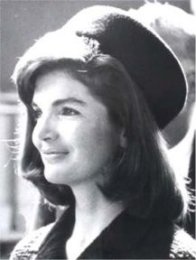
Jacqueline Kennedy, born July 28, 1929 Birthday of Jacqueline Bouvier Kennedy Onassis (July 28, 1929), wife of John F Kennedy; first lady 1961-1963.

Save

Tidbits of History, July 27

July 27 is:

Bagpipe Appreciation Day
Take Your Pants for a Walk Day Today is about getting out and getting exercise.
National Scotch Day

In 1663, the English Parliament passed the second Navigation Act, requiring that all goods bound for the American colonies have to be sent in English ships from English ports.

1775 – Founding of the U.S. Army Medical Department: The Second Continental Congress passed legislation establishing “an hospital for an army consisting of 20,000 men.” The U.S. Army Medical Department Museum — or AMEDD Museum — is located at Fort Sam Houston, San Antonio, Texas.

In 1789, the first U.S. federal government agency, the Department of Foreign Affairs, was established (it will be later renamed Department of State).

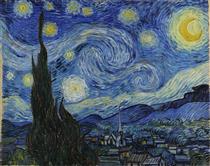
The Starry Night by Van GoghJuly 27, 1890, Vincent van Gogh shot himself and died two days later. According to Wikipedia:

“On 22 February 1890, Van Gogh suffered a new crisis that was ‘the starting point for one of the saddest episodes in a life already rife with sad events’. From February until the end of April he was unable to bring himself to write, though he did continue to draw and paint, which follows a pattern begun the previous May… For a year he ‘had fits of despair and hallucination during which he could not work, and in between them, long clear months in which he could and did, punctuated by extreme visionary ecstasy.’

On 27 July 1890, aged 37, Van Gogh is believed to have shot himself in the chest with a revolver (although no gun was ever found). There were no witnesses…. Biographer David Sweetman writes that the bullet was deflected by a rib bone and passed through his chest without doing apparent damage to internal organs—probably stopped by his spine. He was able to walk back to the Auberge Ravoux, and there was attended by two physicians; however, without a surgeon present, the bullet could not be removed. After tending to him as best they could, the two physicians left Van Gogh alone in his room, smoking his pipe. The following morning (Monday), Theo (his brother) rushed to be with Van Gogh as soon as he was notified, and found him in surprisingly good shape, but within hours Van Gogh began to fail due to an untreated infection caused by the wound. Van Gogh died in the evening, 29 hours after he supposedly shot himself. According to Theo, his brother’s last words were: “The sadness will last forever.”

See Wikiart for examples of paintings by VanGogh.

In 1921, insulin was isolated at Toronto University by Canadians Sir Frederick Banting and Charles Best. It proved an effective treatment for diabetes.

July 27, 1940 – The animated short A Wild Hare was released, introducing the character of Bugs Bunny.

per Mark Steyn, August 1, 2015:

“Bugs Bunny turned 75 earlier this week. Like the Queen, he has official and unofficial birthdays. Unofficially, Looney Tunes introduced a rabbit to the cast of characters in “Porky’s Hare Hunt” (1938), but the anthropomorphized lagomorph looked nothing like Bugs and, although he was voiced by Mel Blanc, he sounded more like Woody Woodpecker. So, officially, Bugs made his debut in the form we know him today on July 27th 1940 in Chuck Jones’ “A Wild Hare”.

July 27, 1953: The Korean War ended, though an official state of war still exists between North Korea and South Korea.

Tidbits of History, July 26

All or Nothing Day -From Examiner.com: “July 26 is the perfect day to either “go for it” or “forget it.” It is the day to quit making excuses and silence the beliefs that prevent you from moving forward. Go on and fully own your choices. Either forget them or embrace what you want and just do it.”

National Talk in an Elevator Day
Aunt and Uncle Day
National Coffee Milkshake Day
National Bagelfest

Feast day of Saint Anne, patron saint of Canada, patroness of housewives and of miners, mother of the Virgin Mary, wife of Joachim.

July 26, 1775, United States Post Office (U.S.P.O.) was created in Philadelphia under Benjamin Franklin.

New York headerNew York Ratification Day in 1788 New York became the eleventh state

  • Capital: Albany
  • Nickname: Empire State/Excelsior State
  • Bird: Bluebird
  • Flower: Rose
  • Tree: Sugar maple
  • Motto: Ever Upward

See our page for more interesting facts and trivia about New York.

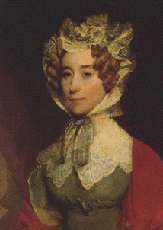
Louisa Adama, Born July 26, 1797Birthday of Louisa Johnson Adams (1797), wife of John Quincy Adams, first lady 1825-1829. Born in England, she was the only First Lady born outside the U.S. until Melania Trump, wife of President Donald Trump.
In 1847, the legislature of Liberia declared the nation an independent state. The American Colonization Society (ACS; in full, “The Society for the Colonization of Free People of Color of America”), established in 1817 by Robert Finley of New Jersey, was the primary vehicle to support the return of free African Americans to what was considered greater freedom in Africa. It helped to found the colony of Liberia in 1821–22 as a place for freedmen. From 1821, thousands of free black Americans moved to Liberia from the United States. Over twenty years, the colony continued to grow and establish economic stability.

Birthday of George Bernard Shaw (July 26, 1856), Irish-English dramatist, critic, novelist. Author of “Candida”, “Pygmalion” and many more.

July 26, 1878, in California, the poet and American West outlaw calling himself “Black Bart” makes his last clean getaway when he steals a safe box from a Wells Fargo stagecoach. The empty box will be found later with a taunting poem inside. He was later identified as British-born Charles Earl Bowles. (Read an interesting article about Black Bart at BenneyDavis.com.)

July 26, 1908, United States Attorney General Charles Joseph Bonaparte issued an order to immediately staff the Office of the Chief Examiner (later renamed the Federal Bureau of Investigation).

Tidbits of History, July 25

July 25 is:

Culinarians Day is a special day for anyone who cooks. That means just about everyone of us get to celebrate this day. You don’t have to be a chef, or a graduate of a culinary institute to celebrate this delicious day. You simply have to cook, and to enjoy the results.
Threading the Needle Day
National Hot Fudge Sundae Day
National Merry-Go-Round Day

Saint Christopher’s day, honoring the patron of motorists, bus drivers, and travelers.

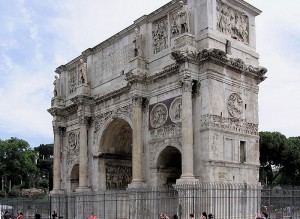
Arch of ConstantineThe Arch of Constantine was completed (315 A.D.) near the Colosseum in Rome to commemorate Constantine I’s victory over Maxentius at the Milvian Bridge.
Don Diego de Losada founded the city of Santiago de Leon de Caracas in 1567, modern-day Caracas, the capital city of Venezuela.

Anna Harrison, born July 25, 1775Birthday of Anna Symmes Harrison (July 25, 1775), wife of William Henry Harrison, First Lady in 1841. As William Henry and his wife, Anna, prepared to leave Ohio to head to Virginia to visit a daughter and then to Washington for the inauguration, Anna Harrison became ill and too weak for the journey. She was still mourning the August 12, 1839 death of her son Carter, and the June 9, 1840 death of her son Benjamin. President Harrison was inaugurated on March 4 and died on April 4th. Anna Harison never entered the White House.
Horatio Nelson lost more than 300 men and his right arm during the failed conquest attempt of Tenerife (Spain) on this date in 1797.

July 25, 1814, Battle of Niagara Falls (Lundy’s Lane); Americans defeated British.

The Congress created the Territory of Wyoming in 1868. Brigadier General John A. Campbell was appointed by President Ulyses S. Grant as the first territorial governor and Cheyenne became Wyoming Territory’s temporary capital. The territorial legislature granted women the right to vote, serve on juries and hold office, beginning in 1869 — the new law was the first of its kind in the country. It was hoped that such laws would attract more women immigrants.

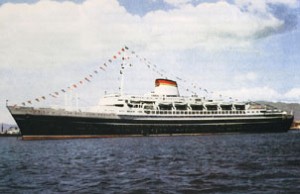
Andrea DoriaOn July 25, 1956 – 45 miles south of Nantucket Island, the Italian ocean liner SS Andrea Doria collided with the MS Stockholm in heavy fog and sank the next day, killing 51. Artifact recovery on Andrea Doria has resulted in additional loss of life. Sixteen scuba divers have lost their lives diving to the wreck, and diving conditions at the wreck site are considered very treacherous.
Tidbits of History, July 24

July 24 is:

Amelia Earhart Day
Cousins Day
National Tequila Day
National Jellybeans Day

Pioneer Day, celebrated in Utah. A legal holiday celebrating the entry of Brigham Young and the Mormon pioneers into the valley of the Salt Lake in 1847. After 17 months of travel, Brigham Young led 148 Mormon pioneers into Salt Lake Valley, resulting in the establishment of Salt Lake City.

July 24, 1534 – French explorer Jacques Cartier planted a cross on the Gaspé Peninsula and took possession of the territory in the name of Francis I of France.

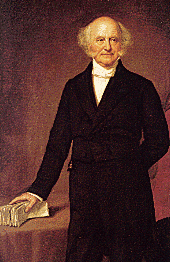
Van Buren died July 24, 1862Death of Martin Van Buren, eighth President of the United States, on July 24, 1862. He was 79 and died at Kinderhook, New York. He died of bronchial asthma and heart failure following a case of pneumonia. Van Buren was the first president who was born an American (rather than a British) citizen. The term “O.K.” was popularized because of Van Buren. He was from Kinderhook, New York, sometimes referred to as “Old Kinderhook” in speeches and print. O.K. Clubs soon formed to support Van Buren’s campaign. “O.K.” later came to mean all right.

Birthday of Amelia Earhart (Putnam) (July 24, 1898), American aviatrix, the first woman to fly across the Atlantic.

Explorer Hiram Bingham re-discovered the remains of Machu Picchu in Peru on July 24, 1911.

1967 – During an official state visit to Canada, French President Charles de Gaulle declared to a crowd of over 100,000 in Montreal: “Vive le Québec libre!” (“Long live free Quebec!”). The statement, interpreted as support for Quebec independence, delighted many Québécois but angered the Canadian government and many English Canadians.

July 24, 1998, Russell Eugene Weston Jr. burst into the United States Capitol and opened fire killing two police officers. He was later ruled to be incompetent to stand trial.

Added courtesy of Christy Stone: “On July 24, 1901, William Sydney Porter, better known to literature fans as O. Henry, was released from prison after serving a three-year jail term for embezzling from an Austin Texas bank. He had previously hidden from authorities in Honduras but returned to America when his wife was diagnosed with a terminal illness, and supported his young daughter from prison by writing stories.”
That, in itself, is quite a story on its own.

July 24, 2002, James Traficant was expelled from the United States House of Representatives on a vote of 420 to 1 after being convicted of 10 felony counts including taking bribes, filing false tax returns, racketeering, and forcing his Congressional staff to perform chores at his farm in Ohio and houseboat in Washington, D.C

Tidbits of History, July 23

July 23 is:
National Hot Dog Day
Vanilla Ice Cream Day

1829 – William Austin Burt patented the typographer, a precursor to the typewriter.

The Province of Canada was created by the Act of Union of 1840. It abolished the legislatures of Lower Canada and Upper Canada and established a new political entity, the Province of Canada, to replace them.

1866 Cincinnati Baseball club (Red Stockings) forms.

grant died July 23, 1885Death of Ulysses S. Grant, eighteenth President of the United States. He was born Hiram Ulysses Grant. Grant was president from 1869 to 1877. He had invested all his savings in a banking firm in which one of his sons was a partner. The firm went bankrupt in 1884 and the Grants lost all their money. Broke and sick with throat cancer, Grant undertook to write his memoirs for magazine serialization. At times he would fall unconscious from coughing fits and hemorrhages. He managed to complete the series just weeks before he died at his home in Mount McGregor, New York, on July 23, 1885. Mark Twain had the memoirs published in book form and turned over a half million dollars’ profit to the Grant family.

1904 Ice cream cone created during St Louis World Fair:
Per Wikipedia:

At the St. Louis World’s Fair in 1904, a Syrian/Lebanese concessionaire named Arnold Fornachou was running an ice cream booth. When he ran short on paper cups, he noticed he was next to a waffle vendor by the name of Ernest Hamwi, who sold Fornachou some of his waffles. Fornachou rolled the waffles into cones to hold the ice cream – and this is believed by some (although there is much dispute) to be the moment where ice-cream cones became mainstream.

Abe Doumar and the Doumar family can also claim credit for the ice cream cone. At the age of 16, Doumar began to sell paperweights and other items. One night, he bought a waffle from another vendor transplanted to Norfolk, Virginia from Ghent in Belgium, Leonidas Kestekidès. Doumar proceeded to roll up the waffle and place a scoop of ice cream on top. He then began selling the cones at the St. Louis Exposition. His “cones” were such a success that he designed a four-iron baking machine and had a foundry make it for him. At the Jamestown Exposition in 1907, he and his brothers sold nearly twenty-three thousand cones. After that, Abe bought a semiautomatic 36-iron machine, which produced 20 cones per minute and opened Doumar’s Cone’s and BBQ In in Norfolk, Virginia, which still operates at the same location over 100 years later.

Per Trivia-library.com

Charles E. Menches was an ice cream salesman at the Louisiana Purchase Exposition, the great fair in St. Louis, Mo. Whenever Menches visited a certain lady friend, he brought a bouquet of flowers. On one occasion, for a super date, he brought flowers and an ice cream sandwich. Because his lady friend lacked a vase for the flowers, she took one of the sandwich layers and curled it into the form of a vase. Then she rolled the other layer to contain the ice cream itself–and the ice cream cone was born.

In 2008, the ice cream cone became the official state food of Missouri

1929 – The Fascist government in Italy banned the use of foreign words.

July 23, 1989, FOX-TV tops ABC, NBC and CBS for 1st time (America’s Most Wanted)

Tidbits of History, July 22

July 22 is:
Hammock Day – Hammocks are a symbol of summer, leisure, relaxation and simple easy living.

Ratcatcher’s Day, commemorating the myth of the “Pied Piper of Hamelin” by Robert Browning

Spoonerism Day Spoonerisms are words or phrases in which letters or syllables get swapped. This often happens accidentally in slips of the tongue (or tips of the slung as Spoonerisms are often affectionately called!): For example:

  • Tease my ears (Ease my tears)
  • A lack of pies (A pack of lies)
  • It’s roaring with pain (It’s pouring with rain)
  • Wave the sails (Save the whales)

National Penuche Fudge Day Penuche is a fudge-like candy made from brown sugar, butter, and milk, using no flavorings except for vanilla.

Colony of Roanoke: a second group of English settlers arrived on Roanoke Island off North Carolina in 1587 to re-establish the deserted colony.

The Acts of Union of 1707 are agreed upon by commissioners from the Kingdom of England and the Kingdom of Scotland, which, when passed by each country’s Parliaments, led to the creation of the Kingdom of Great Britain.

On July 22, 1796, surveyors of the Connecticut Land Company named an area in Ohio “Cleveland” after Gen. Moses Cleaveland, the superintendent of the surveying party.

dedicated Oct 28, 1886Birthday of Emma Lazarus (July 22, 1849), American poet who wrote “The New Colossus”, the last part of which is engraved on a plaque and mounted inside the pedestal of the Statue of Liberty.:

Give me your tired, your poor,
Your huddled masses yearning to breathe free;
The wretched refuse of your teeming shore,
Send these, the homeless,
Tempest-tossed to me
I lift my lamp beside the golden door!

July 22, 1893, Katharine Lee Bates wrote “America the Beautiful,” in Colorado.

Birthday of Stephen Vincent Benét (July 22, 1898), American poet and novelist who was best known for “his book-length narrative poem of the American Civil War, ‘John Brown’s Body’ (1928), for which he won a Pulitzer Prize in 1929, and for two short stories, ‘The Devil and Daniel Webster‘ (1936) and ‘By the Waters of Babylon‘ (1937).

Tidbits of History, July 21

July 21 is:

National Junk Food Day
National Creme Brulee Day
National Ice Cream Day

Mrs. Cleveland born July 21, 1864Birthday of Frances Folsom Cleveland (July 21, 1864), wife of Grover Cleveland;  First lady 1885-1889 and 1893-1897. On June 2, 1886, Grover Cleveland, at age 49, married twenty-one year old Frances Folsom. It remains the only wedding at the White House of a sitting president. Upon leaving the White House in 1889, Mrs. Cleveland told the staff to take good care of things because “we will come back.” They did, in 1893.

July 21,1865 – In the market square of Springfield, Missouri, Wild Bill Hickok shot and killed Davis Tutt in what is regarded as the first western showdown.

According to factinate.com “Tutt and Wild Bill did not get along. They chased the same women and gambled fiercely with one another. Eventually, Wild Bill lost a gold watch to Tutt in a poker game. The watch was special to Hickok, so he asked Tutt not to wear it in public—but of course, Tutt refused. Tensions boiled over and on July 21, 1865, the two of them met in Springfield’s town square. What happened next is believed to have been one of the first quick-draw duels in history.
Tutt missed. Wild Bill didn’t. He shot his rival through the heart, and was subsequently arrested for murder. But this was a different time, and after a lengthy trial, a jury cleared Hickok of all charges.”

At Adair, Iowa, on July 21, 1873, Jesse James and the James-Younger Gang pulled off the first successful train robbery in the American Old West.

Birthday of Ernest Hemingway (July 21, 1899), American novelist, author of “The Old Man and the Sea” and “For Whom the Bell Tolls” and many others.

Willis Carrier created the first air conditioner in Buffalo, New York in 1902.

1925 – Scopes Trial: In Dayton, Tennessee, high school biology teacher John T. Scopes was found guilty of teaching evolution in class and fined $100.

The United States Senate ratified the North Atlantic Treaty in 1949.

At -89.2 degrees Celsius, the coldest-ever recorded temperature was measured in Antarctica on July 21, 1983 (equal to -128.6 Fahrenheit).

Harry Potter and the Deathly Hallows, the fastest-selling novel ever was published in 2007. It sold 15 million copies in the first 24 hours of its release.

July 21, 2011: End of the Space Shuttle program.

Tidbits of History, July 20

July 20 is:

Moon Day
Ugly Truck Day
National Lollipop Day
Fortune Cookie Day

Feast day of Saint Margaret; patron saint of all women in childbirth.

Birthday of Alexander the Great (356 BC), Macedonian king.

Birthday of Francesco Petrarca (July 20, 1304), commonly called “Petrarch”, Italian scholar and poet. He rediscovered Cicero’s letters and is often credited with initiating the Renaissance.

Canadian explorer Pierre Gaultier de Varennes et de La Vérendrye reached the western shore of Lake Michigan in 1738.

Nicéphore Niépce was awarded a patent by Napoleon in 1807 for the Pyréolophore, the world’s first internal combustion engine, after it successfully powered a boat upstream on the river Saône in France.

Birthday of Gregor Mendel (1822), Czech geneticist.

British Columbia joined the confederation of Canada in 1871.

Sitting BullSitting Bull, Sioux Indian chief ,surrendered to Major David H. Brotherton, commanding officer of Fort Buford, North Dakota . See History.com for 10 things you may not know about Sitting Bull.

Birthday of Edmund Hillary (1919), New Zealand mountaineer and explorer. On 29 May 1953, Hillary and Sherpa mountaineer Tenzing Norgay became the first climbers confirmed to have reached the summit of Mount Everest.

World War II: Adolf Hitler survived an assassination attempt on July 20, 1944 led by German Army Colonel Claus von Stauffenberg.

July 20, 1969 – Apollo program: Apollo 11 successfully made the first manned landing on the Moon in the Sea of Tranquility. Americans Neil Armstrong and Buzz Aldrin become the first humans to walk on the Moon almost 7 hours later. (US Time). Surely one of the most significant events of history in our lifetime.

Tidbits of History, July 19

July 19 is:

National Raspberry Cake Day
National Daiquiri Day

National Flitch Day As far back as 1104 in Dunmow Priory, England, monks offered a side of bacon (flitch) to any married couple, (at least a year and a day after their wedding), that had lived in harmony and fidelity for the past year and had not wished they were single again. Although some web sites state that July 19th is Flitch Day, the Flitch Ceremony in held every four years in mid-July during leap years. Flitch trials are still held in Great Dunmow, England. The jury consists of six maidens and six bachelors. Great Dunmow is believed to be the only location to have preserved the flitch of bacon custom. (A flitch of bacon is a side of “bacon” — half of a pig that has been cut in half lengthwise.)

64 – Great Fire of Rome: a fire begins to burn in the merchant area of Rome and soon burns completely out of control. According to a popular, but untrue legend, Nero fiddled as the city burned.

Lady Jane Grey is replaced by Mary I of England as Queen of England in 1553 after only nine days on the throne.

Nanfan Treaty1701 – Representatives of the Iroquois Confederacy sign the Nanfan Treaty, ceding a large territory north of the Ohio River to England.

Degas - Dance Class at the OperaBirthday of Edgar Degas (Hilaire-Germain-Edgar De Gas) (July 19, 1834), the French Impressionist painter identified with the subject of dance. See Wikiart for samples of his art.

Birthday of Charles Horace Mayo (July 19, 1865), American surgeon, specialist in goiters and preventive medicine, co-founder of the Mayo Clinic

1981 – In a private meeting with U.S. President Ronald Reagan, French Prime Minister François Mitterrand reveals the existence of the Farewell Dossier, a collection of documents showing that the Soviets had been stealing American technological research and development.

Ferraro nominatedCongresswoman Geraldine A. Ferraro of New York won the Democratic nomination for vice president at the party’s convention in San Francisco in 1984. Walter Mondale was the presidential candidate.