Tidbits of History, June 23

June 23 is National Columnists Day
National Pink Day
National Pecan Sandy Day
Laura Ingalls Wilder Pageant

1713 – The French residents of Acadia were given one year to declare allegiance to Britain or leave Nova Scotia, Canada. Those who left went to Louisiana and became “Cajuns”.

1860 – The United States Congress established the Government Printing Office and the Secret Service. They were established to arrest counterfeiters.

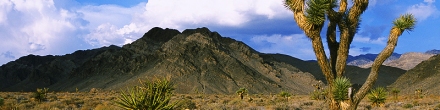
1887 – The Rocky Mountains Park Act created Canada’s first national park, Banff National Park, on June 23, 1887.

Ernie Shore and Babe Ruth1917 – In a game against the Washington Senators, Boston Red Sox pitcher Ernie Shore retired 26 batters in a row. He had replaced Babe Ruth who had been ejected for punching the umpire. The umpire, Clarence “Brick” Owens, called the first four pitches balls, walking the batter. Ruth thought two of the pitches had been strikes. Ruth reportedly yelled at him, “If you’d go to bed at night, you *expletive*, you could keep your eyes open long enough in the daytime to see when a ball goes over the plate!”

As you might imagine, the umpire didn’t take too kindly to this and told Ruth that if he didn’t shut up and get back to the mound, he’d be thrown out of the game. Ruth then yelled at him, “Throw me out and I’ll punch ya right in the jaw!” Owens then threw him out; Ruth attempted to punch him in the jaw but missed and hit a glancing blow behind the umpire’s ear, knocking Owens down. Ruth was fined $100 (about $1600 today), given a 10 game suspension, and forced to give a public apology. See story at This Day in History.

What made this particularly attacking of an umpire important was that, when Ernie Shore came in to replace Ruth on the mound, the catcher, Sam Agnew, (who incidentally replaced catcher Chester “Pinch” Thomas who was also ejected with Ruth), threw out the runner on first trying to steal second. Shore then retired the next 26 batters in a row without giving up a hit or a walk, winning the game 4-0. As such, this was ruled to be a “perfect game” because Shore had been on the mound for all 27 outs, though in the 1990s, it was downgraded to simply a “combined no-hitter”.

*** Comment from viewer Christy Stone:
Linda-
I missed sending you a story of another baseball no-hitter that was pitched on June 23rd (1971).
Philadelphia right hander Rick Wise no-hit the Reds at Cincinnati’s former home, Riverfront Stadium by a score 4-0.
Two interesting items about this game:
Wise himself drove in three runs by hitting TWO home runs, one a solo and the other a two-run job. Wise hit 15 career home runs.
Last batter retired to complete the no-hitter?
Pete Rose, line drive out to third baseman, John Vukovich.
*** Thanks Christy!

1931 – Wiley Post and Harold Gatty took off from Roosevelt Field, Long Island in an attempt to circumnavigate the world in a single-engine plane.

1947 – The United States Senate followed the United States House of Representatives in overriding U.S. President Harry Truman’s veto of the Taft-Hartley Act on June 23, 1947.

1960 – The United States Food and Drug Administration declared Enovid to be the first officially approved combined oral contraceptive pill in the world on June 23, 1960.

1972 – Sexual discrimination to any educational program receiving federal funds was prohibited by Title IX of the United States Civil Rights Act of 1964

2013 – Nik Wallenda walked across the Grand Canyon on a tight rope on June 23, 2013, becaming the first man to do so successfully .

Tidbits of History, June 22

June 22 is National Chocolate Eclair Day
National Onion Rings Day

English explorer Henry Hudson discovered the Hudson Strait and the immense Hudson Bay on his final expedition, while still searching for the Northwest Passage. On this date in 1611, after wintering on the shore of James Bay, Hudson wanted to press on to the west, but most of his crew mutinied. The mutineers cast Hudson, his son, and seven others adrift; the Hudsons and their companions were never seen again.

Galileo - June 22, 16331633  Galileo Galilei was forced by the Inquisition to “abjure, curse, and detest” his Copernican heliocentric views. “I, Galileo…do swear that I have always believed, do now believe and, with God’s aid shall believe hereafter, all that which is taught and preached by the … church. I must wholly forsake the false opinion that the sun is the center of the world and moves not, and that the earth is not the center of the world and moves….” He was then condemned to the “formal prison of the Holy Office” for an undetermined amount of time which would be served at the pleasure of his judges, and required to repeat the seven penitential psalms once a week for three years. The next day the Pope specified the prison sentence should be house arrest. Galileo was the first person to reveal that the Milky Way galaxy was composed of stars.

1740 –  King Frederik II of Prussia ended torture and guaranteed religion & freedom of the press.

1774 – The British passed the Quebec Act on June 22, 1774, setting out rules of governance for the colony of Quebec in British North America.

1870 –  The U.S. Congress created the Department of Justice.

1933 – Germany became a one political party country when Hitler banned parties other than the Nazis on June 22, 1933.

A Japanese submarine shelled Fort Stevens at the mouth of the Columbia River in 1942.

U.S. President Franklin Roosevelt signed the “GI Bill of Rights” June 22, 1944 to provide broad benefits for veterans of the war.

From Today in Science
1969 – The Cuyahoga River caught fire, triggering a crack-down on pollution in the river. In Cleveland, Ohio, oil-sodden floating debris on the Cuyahoga River ignited (perhaps by sparks from a passing train) and burned with flames reported up to five stories high. Although fire-fighters extinguished the blaze in a half-hour or so, it caused $50,000 in damage. For a century the river had been an open sewer for industrial waste, through the times when factory production seemed more important than worrying about the environment. Several fires had happened in the prior hundred years, but attitudes changed to outrage as this time, national attention was aroused. It became one of several disasters that led to the Clean Water Act and the Environmental Protection Agency (EPA). Determined remedial action for decades since has resulted in cleaner water, and improving aquatic life.

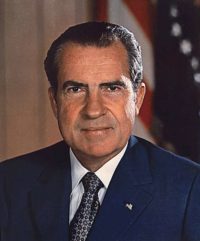
1970: U.S. President Richard Nixon signed an extension of the Voting Rights Act of 1965. It required the voting age in the United States to be 18.

From Today in Science
In 1978, evidence of the first moon of Pluto was discovered by astronomer James W. Christy of the Naval Observatory in Flagstaff, Ariz. when he obtained a photograph of Pluto that showed the orb to be distinctly elongated. Furthermore, the elongations appeared to change position with respect to the stars over time. After eliminating the possibility that the elongations were produced by plate defects and background stars, the only plausible explanation was that they were caused by a previously unknown moon orbiting Pluto at a distance of about 19,600 kilometers (12,100 miles) with a period of 6.4 days. The moon was named Charon, after the boatman in Greek mythology who took the souls of the dead across the River Styx to Pluto’s underworld.

1992  – The U.S. Supreme Court unanimously ruled that hate-crime laws that ban cross-burning and similar expressions of racial bias violated free-speech rights.

1998 – The U.S. Supreme Court ruled that evidence illegally obtained by authorities could be used at revocation hearings for a convicted criminal’s parole.

Tidbits of History, June 21

June 21 is Go Skate Day
Summer Solstice
National Peaches and Cream Day
World Sauntering Day
World Handshake Day

First day of summer

1749 – Halifax, Nova Scotia, was founded.

author of Federalist PaperPublication of Federalist Paper #80: The Powers of the Judiciary written by Alexander Hamilton in 1788.

1788 – The U.S. Constitution went into effect when New Hampshire became the ninth state to ratify it.

New Hampshire headerNew Hampshire Day, the ninth state

  • Capital: Concord
  • Nickname: Granite State
  • Bird: Purple finch
  • Flower: Purple lilac
  • Tree: White birch
  • Motto: Live free or die

See our page for New Hampshire for interesting facts and trivia about New Hampshire.

1834 – Cyrus McCormick patented the first practical mechanical reaper for farming. His invention allowed farmers to more than double their crop size.

1877 – The Molly Maguires, ten Irish immigrants convicted of murder, were hanged at the Schuylkill County and Carbon County, Pennsylvania prisons.

June 21, 1838 – Wheatstone’s discovery of the stereoscopic viewer was described in a paper, On some remarkable, and hitherto unobserved Phenomena of Binocular Vision, which he read to the Royal Society, London. This is the visual effect whereby pictures of an object drawn from slightly different viewpoints for individual eyes could be viewed with his stereoscope and give the perception of the object in three dimensions. He read a second part to this paper on 15 Jan 1852. This principle was later popularized with photographs to make stereo view cards.

June 21, 1893 – The Ferris Wheel was introduced at the World’s Columbian Exposition in Chicago, IL. It was invented by George Washington Ferris, a Pittsburgh bridge builder, for the purpose of creating an attraction like the Eiffel Tower in Paris. Each of the 36 cars carried 60 passengers, making a full passenger load of 150 tons. Ferris didn’t use rigid spokes: instead, he used a web of taut cables, like a bicycle wheel. Supported by two 140 foot steel towers, its 45 foot axle was the largest single piece of forged steel at the time in the world. The highest point of the wheel was 264 feet. The wheel and cars weighed 2100 tons, with another 2200 tons of associated levers and machinery. Ferris died just four years later, at the age of only 38.

1948 – Columbia Records introduced the long-playing record album in a public demonstration at the Waldorf-Astoria Hotel in New York, New York. Made of nonbreakable Vinilyte plastic, and designed for the new speed of 33-1/3 r.p.m., the records were developed by Dr. Peter Goldmark of Columbia Records. The 12 inch record could play 23 minutes per side, as compared to only 4 minutes per side on the earlier 78 rpm record. The LP was also an improvement by the quietness of its surfaces and its greatly increased fidelity. The first LP featured violinist Yehudi Menuhin. Columbia originated the term “LP” itself, which was copyrighted. Thus, although many other firms could make long-playing records, only Columbia could make an LP.

1963 – France announced that they were withdrawing from the North Atlantic NATO fleet.

1973 – In handing down the decision in Miller v. California 413 US 15, the Supreme Court of the United States establishes the Miller Test for obscenity in U.S. law. The U.S. Supreme Court ruled that states may ban materials found to be obscene according to local standards. The Miller Test has three parts:

  1. Whether “the average person, applying contemporary community standards”, would find that the work, taken as a whole, appeals to the prurient interest,
  2. Whether the work depicts or describes, in a patently offensive way, sexual conduct specifically defined by applicable state law,
  3. Whether the work, taken as a whole, lacks serious literary, artistic, political, or scientific value.

1989 – The U.S. Supreme Court ruled that burning the American flag as a form of political protest was protected by the First Amendment.

2001 – KhobarTower indictment on June 21, 20012001-06-21 – A federal grand jury in Alexandria, Virginia, indicted 13 Saudis and a Lebanese in the 1996 bombing of the Khobar Towers in Saudi Arabia that killed 19 American servicemen.

Tidbits of History, June 20

June 20 is Ice Cream Soda Day
National Vanilla Milkshake Day

Summer Solstice – longest day of the year.

In 451 Battle of the Catalaunian Plains: Roman and Visigoths forces defeated Attila the Hun in northeast France.

1782 – Great Seal approved June 20The U.S. Congress adopts the Great Seal of the United States in 1782.

1787-  Oliver Ellsworth moves at the Federal Convention of 1787 to call the government the “United States”.

1789 – Deputies of the French Third Estate took the Tennis Court Oath on June 20, 1789.

1819 The U.S. vessel SS Savannah arrived at Liverpool, England. It was the first steam-propelled vessel to cross the Atlantic, although most of the journey was made under sail.

1837 Queen Victoria succeeded to the British throne following the death of her uncle King William IV on this date in 1837. She was 18 years old. She ruled for 63 years till 1901.

Samuel Morse received the patent for the telegraph in 1840.

West Virginia headerWest Virginia Admission Day on June 20, 1863 as the thirty-fifth state.

  • Capital: Charleston
  • Nickname: Mountain State
  • Bird: Cardinal
  • Flower: Rhododendron
  • Tree: Sugar Maple
  • Motto: Mountaineers are always

See our page for West Virginia for other interesting facts and trivia about West Virginia.

1877 Alexander Graham Bell installed the world’s first commercial telephone service in Hamilton, Ontario, Canada.

1893 Lizzie Borden was acquitted of the murders of her father and stepmother.

On June 20, 1945, the United States Secretary of State, Edward Reilly Stettinius, Jr., approved the transfer of Wernher von Braun and his team of Nazi rocket scientists to America.

Toast of the Town, later The Ed Sullivan Show, made its television debut in 1948.

The so-called “red telephone” was established between the Soviet Union and the United States following the Cuban Missile Crisis in 1963.

In 1975 the movie “Jaws”, based on the book by Peter Benchley, directed by Steven Spielberg and starring Roy Scheider was released.

Tidbits of History, June 19

June 19 is World Sauntering Day
National Dry Martini Day
Juneteenth..see 1865

1586 -English colonists left Roanoke Island on June 19, 1586, after failing to establish England’s first permanent settlement in North America.

1846 -– The first officially recorded, organized baseball game was played under Alexander Cartwright’s rules on Hoboken, New Jersey’s Elysian Fields with the New York Base Ball Club defeating the Knickerbockers 23-1. Cartwright umpired.

1862 – The U.S. Congress in 1862 prohibited slavery in United States territories, nullifying Dred Scott v. Sandford.

1865 -– Over two years after the Emancipation Proclamation, slaves in Galveston, Texas, United States, are finally informed of their freedom. The anniversary is still officially celebrated in Texas and 41 other states as Juneteenth.

BD of Lou Gehrig, June 19
Birthday of Lou Gehrig (June 19, 1903), American baseball great, first baseman for the New York Yankees (1923-1939). Died of amyotrophic lateral sclerosis (ALS), now called Lou Gehrig’s disease. In his retirement speech, Gehrig said he thought he was “the luckiest man on the face of the earth”.

From Today in Science
In 1941, Cheerios whole grain oat cereal was invented to provide a more convenient and better tasting alternative to cooked oatmeal. Each piece of the O-shaped cereal is 1/2-inch diameter, and weighs .0025 ounce. Each little “O” puffs itself out, like popcorn, as it explodes from the barrel of a puffing gun at high temperature. It was first called Cheerie Oats when General Mills invented it, but that name had to be changed in 1945, to avoid a conflict with a competitor who suggested they had exclusive rights to use the word “oats” in a commercial name.

The Civil Rights Act of 1964 was approved after surviving an 83-day filibuster in the United States Senate. The most fervent opposition to the bill came from Senator Strom Thurmond (D-SC) and Senator Robert Byrd (D-W.Va.)

June 19, 1978 Garfield
Garfield, holder of the Guinness World Record for the world’s most widely syndicated comic strip, made its debut in 1978.

Tidbits of History, June 18

June 18 is Father’s Day see 1910

Go Fishing Day
International Panic Day
International Picnic Day
National Splurge Day
National Sushi Day

Waterloo Day, anniversary of the Battle of Waterloo, lost by Napoleon in 1815.

William Penn founded Philadelphia as the capital of the Province of Pennsylvania in 1682.

The charter of the Massachusetts Bay Colony was revoked via a scire facias writ issued by an English court on June 18, 1684 for the colony’s interference with the royal prerogative in founding Harvard College and other matters.
In English law, a writ of scire facias (Latin, meaning literally “make known”) was a writ founded upon some judicial record directing the sheriff to make the record known to a specified party, and in the case of letters, patents, and grants, requiring the defendant to show cause why the patent or grant should not be annulled and vacated.

Samuel Wallis, an English sea captain, sighted Tahiti June 18, 1767 and is considered the first European to reach the island. It is located 2,376 nautical miles south of Hawaii.

author of Federalist PaperPublication of Federalist Paper #79: The Judiciary Department written by Alexander Hamilton in 1788.

War of 1812: The U.S. Congress declared war on Great Britain, Canada, and Ireland on this day in 1812.

The Battle of Waterloo resulted in the defeat of Napoleon Bonaparte by the Duke of Wellington and Gebhard Leberecht von Blücher, forcing him to abdicate the throne of France for the second and last time in 1815.

Susan B. Anthony was fined $100 for attempting to vote in the 1872 presidential election. She was arrested for voting in Rochester, New York in violation of state laws that allowed only men to vote. Anthony argued that she had the right to vote because of the recently adopted Fourteenth Amendment to the U.S. Constitution, part of which reads, “No State shall make or enforce any law which shall abridge the privileges or immunities of citizens of the United States.”

1910 – The first Father’s Day was celebrated in Spokane, Washington in 1910.

Churchill, June 18, 1940“Finest Hour” speech by Winston Churchill on June 18, 1940.

‘What General Weygand has called the Battle of France is over: the Battle of Britain is about to begin. Upon this battle depends the survival of Christian civilisation. Upon it depends our own British life, and the long continuity of our institutions and our Empire. The whole fury and might of the enemy must very soon be turned on us. Hitler knows that he will have to break us in this island or lose the war. If we can stand up to him, all Europe may be freed and the life of the world may move forward into broad, sunlit uplands. But if we fail, then the whole world, including the United States, including all that we have known and cared for, will sink into the abyss of a new Dark Age made more sinister, and perhaps more protracted, by the lights of perverted science. Let us therefore brace ourselves to our duty and so bear ourselves that, if the British Empire and its Commonwealth last for a thousand years, men will still say: “This was their finest hour” ‘.

Tidbits of History, June 17

June 17 is Eat Your Vegetables Day
National Apple Strudel Day
National Cherry Tart Day

Bunker Hill Day in honor of the Battle of 1775.

Sir Francis Drake claimed a land he calls Nova Albion (modern California) for England on June 17, 1579.

June 17 death of Mumtaz Mihal On June 17, 1631, Mumtaz Mahal died during childbirth. Her husband, Mughal emperor Shah Jahan I, spent the next 17 years building her mausoleum, the Taj Mahal.

1673 – French explorers Jacques Marquette and Louis Jolliet reached the Mississippi River and become the first Europeans to make a detailed account of its course.

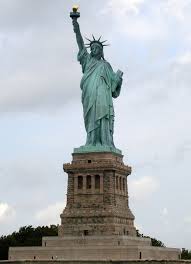
dedicated Oct 28, 1886June 17, 1885 – The Statue of Liberty arrived in New York Harbor.

Watergate scandal: On June 17, 1972, five White House operatives are arrested for burgling the offices of the Democratic National Committee, in an attempt by some members of the Republican party to illegally wiretap the opposition.

From Today in Science:
Birthday of George Cormack (June 17, 1870), Co-inventor of Wheaties cereal. In 1921, a health clinician in Minneapolis, while mixing a batch of bran gruel for his patients, spilled some of the mix on a hot stove where it sizzled into a crisp flake. After tasting the very first Wheaties prototype, he took the idea to the Washburn Crosby Company, where the head miller, George Cormack, took on the task of trying to strengthen the flakes to keep them from turning to dust inside a cereal box. Cormack tested 36 varieties of wheat before he developed the perfect flake. It was introduced in test marketing in Nov 1924. Originally named Washburn’s Gold Medal Whole Wheat Flakes, the name Wheaties was chosen by a company wide contest won by Jane Bausman, the wife of the export manager. Numerous other entries included Nutties and Gold Medal Wheat Flakes.

Save

Tidbits of History, June 16

June 16 is Fresh Veggies Day
National Fudge Day

1755 – French and Indian War: the French surrender Fort Beauséjour to the British, leading to the expulsion of the Acadians. Fort Beauséjour is a large, five-bastioned star fort on the Isthmus of Chignecto in eastern Canada, a neck of land connecting the present-day province of New Brunswick with that of Nova Scotia.

June 16, 1816 – Lord Byron read Fantasmagoriana to his four house guests at the Villa Diodati: Percy Shelley, Mary Shelley, Claire Clairmont, and John Polidori. He then challenged each guest to write a ghost story, which culminated in Mary Shelley writing the novel Frankenstein, John Polidori writing the short story The Vampyre, and Byron writing the poem Darkness.

Abraham Lincoln delivered his House Divided speech in Springfield, Illinois on June 16, 1858.

“A house divided against itself cannot stand….
I believe this government cannot endure, permanently half slave and half free.
I do not expect the Union to be dissolved — I do not expect the house to fall — but I do expect it will cease to be divided.
It will become all one thing or all the other.”

From “Today in Science”:
In 1903, Pepsi-Cola Co. registered the Pepsi-Cola trademark with the U.S. Patent Office. Pharmacies at the time were favorite gathering places. To increase business at his store’s soda fountain, pharmacist Caleb D. Bradham created a soft drink. In the summer of 1898, he mixed carbonated water, sugar, vanilla, oils, pepsin, and kola nut extract. Customers at in his pharmacy in New Bern, N.C., liked the beverage and called it Brad’s Drink. As its popularity grew, Bradham changed the name to Pepsi-Cola. The name emphasized the pepsin and kola nut extract it contained for their supposed health benefits. Pepsin, an enzyme, was thought to aid in digestion, and caffeine, an alkaloid found in kola nuts, was believed to bestow beneficial energy.

Also from “Today in Science”:
Cracker Jack invented June 16In 1893, Cracker Jack was invented by R.W. Rueckheim, a unique popcorn, peanuts, and molasses confection which he introduced at the World’s Columbian Exposition, Chicago’s First World Fair. The company he formed with his brother Louis as a partner was called F.W. Rueckheim and Brother. In 1896, Louis discovered the process for keeping the molasses-covered popcorn morsels from sticking together. This secret formula is still in use to this day. In 1912, “A Prize in Every Box” was introduced with toys inserted into every package. In 1918, Sailor Jack and his dog, Bingo, first appeared on packages. Sailor Jack was modeled after F.W. Rueckheim’s young grandson, Robert.

Save

Tidbits of History, June 15

June 15 is World Gin Day
Smile Power Day
Fly a Kite Day

Father’s Day

Feast day of Saint Bernard, born about 1020 in France, died in June of 1081. Patron saint of mountaineers, skiers, skateboarding, backpacking and the Alps. Legend has it that he decided to devote himself to the service of the Church and refused an honorable marriage proposed by his father. It is said that he had to sneak out of the castle on the night before an arranged wedding, and that during his flight from the castle, he threw himself from his window, only to be captured by angels and lowered gently to the ground 40 feet below. As an archdeacon, Bernard set up a hospice at the highest point of a pass across the Pennine Alps, 8000 feet above sea level. The pass was used by French and German pilgrims on their way to Rome and was subject to avalanches, and snow drifts. It is because of this that the rescue St. Bernard dogs were named.

Magna Carta Day , anniversary of the day in 1215 that King John signed the Magna Carta.

In 1752, Benjamin Franklin proved that lightning is electricity (traditional date, the exact date is unknown).

1775 – American Revolutionary War: George Washington was appointed commander-in-chief of the Continental Army.

1776 – Delaware Separation Day Delaware voted to suspend government under the British Crown and separate officially from Pennsylvania.

1804 – New Hampshire approves the Twelfth Amendment to the United States Constitution, ratifying the document. The Twelfth Amendment refined the process whereby a President and a Vice President are elected by the electors of the Electoral College.

Arkansas headerArkansas admission day in 1836 as the twenty-fifth state

  • Capital: Little Rock
  • Nickname: The Natural State/Wonder State/Land of Opportunity
  • Bird: Mockingbird
  • Flower: Apple Blossom
  • Tree: Pine
  • Motto: The People Rule

See our page about Arkansas for more interesting facts and trivia about Arkansas.

1846 – The Oregon Treaty established the 49th parallel as the border between the United States and Canada, from the Rocky Mountains to the Strait of Juan de Fuca.

James K. Polk May 11 ,184614Death of ‎James K. Polk , eleventh President of the United States on June 15, 1849. He died in Nashville, Tennessee at age 53. He lived only 103 days after leaving the presidency.

Arlington National Cemetery was established. George Washington Parke Custis, grandson of Martha Washington, acquired the land that now is Arlington National Cemetery in 1802, and began construction of Arlington House. The estate passed to Custis’ daughter, Mary Anna, who had married United States Army officer Robert E. Lee. Upon her death, the Arlington estate passed to her eldest son, George Washington Custis Lee. On July 16, 1862, Congress passed legislation authorizing the U.S. federal government to purchase land for national cemeteries for military dead, and put the U.S. Army Quartermaster General Montgomery C. Meigs in charge of this program. Within weeks, his staff reported that Arlington Estate was the most suitable property in the area. The property was high and free from floods (which might unearth graves), it had a view of the District of Columbia, and it was aesthetically pleasing. It was also the home of the leader of the armed forces of the Confederate States of America, and denying Robert E. Lee use of his home after the war was a valuable political consideration. Meigs formally authorized establishment of burials on June 15, 1864.

Tidbits of History, June 14

June 14 is Flag Day
Pop Goes the Weasel Day
National Strawberry Shortcake Day

June 14, 1642 – First compulsory education law in America was passed by Massachusetts.

American Revolutionary War: the Continental Army was established by the Continental Congress on June 14, 1775, marking the birth of the United States Army.

Flag Day established June 14 1777 – The Stars and Stripes was adopted by Congress as the Flag of the United States. (Celebrated as Flag Day)

author of Federalist PaperPublication of Federalist Paper #78: The Judiciary Department written by Alexander Hamilton in 1788.

In 1789, whiskey distilled from maize was first produced by American clergyman, the Rev Elijah Craig. It is named Bourbon because Rev. Craig lived in Bourbon County, Kentucky.

Julia Tyler, born June 14Birthday of Julia Gardiner Tyler (June 14, 1816), second wife of ‎John Tyler, first lady 1844-1845. John Tyler fathered eight children with his first wife, Letitia and seven more with his second wife, Julia.

1846 – Bear Flag Revolt begins – Anglo settlers in Sonoma, California, start a rebellion against Mexico and proclaim the California Republic.

Donald J Trump, President1946 – Birthday of ‎President Donald J. Trump, forty-fifth president of the U.S.A.

In 1951, the Univac-1 was unveiled in Washington, DC. and dedicated as the world’s first commercial computer. The Univac was manufactured for the U.S. Census Bureau by Remington Rand Corp. The massive computer was 8 feet high, 7-1/2 feet wide and 14-1/2 feet long. It could retain a maximum of 1000 numbers and was able to add, subtract, multiply, divide, sort, collate and take square and cube roots. Its transfer rate to and from magnetic tape was 10,000 characters per second. This was five years after the ENIAC, the first electronic computer in the U.S., was completed.

1954 – ‎U.S. President Dwight D. Eisenhower signed a bill into law that placed the words “under God” into the United States Pledge of Allegiance.

Disneyland Monorail System opened to the public in Anaheim, California on June 14, 1959, the first daily operating monorail system in the Western Hemisphere.

On June 14, 1972, the insecticide DDT was banned from use in the U.S. after 31 Dec 1972, by executive order of the Environmental Protection Agency.

Save