
March 2 is National Banana Cream Pie Day
Birthday of Samuel Houston (1793), first president of the Republic of Texas.
1799 – Congress standardized US weights & measures. Under the United States Constitution, Article 1 Section 8, Congress shall have power “To coin Money, regulate the Value thereof, and of foreign Coin, and fix the Standard of Weights and Measures”.
The U.S. Congress passed the Act Prohibiting Importation of Slaves on March 2, 1807, disallowing the importation of new slaves into the country. It took effect in 1808, the earliest date permitted by the United States Constitution.
This legislation was promoted by President Thomas Jefferson, who called for its enactment in his 1806 State of the Union Address. He had promoted the idea since the 1770s. It reflected the force of the general trend toward abolishing the international slave trade which Virginia, followed by all the other states, had prohibited or restricted.
1819 – Territory of Arkansas was organized.
Texas Independence Day is the anniversary of Texas’ Declaration of Independence from Mexico in 1836.
1853 – Territory of Washington was organized after separating from Oregon Territory
1861 – US created Dakota & Nevada Territories out of the Nebraska & Utah territory
Baseball batter’s box was officially adopted in 1874
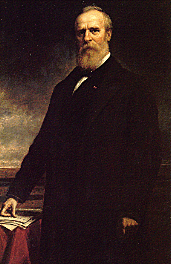 Rutherford B Hayes was inaugurated on this day in 1877. The U.S. presidential election held on Nov. 7, 1876 was one of the most contentious in U. S. History. Democrat Samuel J. Tilden won the popular vote with 4,288,546 and Republican, Rutherford Hayes got 4,034,311. Tilden won 203 electoral votes to Hayes’s 166. The Republicans disputed the votes in three southern states, claiming voter intimidation (specifically they claimed that Negroes had been prevented from going to the polls) by the Democrats in Florida, Louisiana, and South Carolina. (There was also a controversy regarding the electors from the state of Oregon.) There were 20 electoral votes disputed. To resolve the dispute, Congress, in January 1877, established an electoral commission made up of five U.S. representatives, five senators, and five Supreme Court justices. Three of the justices were Republicans. The commission awarded Hayes all 20 of the disputed electoral votes. Democratic leaders accepted Hayes’s election in exchange for Republican promises to withdraw federal troops from the South, provide federal funding for internal improvements in the South, and name a prominent Southerner to the president’s cabinet. When the federal troops were withdrawn, the Republican governments in Florida, Louisiana, and South Carolina collapsed, bringing Reconstruction to a formal end. Under the so-called Compromise of 1877, the national government would no longer intervene in southern affairs. This would permit the imposition of racial segregation and the disfranchisement of black voters.The voters were not pleased with the outcome, referring to the president as RutherFRAUD Hayes. He served just one term.
1897 – U.S. President Cleveland vetoed legislation that would have required a literacy test for immigrants entering the country.
President McKinley signed a bill creating Mt Rainier National Park (5th in US) in 1899.
Birthday of Dr. Seuss (March 2, 1904), aka Theodor Seuss Geisel, writer of 46 children’s books.
The film King Kong opened at New York’s Radio City Music Hall in 1933.
March 2, 1956 – Morocco declared its independence from France.
1965 – The movie, “Sound Of Music,” opened. It featured music by Richard Rodgers, lyrics by Oscar Hammerstein II and included songs: My Favorite Things”, “Edelweiss”, “Climb Every Mountain”, and “Do-Re-Mi”. See BenneynLinda.com for more information.
1983 – Compact Discs and players were released for the first time in the United States and other markets. They had previously been available only in Japan.
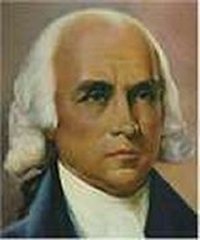 Publication of

 Soviet Premier
 The flowers for the month are the jonquil or daffodil…

 Birthday of John Steinbeck , (February 27, 1902), author of Tortilla Flat (1935), Cannery Row (1945), the multi-generation epic East of Eden (1952), and the novellas Of Mice and Men (1937) and The Red Pony (1937) as well as the Pulitzer Prize-winning The Grapes of Wrath (1939),
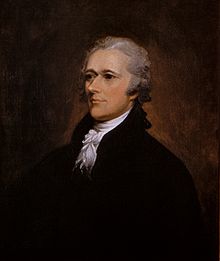 Publication of
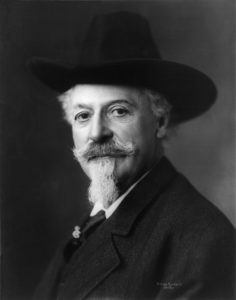 Birthday of William Frederick Cody (
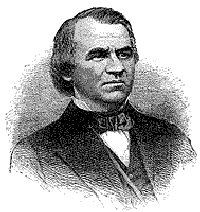
 Buckingham Palace announced the engagement of Britain’s Prince Charles to Lady Diana Spencer. They married July 29, 1981; had two sons, William in 1982 and Harry in 1984; divorced in 1996. Diana died in a car crash August 31, 1997. Charles married Camilla Parker Bowles in April 2005. He became King Charles III upon the death of his mother, Queen Elizabeth, on Sept 8, 2022.
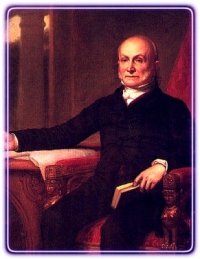 “This is the last of Earth! I am content!” were the final words spoken by
  Iwo Jima Day, anniversary of the raising of the American flag atop Mount Suribachi in 1945
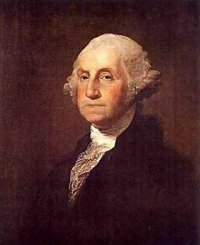 Birthday of
 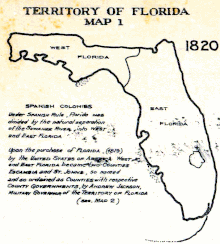 1821 Spain sold eastern
  2006 “Insurgents” (aka barbaric terrorists), affiliated with Al-Qaida, destroyed the golden dome of one of Iraq’s holiest Shiite shrines, the