Tidbits of History, July 5

July 5 is the 187th day of the year in the Gregorian calendar. There are 179 days remaining until the end of the year.

Work-a-holics Day
National Apple Turnover Day

Birthday of Jonathan Carter Hornblower (July 5, 1753), English mining engineer who invented the first compound steam engine for which he claimed better efficiency, using two cylinders of unequal size attached to the same beam.
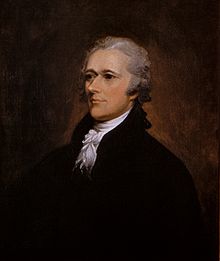
author of Federalist PaperPublication of Federalist Paper #83: The Judiciary in Relation to Trial by Jury written by Alexander Hamilton in 1788.

Birthday of Phineas Taylor (P.T.) Barnum (July 5, 1810), American museum administrator and circus owner. He is remembered for his showmanship. He began as proprietor of the American Museum in New York City, which included not just freak shows, but also serious scientific exhibits, for which he actively collected natural history specimens.
See 10 things you may not know about P. T. Barnum from History.com.

In 1865, a lower speed limit – of 2 mph in town and 4 mph in the country – was imposed in Britain under the Locomotives and Highways Act. The “Red Flag” Act also required three drivers for each vehicle – two on the vehicle and one to walk ahead carrying a red flag. It was repealed in 1896, after nearly two decades of strong support from horse interests. The repeal of the act was celebrated by a 60 mile car run from London to Brighton – at the new and previously illegal speed of 12 mph.

Spam, the luncheon meat, was introduced into the market by the Hormel Foods Corporation on July 5, 1937. The word “spam” referring to unsolicited electronic bulk messages comes from a 1970 sketch of the BBC television comedy series” Monty Python’s Flying Circus”. The sketch is set in a cafe where nearly every item on the menu includes Spam canned luncheon meat.

First bikini bathing suit displayed (Paris) in 1946.

1971 – The Twenty-sixth Amendment to the United States Constitution, lowering the voting age from 21 to 18 years, is formally certified by President Richard Nixon. It was proposed by Congress on March 23, 1971, and ratified on July 1, 1971 by North Carolina, the 38th state to do so, the quickest ratification of an amendment in history. It has since been ratified by an additional 5 states. No action has been taken on the amendment by the states of Florida, Kentucky, Mississippi, Nevada, New Mexico, North Dakota, or Utah.

In 1996, Dolly, a cloned sheep, was born at the Roslin Institute, Edinburgh, Scotland.
Tidbits of History, July 4

July 4, Independence Day, the birthday of the United States, celebrating the signing of the Declaration of Independence in 1776.

National Country Music Day
Sidewalk Egg Frying Day
National Barbecued Spareribs Day
Caesar Salad Day

July 4, 1803, the Louisiana Purchase was announced to the American people.

Birthday of Nathaniel Hawthorne in 1804. American novelist who wrote “The Scarlet Letter” and the “House of Seven Gables”.

Birthday of Stephen Collins Foster in 1826. American composer remembered for writing “Oh! Susanna”, “Old Folks at Home”, and “Beautiful Dreamer” along with others.

July 4, 1826: US Presidents John Adams , second President of the United States, and Thomas Jefferson , third President of the United States, died on the same day. Adams was 90 years old; Jefferson was 83.

July 4, 1831, death of James Monroe , fifth President of the United States. He died in New York City at age 73 from heart failure and tuberculosis.

“America (My Country ‘Tis of Thee)” is first sung in Boston on this day in 1832. There are eight different verses to the song.

My country, ’tis of Thee,
Sweet Land of Liberty
Of thee I sing;
Land where my fathers died,
Land of the pilgrims’ pride,
From every mountain side
Let Freedom ring.

The melody is the same as “God Save the Queen” or “God Save the King”, national anthem of Great Britain:

God save our gracious Queen
Long live our noble Queen
God save The Queen!
Send her victorious
Happy and glorious
Long to reign over us
God save The Queen!

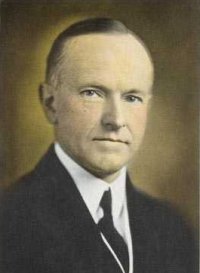
January 5, Coolidge diedBirthday of Calvin Coolidge in 1872; 30th president of the United States.

Katherine Lee Bates published “America the Beautiful” in 1895.

O beautiful for spacious skies,
For amber waves of grain,
For purple mountain majesties
Above the fruited plain!
America! America!
God shed his grace on thee
And crown thy good with brotherhood
From sea to shining sea!

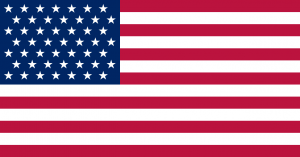
49 star flag, July 4, 1959July 4, 1959- America’s new 49-star flag honoring Alaska statehood unfurled. (7 rows of 7 stars)
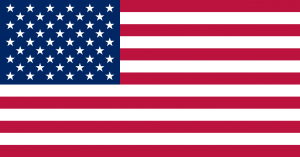
July 4, 1960July 4, 1960, America’s new 50-star flag honoring Hawaiian statehood unfurled.( 5 rows of 6 stars plus 4 rows of 5 stars)
Preamble to the Constitution:

We the People of the United States, in Order to form a more perfect Union, establish Justice, insure domestic Tranquility, provide for the common defense, promote the general Welfare, and secure the Blessings of Liberty to ourselves and our Posterity, do ordain and establish this Constitution for the United States of America.

Save

Tidbits of History, July 3

July 3 is:
Compliment Your Mirror Day
Disobedience Day
Stay out of the Sun Day
National Chocolate Wafer Day
Eat Beans Day

July 3, 1608, Québec City was founded by Samuel de Champlain.

1775 – American Revolutionary War: George Washington took command of the Continental Army at Cambridge, Massachusetts.

In 1806, Michael Keens, a market gardener of Isleworth near London, exhibited the first cultivated strawberry that combined size, flavor, and color at the Royal Horticultural Society. The 600 strawberry varieties found today stem from five or six original wild species, and are a member of the rose family. The wild, small, fragrant forest strawberry of Europe was available to the Romans in the Middle Ages. Europeans discovered wild strawberries in Virginia when their ships landed there in 1588, grown by local American Indians. When Virginia sent a better flavored strawberry to England in 1642, and a large white strawberry from Chile was introduced in 1806, the big fruit we know today, emerged. Strawberries are unique, because they are the only fruit with seeds on the outside.

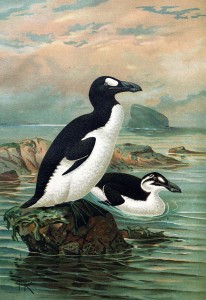
Great Auk extinct, July 3, 1844July 3 – 1844: The Great Auk becomes extinct, after the last group was killed in Iceland.

Idaho header Idaho Admission Day in 1890 as the forty-third state

  • Capital: Boise
  • Nickname: Gem state
  • Bird: Mountain bluebird
  • Flower: Syringa (mock orange)
  • Tree: Western white pine
  • Motto: It is forever

See our page Idaho for more interesting facts and trivia about Idaho.

In 1929, foam rubber was developed at the Dunlop Latex Development Laboratories in Birmingham. British scientist E.A. Murphy whipped up the first batch in 1929, using an ordinary kitchen mixer to froth natural latex rubber. His colleagues were unimpressed – until they sat on it. Within five years it was everywhere, on motorcycle seats, on London bus seats, Shakespeare Memorial Theatre seats, and eventually in mattresses.

Save

Tidbits of History, July 2

July 2 is:
I Forgot Day
World UFO Day
National Anisette Day

1776 – The Continental Congress adopted a resolution which severed ties with the Kingdom of Great Britain although the wording of the formal Declaration of Independence was not approved until July 4.

author of Federalist PaperPublication of Federalist Paper #82: The Judiciary written by Alexander Hamilton in 1788.

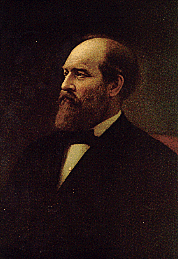
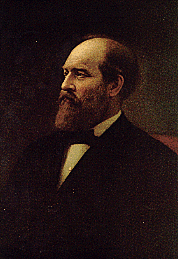
July 2, 1881July 2, 1881: Charles J. Guiteau shot and fatally wounded U.S. President James Garfield at the Baltimore and Potomac Railroad Station in Washington, D.C. Garfield eventually died from an infection on September 19.
Guiteau had written a speech in support of Ulysses S Grant prior to the election of 1880. He changed “Grant” to “Garfield” after Garfield secured the nomination. For this speech, which he believed had helped Garfield’s election, he believed he was entitled to a consulship to Vienna but was willing to settle for Paris. He warned several Washington officials that they would come to grief if his demands were not met.

Guiteau’s family had judged him to be insane and had attempted to have him committed but Gaiteau had escaped. He purchased a .442 Webley caliber British Bulldog revolver for $15.00 (which he had borrowed). He followed Garfield around Washington for a whole month before shooting the President. While awaiting trial, Guiteau began making plans for a lecture tour and considered running for president in 1884. He was found guilty in January of 1882 and was hanged June 30, 1882.

In 1922, the first modern U.S. carillon, (a series of chromatic bells) installed in the Church of Our Lady of Good Voyage, Gloucester, Mass., was blessed by Cardinal O’Connell. Our Lady of Good Voyage Church, with its brilliant blue domes, was modeled after the Santa Maria Madelena church, Pico, Azores. Inside, there are more than twenty-five ship models and stained glass and statuary depictions of Our Lady. The church includes one of the oldest sets of full carillon bells in the United States.

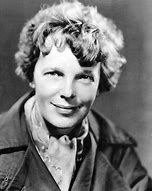
Amelia EarhartJuly 2, 1937: American aviation pioneer, Amelia Earhart, disappeared in the Central Pacific during an attempt to fly around the world at the equator.
1956 – Elvis Presley recorded “Hound Dog” & “Don’t Be Cruel”.

1962 – The first Wal-Mart store opened for business in Rogers, Arkansas.

1964 – U.S. President Lyndon B. Johnson signed the Civil Rights Act of 1964, meant to prohibit segregation in public places.

Tidbits of History, July 1

July 1st is the 183rd day of the year…midpoint…there are 183 days left.

July 1 is also:
Creative Ice Cream Flavors Day
International Joke Day (not “Tell a Joke Day” which is on August 16th)
National Gingersnap Day

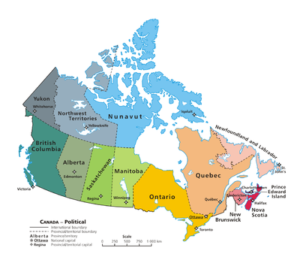
Political map of CanadaDominion Day, now called Canada Day, a national holiday commemorating the Confederation of the provinces of Canada into the Dominion of Canada under the terms of the British North America Act of 1867. Sir John A. Macdonald was sworn in as the first Prime Minister of Canada.
July 1, 1766 – Jean-François Lefebvre de la Barre was a young French nobleman. He became famous for having been tortured and beheaded before his body was burnt on a pyre along with a copy of Voltaire’s “Philosophical Dictionary” nailed to his torso for his crime of not saluting a Roman Catholic religious procession in Abbeville, France.

July 1, 1862, Internal Revenue Law imposed first federal taxes on inheritance, tobacco and on incomes over $600 (progressive rate)

Polygamy

Congress outlawed polygamy by passing the Morrill Anti-Bigamy Act in 1862. Lincoln gave Brigham Young tacit permission to ignore the Morrill Act in exchange for not becoming involved with the Civil War. General Patrick Edward Connor, commanding officer of the federal forces garrisoned at Fort Douglas, Utah beginning in 1862, was explicitly instructed not to confront the Mormons over this or any other issue.

The Morrill Anti-Bigamy Act was amended in 1882 by the Edmunds Act, a United States federal statute, signed into law on March 23, 1882 by president Chester A. Arthur, declaring polygamy a felony. The Edmunds Act also prohibited “bigamous” or “unlawful cohabitation” (a misdemeanor), thus removing the need to prove that actual marriages had occurred. It was passed in a wave of Victorian-era reaction to the perceived immorality of polygamy, or at least polygyny (one man, more than one wife), which was often compared to slavery. The act not only reinforced the 1862 Morrill Anti-Bigamy Act but also revoked polygamists’ right to vote, made them ineligible for jury service, and prohibited them from holding political office.

The Edmunds–Tucker Act was passed in response to the dispute between the United States Congress and The Church of Jesus Christ of Latter-day Saints (LDS Church) regarding polygamy. The act disincorporated both the LDS Church and the Perpetual Emigration Fund on the grounds that they fostered polygamy. It dissolved the corporation of the church and directed the confiscation by the federal government of all church properties valued over a limit of $50,000. The act was repealed in 1978.
The LDS Church banned the practice of polygamy in 1904.

Weights and Measures
The U.S. National Bureau of Standards became effective in 1901. It had been established under an Act of Congress (31 Stat. 1449) approved 3 Mar 1901 that expanded the functions of the Office of Standard Weights and Measures, previously part of the Coast and Geodetic Survey. Its duties included the custody of the standards; comparison of standards; construction of standards; testing and calibration of standard measuring apparatus; and determination of physical constants and the properties of materials which are of great importance to scientific or manufacturing interests. The Bureau became the National Institute of Standards and Technology (N.I.S.T) in 1988.

SOS was adopted as the international distress signal on July 1, 1908.

ZIP codes (Zoning Improvement Plan) were introduced for United States mail in 1963.

Tidbits of History, June 30

June 30 is Meteor Day
Don’t Sing in the Shower Day – Alfred Hitchcock’s movie “Psycho” premiered on June 30, 1960.
Go for a Stroll Downtown Day
National Ice Cream Soda Day
National Mai Tai Day

An Act on 1 Oct 1890 reserved additional areas of forest land in California, and created Yosemite National Park under the control of the Secretary of the Interior.

Garfield's Assassin hung, June 301882 – Charles J. Guiteau was hanged in Washington, D.C. for the assassination of U.S. President James Garfield.
1905 – Albert Einstein published the article On the Electrodynamics of Moving Bodies, in which he introduces special relativity.

A meteor explosion in Siberia on June 30, 1908 knocked down trees in a 40-mile radius and struck people unconscious some 40 miles away.

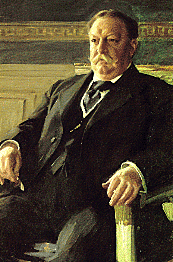
Taft nominated Chief Justice June 301921 – U.S. President Warren G. Harding appointed former President William Howard Taft as Chief Justice of the United States.
When asked about his time on the Supreme Court and as President, Chief Justice Taft allegedly remarked, “I don’t remember that I ever was President.”

1934 – The Night of the Long Knives, Adolf Hitler’s violent purge of his political rivals in Germany, took place.

Margaret Mitchell’s book, “Gone with the Wind,” was published in 1936.

1953 – The first Chevrolet Corvette rolled off the assembly line in Flint, Michigan. It sold for $3,250.

1962 – Los Angeles Dodger Sandy Koufax pitched his first no-hitter in a game with the New York Mets.

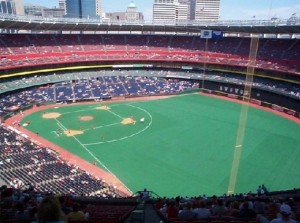
RiverfrontStadium opens June 301970 – The Cincinnati Reds moved to their new home at Riverfront Stadium. It was the first stadium to have its entire surface covered by AstroTurf.
1971 – Ohio ratified the 26th Amendment to the U.S. Constitution, reducing the voting age to 18, thereby putting the amendment into effect.

The right of citizens of the United States, who are 18 years of age or older, to vote, shall not be denied or abridged by the United States or any state on account of age.

Russian ballet dancer Mikhail Baryshnikov defected in Toronto, Canada in 1974.

1986 – The U.S. Supreme Court ruled in Bowers v. Hardwick that states can outlaw homosexual acts between consenting adults. Seventeen years after Bowers v. Hardwick, the Supreme Court directly overruled its decision in Lawrence v. Texas, and held that anti-sodomy laws are unconstitutional.

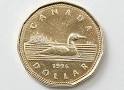
Loonie introduced June 301987 – The Royal Canadian Mint introduced the $1 coin, known as the Loonie.
1994 – The U.S. Figure Skating Association stripped Tonya Harding of the 1994 national championship and banned her from the organization for life for an attack on rival Nancy Kerrigan.

Save

Tidbits of History, June 29

June 29 is:

National Almond Buttercrunch Day
Camera Day
Hug Holiday – originally designed to encourage hugging or other demonstrations of affection to those who are sick, or elderly or in the hospital.  Has evolved into hugging anyone who needs a hug!!

Waffle Iron Day

Massachusetts declared itself an independent commonwealth on June 29, 1652.

June 29, 1767 – The British Parliament approved the Townshend Revenue Acts. The acts imposed import duties on glass, lead, paint, paper and tea shipped to America.

The Virginia constitution was adopted and Patrick Henry was made governor in 1776.

Privates John Collins and Hugh Hall of the Lewis and Clark Expedition of 1804 were found guilty by a court-martial consisting of members of the Corps of Discovery for getting drunk on duty. Collins received 100 lashes on his back and Hall received 50.

1897 – The Chicago Cubs scored 36 runs in a game against Louisville, setting a record for runs scored by a team in a single game.

The Ukraine proclaimed independence from Russia in 1917.

1941 – Joe DiMaggio got a base hit in his 42nd consecutive game. He broke George Sisler’s record from 1922.

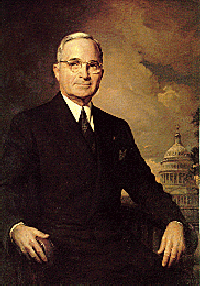
Harry S. Truman, died December 261950 – U.S. President Harry S. Truman authorized a sea blockade of Korea.

The U.S. Supreme Court ruled in 1972 that the death penalty could constitute “cruel and unusual punishment.” The ruling prompted states to revise their capital punishment laws.

1995 – The shuttle Atlantis and the Russian space station Mir docked, forming the largest man-made satellite ever to orbit the Earth.

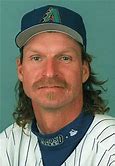
Randy JohnsonIn 2004, Randy Johnson of the Arizona Diamondbacks became the fourth pitcher in major league history to record 4,000 career strikeouts.
The Apple iPhone went on sale on June 29, 2007.

Tidbits of History, June 28

June 28 is Insurance Awareness Day
National Tapioca Day
Paul Bunyan Day

National Ceviche Day – Ceviche is a seafood dish popular in the coastal regions of the Americas, especially Central and South America. The dish is typically made from fresh raw fish cured in citrus juices, such as lemon or lime, and spiced with ají or chili peppers.

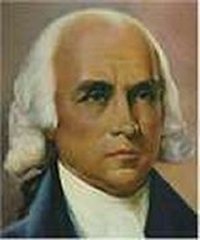
James Madison, died June 28, 1836Death of James Madison, Jr. , (June 28, 1836) fourth President of the United States, at Montpelier, Virginia. He was 85 years old and died of rheumatism and heart failure. He is known as “the Father of the Constitution” and author of the Bill of Rights. He was one of the authors of the Federalist Papers.

The U.S. Congress made Labor Day a U.S. national holiday in 1894.

The U.S. Congress passed the Spooner bill, in 1902. It authorized a canal to be built across the isthmus of Panama.

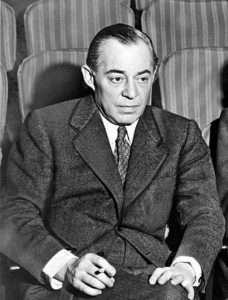
Richard RodgersOn June 28, 1902, Richard Rodgers, the American composer who was a major force in 20th century musical comedy, was born. With 43 Broadway musicals and over 900 songs to his credit, Rodgers was one of the most significant American composers of the 20th century, and his compositions had a significant impact on popular music. He is best known for his songwriting partnerships with the lyricists Lorenz Hart, with whom he wrote several musicals throughout the 1920s and 1930s, including Pal Joey, A Connecticut Yankee, On Your Toes and Babes in Arms, and Oscar Hammerstein II, with whom he wrote musicals through the 1940s and 1950s such as Oklahoma!, Carousel, South Pacific, The King and I, and The Sound of Music. Rodgers was the first person to win what are considered the top American entertainment awards in television, recording, movies and Broadway – an Emmy, a Grammy, an Oscar, and a Tony Award — now known collectively as an EGOT. In addition, he was awarded a Pulitzer Prize, making him one of only two people to receive all five awards (Marvin Hamlisch is the other).
1914 – Archduke Franz Ferdinand of Austria, the heir to the Austrian-Hungarian throne, was assassinated in Sarajevo along with his wife, Duchess Sophie. His death led to Austria-Hengary’s declaration of war against Serbia which started World War I.

Anniversary of the signing in 1919 of the Treaty of Versailles, ending World War I and establishing the League of Nations.

President Franklin D Roosevelt ordered a gold vault to be built at Fort Knox, Kentucky in 1935

2000 – Six-year-old Elián González returned to Cuba from the U.S. with his father. The child had been the center of an international custody dispute.

2004 – The U.S. turned over official sovereignty to Iraq’s interim leadership. The event took place two days earlier than previously announced to thwart insurgents’ attempts at undermining the transfer.

Save

Save

Tidbits of History, June 27

June 27 is Sunglasses Day
National “Happy Birthday to You” Day

National “Decide to Be Married” Day

National Orange Blossom Day

1693 – “The Ladies’ Mercury” was published by John Dunton in London. It was the first women’s magazine and contained a “question and answer” column that became known as a “problem page.” It was published for four weeks.

1787 – Edward Gibbon completed “The Decline and Fall of the Roman Empire.” It was published the following May. It traced Western civilization from the Roman Empire to the fall of Byzantium.

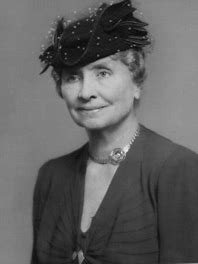
Helen Keller born June 27, 1880Birthday of Helen Adams Keller (June 27, 1880), American author, political activist, and lecturer. She was the first person who was blind and deaf to earn a bachelor of arts degree. Helen was born able to see and hear. She fell ill at 19 months old with what might have been scarlet fever or meningitis.

The New York stock market crashed on June 27, 1893. By the end of the year 600 banks and 74 railroads had gone out of business. See the Panic of 1893. The unemployment rate rose to 18.4%.

1929 – Scientists at Bell Laboratories in New York revealed a system for transmitting television pictures.

On June 27, 1942, the FBI announced the capture of eight Nazi saboteurs who had been put ashore from a submarine on New York’s Long Island.

1950 – Two days after North Korea invaded South Korea, U.S. President Truman ordered the Air Force and Navy into the Korean conflict. The United Nations Security Council had asked for member nations to help South Korea repel an invasion from the North.

The world’s first cash dispenser was installed at Barclays Bank in Enfield, England in 1967. The device was invented by John Sheppard-Barron. The machine operated on a voucher system and the maximum withdrawal was $28.

The United States National Do Not Call Registry, was formed to combat unwanted telemarketing calls and administered by the Federal Trade Commission, enrolled almost three-quarters of a million phone numbers on its first day, June 27, 2003.

Tidbits of History, June 26

June 26 is Beautician’s Day
Forgiveness Day
National Chocolate Pudding Day

United Nations Charter Day commemorating the signing of the charter in five official languages – Chinese, English, French, Russian and Spanish

From Today in Science
In 1498, the bristle toothbrush was invented in China. Coarse hairs taken from the back of a hog’s neck were used for the bristles, attached at right angles to a bone or bamboo handle (similar to the modern type). The best bristles came from hogs raised in the colder climates of China and Siberia, where the animals grew stouter and firmer hair. Since 3000 BC, ancient civilizations had been cleaning teeth with a “chew-stick” by using a thin twig with a frayed end.

June 26, 1721, Dr Zabdiel Boylston gave first smallpox inoculations in America. He lived in Boston, Massachusetts and he performed the first surgical operation by an American physician, the first removal of gall bladder stones in 1710, and the first removal of a breast tumor in 1718. He was a great-uncle to John Adams.

The Lewis and Clark Expedition reached the mouth of the Kansas River at Kaw Point on June 26, 1804, after completing a westward trek of nearly 400 river miles.

The bicycle was patented by W.K. Clarkson, Jr. on this date in 1819.

1844 – John Tyler took Julia Gardiner as his bride, thus becoming the first U.S. President to marry while in office.

Christmas declared a holiday, June 26On June 26, 1870, the Christian holiday of Christmas was declared a federal holiday in the United States.

The first section of the Boardwalk in Atlantic City, NJ, was opened to the public in 1870.

June 26, 1896 – First movie theater in US opened, charging 10 cents for admission

Hellcat, June 26The Grumman F6F Hellcat fighter was flown for the first time on June 26, 1942.
June 25, 1948 – The Berlin Airlift began as the U.S., Britain and France started ferrying supplies to the isolated western sector of Berlin.

1961 – A Kuwaiti vote opposed Iraq’s annexation plans.

1963 – U.S. President John Kennedy announced “Ich bin ein Berliner” (I am a Berliner) at the Berlin Wall.

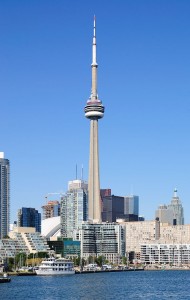
CN Tower, June 261976 – The CN (Canadian National) Tower in Toronto, Canada, opened on June 26, 1976.

On June 26, 1985 Wilbur Snapp, a ballpark organist, was ejected from a game at the Jack Russell Stadium in Clearwater, Florida, for playing “Three Blind Mice” in response to what he thought was a bad call from the umpire, Kevin O’Connor. The umpire pointed up to Snapp, who was sitting at his organ behind first base, then thumbed him out of the game. Snapp stepped away from his keyboard, but spent the remainder of the game twisting balloons into mice for the delighted fans, who began singing “Three Blind Mice.”

1987 – The movie “Dragnet” opened in the U.S.

1998 – The U.S. Supreme Court ruled that employers are always potentially liable for supervisor’s sexual misconduct toward an employee.