Tidbits of History, August 4

August 4 is:

National Chocolate Chip Cookie Day
Per Wikipedia: The chocolate chip cookie was invented by American chefs Ruth Graves Wakefield and Sue Brides in 1938. Wakefield invented the recipe during the period when she owned the Toll House Inn, in Whitman, Massachusetts. In this era, the Toll House Inn was a popular restaurant that featured home cooking. It is often incorrectly reported that she accidentally developed the cookie, and that she expected the chocolate chunks would melt, making chocolate cookies. In fact, she stated that she deliberately invented the cookie. She said, “We had been serving a thin butterscotch nut cookie with ice cream. Everybody seemed to love it, but I was trying to give them something different. So I came up with Toll House cookie.” She added chopped up bits from a Nestlé semi-sweet chocolate bar into a cookie. The original recipe in Toll House Tried and True Recipes is called “Toll House Chocolate Crunch Cookies”. Wakefield gave Nestle the recipe for her cookies and was paid with a lifetime supply of chocolate from the company.

Coast Guard Day, anniversary of the establishment in 1790 of the Revenue Cutter Service. It merged with the Life Saving Service in 1915 to become the United States Coast Guard.

In 1873, while protecting a railroad survey party in Montana, the United States 7th Cavalry, under Lieutenant Colonel George Armstrong Custer, clashed for the first time with the Sioux near the Tongue River; only one man on each side was killed.

Birthday of Percy Bysshe Shelley (August 4, 1792), one of the major English Romantic poets and regarded by critics as among the finest lyric poets in the English language.

The Saturday Evening Post was published for the first time as a weekly newspaper in 1821.

1892 – The father and stepmother of Lizzie Borden were found murdered in their Fall River, Massachusetts home. The case was memorialized in a popular skipping-rope rhyme:

Lizzie Borden took an axe
And gave her mother forty whacks.
When she saw what she had done,
She gave her father forty-one.

In reality, Lizzie’s stepmother suffered 18 or 19 blows; her father suffered 11 blows. Lizzie was acquitted of the murders on June 20, 1893.
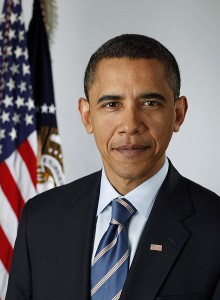
44obama_barackBirthday of Barack Hussein Obama (August 4, 1961), 44th President of the United States.

Aug 4, 1970, Bret Baier It is also the birthday of Bret Baier (August 4, 1970)!

U.S. President Jimmy Carter signed legislation creating the United States Department of Energy in 1977.

On this date in 1984, Upper Volta’s name was changed to Burkina Faso. (For fans of Tucker Carlson’s Final Exam, the Capital is Ouagadougou.)

On August 4, 1988, Congress voted $20,000 to each Japanese-American interned during WW II.
Save

Tidbits of History, August 3

August 3 is:

National Watermelon Day

435 – Deposed Ecumenical Patriarch of Constantinople, Nestorius, considered the originator of Nestorianism, was exiled by Roman Emperor Theodosius II to a monastery in Egypt.
From Theopedia:

Nestorianism is basically the doctrine that Jesus existed as two persons, the man Jesus and the divine Son of God, rather than as a unified person. This doctrine is identified with Nestorius (c.386-451), Patriarch of Constantinople, although he himself denied holding this belief. This view of Christ was condemned at the Council of Ephesus in 431, and the conflict over this view led to the Nestorian schism, separating the Assyrian Church of the East from the Byzantine Church.

The motivation for this view was an aversion to the idea that “God” suffered and died on the cross, be it the divinity itself, the Trinity, or one of the persons of the Trinity. Thus, they would say, Jesus the perfect man suffered and died, not the divine second person of the Trinity, for such is an impossible thought — hence the inference that two “persons” essentially inhabited the one body of Jesus. Nestorius himself argued against calling Mary the “Mother of God” (Theotokos) as the church was beginning to do. He held that Mary was the mother of Christ only in respect to His humanity. The council at Ephesus (431) accused Nestorius of the heresy of teaching “two persons” in Christ and insisted that Theotokos was an appropriate title for Mary.

The problem with Nestorianism is that it threatens the atonement. If Jesus is two persons, then which one died on the cross? If it was the “human person” then the atonement is not of divine quality and thereby insufficient to cleanse us of our sins.

881 – Battle of Saucourt-en-Vimeu: Louis III of France defeated the Vikings, an event celebrated in Ludwigslied, a Old High German poem of 59 rhyming couplets.

Christopher Columbus set sail on his first voyage on August 3, 1492 with three ships: the Santa María ex-Gallega (“Galician”), the Pinta (“The Pint”, “The Look”, or “The Spotted One”) and the Santa Clara, nicknamed the Niña (“Girl”) after her owner Juan Niño. The Bahamas were spotted October 12th.

1678 – Robert LaSalle built Le Griffon, the first known ship to be built on the Great Lakes.

Birthday of Elisha Graves Otis (August 3, 1811), American inventor of a safety device that prevents elevators from falling if the hoisting cable fails. The 1854 New York World’s Fair offered a great chance at publicity. At the New York Crystal Palace, Elisha Otis amazed a crowd when he ordered the only rope holding the platform on which he was standing cut. The rope was severed by an axeman, and the platform fell only a few inches before coming to a halt. The brake he invented used toothed guiderails in the elevator shaft and a spring-loaded bar that automatically caught in the toothed rail if the elevator car if the cable failed. After the World’s Fair, Otis received continuous orders, doubling each year.

Birthday of Ernest (Ernie) Taylor Pyle (Aug 3, 1900), American journalist and spokesman of the American soldier; the most famous American correspondent in World War II.

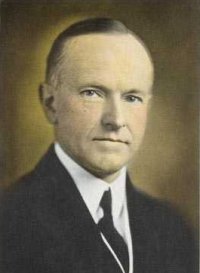
Coolidge sworn in Aug 3In 1923, Calvin Coolidge was sworn in as the 30th president of the United States, one day after President Warren G. Harding died of a heart attack.

Save

Tidbits of History, August 2

August 2 is:

National Ice Cream Sandwich Day

Olivier de Clisson, was found guilty of treason and was beheaded in 1343 at Les Halles in Paris. As a result, his wife, Jeanne de Clisson, (also known as the Lioness of Brittany), sold their holding, bought a fleet of ships, and took to the sea as a pirate to seek revenge against the French King and nobility.

1610 – Henry Hudson sailed into what is now known as Hudson Bay. He thought he had made it through the Northwest Passage and reached the Pacific Ocean.

Birthday of Pierre Charles L’Enfant (August 2, 1754), French army engineer and an officer of the American Revolutionary army; honored as the designer of the plans for the city of Washington, D.C.
Quote from Bartleby.com

After much menutial search for an eligible situation, prompted I may say from a fear of being prejudiced in favour of a first opinion I could discover no one so advantageously to greet the congressional building as is that on the west end of Jenkins heights which stand as a pedestal waiting for a monument, and I am confident, were all the wood cleared from the ground no situation could stand in competition with this. some might perhaps require less labour to be rendered agreeable but after all assistance of arts none ever would be made so grand and all other would appear but of secondary nature.

1870 – Tower Subway, the world’s first underground tube railway, opened in London, England, United Kingdom in 1870.

The Clay Street Hill Railroad began operating the first cable car in San Francisco’s famous cable car system in 1873.

Harding, died August 2nd1923-Death of Warren Gamaliel Harding, twenty-ninth President of the United States. (He was president 1921-1923) He died in San Francisco, California age age 57. In June of 1923 Harding set out on a cross-country trip to “renew his connection with the people”. Arriving in San Francisco, Harding developed pneumonia and it is believed he died of heart failure. Mrs. Harding refused to grant permission for an autopsy. Vice president Calvin Coolidge became the 30th President of the United States.

In 1934 – Gleichschaltung: Adolf Hitler becomes Führer of Germany following the death of President Paul von Hindenburg. He joinied the offices of President and Chancellor into Führer.

August 2, 1990 – Iraq invaded Kuwait, eventually leading to the Gulf War.

From Today in Science
Birthday of John Tyndall (2 Aug 1820) British physicist who demonstrated why the sky is blue. His initial scientific reputation was based on a study of diamagnetism. He became known to the scientific world in 1848 as the author of a substantial work on Crystals. In 1856 he traveled with Professor Huxley to Switzerland, after which he co-authored On the Structure and Motion of Glaciers. He also published Heat as a Mode of Motion (1863), On Radiation (1865), followed by Sound, then in 1870 he published Light. Included in these works were studies of acoustic properties of the atmosphere and the blue color of the sky, which he suggested was due to the scattering of light by small particles of water.

He carried out research on radiant heat, studied spontaneous generation and the germ theory of disease, glacier motion, sound, the diffusion of light in the atmosphere and a host of related topics. He showed that ozone was an oxygen cluster rather than a hydrogen compound, and invented the fireman’s respirator and made other less well-known inventions including better fog-horns. One of his most important inventions, the light pipe, has led to the development of fibre optics.

“It is as fatal as it is cowardly to blink facts because they are not to our taste.” John Tyndall 1879

Tidbits of History, August 1

National Girlfriends Day
National Raspberry Cream Pie Day
National Day of Switzerland Traditional founding date of Switzerland in 1291; The Old Swiss Confederacy was formed with the signing of the Federal Charter.

August 1, 1620 – The Speedwell left Delfshaven, Netherlands and reached Southampton, Hampshire in southeast England. At Southampton it met up with the Mayflower and set out for America on August 5, 1620. Shortly after the Speedwell started taking on water so the ships landed at Dartmouth, Devon. The leaks were sealed and the ships sailed again. They got as far as Plymouth, Devon when the Speedwell was again leaking. It was decided to sell the Speedwell and transfer the passengers and crew to the Mayflower. Of the combined 121 passengers, 102 were chosen to make the trip. The reduced party finally sailed on Sept 6th.

1790 – The first U.S. census was completed with a total population of 3,929,214 recorded. The areas included were the original thirteen colonies (now states) and Kentucky, Maine, and Tennessee. The population had grown from 350 at Jamestown, Virginia in 1610.

1801 – First Barbary War: The American schooner USS Enterprise captured the Tripolitan corsair Tripoli after a fierce but one-sided battle off the coast of modern-day Libya. Unscathed, Enterprise sent the battered pirate into port since the schooner’s orders prohibited taking prizes. Remembered in Marine hymn “From the halls of Montezuma… to the shores of Tripoli…”

1834 – Slavery was abolished in the British Empire as the Slavery Abolition Act of 1833 went into force.

Colorado headerColorado Day, a legal holiday in Colorado in honor of the admission to the Union in 1876 as the thirty-eighth state

  • Capital: Denver
  • Nickname: Centennial State
  • Bird: Lark bunting
  • Flower: Rocky Mountain Columbine
  • Tree:Blue Spruce
  • Motto: Nothing Without Providence

See our page Colorado for more interesting facts and trivia about Colorado.

The first Jeep was produced on August 1, 1941.

1943 – In the Solomon Islands, the U.S. Navy patrol torpedo boat PT-109 sank after being hit by the Japanese destroyer, Amagiri. The boat was under the command of Lt. John F. Kennedy. Eleven of the thirteen crew survived.

August 1, 1944: Anne Frank made the last entry in her diary. Three days later she was arrested. She was deported to Auschwitz on Sept 3, 1944 and died in early March, 1945.

The United States and Canada formed the North American Aerospace Defense Command (NORAD) in 1957.

1961 – U.S. Defense Secretary Robert McNamara ordered the creation of the Defense Intelligence Agency (DIA), the nation’s first centralized military espionage organization. It operates under the jurisdiction of the Dept of Defense.

From Today in Science
In 1831, New London Bridge opened to traffic. In 1821, a committee was formed by Parliament to consider the poor condition of the existing centuries-old bridge. The arches had been badly damaged by the Great Freeze, so it was decided to build a new bridge. Building commenced under John Rennie in 1825, and completed in 1831, at the expense of the city. The bridge is composed of five arches, and built of Dartmoor granite. It was opened with great splendour by King William IV, accompanied by Queen Adelaide, and many of the members of the royal family, August 1st, 1831. In the 1960’s it was auctioned and sold for $2,460,000 to Robert McCulloch who moved it to Havasu City, Arizona. The rebuilt London Bridge was completed and dedicated on 10 Oct 1971.

Also from Today in Science
In 1873, English inventor Andrew Smith Hallidie, in the U.S. since 1852, revolutionized transportation methods in San Francisco when he successfully tested a cable car he had designed to solve the problem of providing mass transit up San Francisco’s steep hills. He not only invented, but also manufactured, and patented the first cable car and its system of wire ropes, pulleys, tracks, and grips that made it possible. Hallidie, an engineer and one-time miner, realized the need on one foggy day in 1869 when he watched in horror as horses pulling a carriage up one of the City’s steep grades slipped on the wet cobblestoned street, the heavy carriage rolled backward downhill and the five horses dragged behind it suffered fatal injuries. Hallidie, using wire rope, had already had much success in the use of cable drawn ore cars for use in mines.

Birthdays

Birthday of William Clark (August 1, 1770), American solider and explorer who, together with Meriwether Lewis, led an expedition from St. Louis to the Pacific following the Louisiana Purchase. Their journey lasted from May 1804 to September 1806.

Birthday of Francis Scott Key (August 1, 1779), American lawyer and author of “The Star-Spangled Banner”.

Birthday of Herman Melville (August 1, 1819), American author of “Moby Dick”

Tidbits of History, July 31

July 31 is:

National Raspberry Cake Day
Cotton Candy Day
Mutt’s Day

Pilgrim Fathers departed Leiden, Holland for England before heading to America on July 31, 1620.

Birthday of John Ericcson (July 31, 1803), American inventor of the screw propeller, pioneer in modern naval construction, builder of the famous “Monitor“.

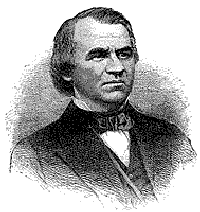
Andrew Johnson died July 31Death in 1875 of Andrew Johnson , seventeenth President of the United States, who became president when Abraham Lincoln was assassinated. Johnson died in Elizabethton, Tennessee at age 66 after suffering a stroke. Following the presidency, Johnson had been elected to the U.S. Senate from the state of Tennessee.

The Impeachment of Andrew Johnson was one of the most dramatic events in the political life of the United States during Reconstruction. The first impeachment of a sitting United States president, it was the consummation of a lengthy political battle between the moderate Johnson and the “Radical Republican” movement that dominated Congress and sought control of Reconstruction policies. The trial concluded with Johnson’s acquittal.

There are only four kinds of office that may be attained by a citizen under the Constitution – legislative, judicial, military, and executive. Andrew Johnson is the only man to attain all these and to be both Vice-President and President.

In 2006, Fidel Castro handed over power temporarily to brother Raúl Castro. This leads to a celebration in Little Havana (La Pequeña Habana in Spanish), Miami, Florida, where many Cuban Americans participated.

Tidbits of History, July 30

July 30 is:

National Cheesecake Day
Father-in-Law Day

In Jamestown, Virginia, the first representative assembly in the Americas, the House of Burgesses, convened for the first time on July 30, 1619.

City of Baltimore was founded in 1729.

Marseillais Day. The Marseillaise, the national anthem of France composed by Rouget de Lisle, was sung in Paris for the first time in 1792.

Birthday of Emily Jane Brontë (July 30, 1818), in Thornton England; novelist of (Wuthering Heights), younger sister of Charlotte Brontë (Jane Eyre) and older sister of Anne.

Slave rebels, took over slave ship, La Amistad in 1839.

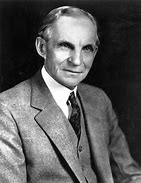
Henry FordBirthday of Henry Ford (July 30, 1863), American inventor, automobile manufacturer, and philanthropist

From Today in Science:
In 1898, Corn Flakes were invented by William Kellogg at Battle Creek ( Michigan) Sanitarium. Sanitarium superintendent, Dr. John Harvey Kellogg and Will Keith Kellogg, his younger brother and business manager, invented many grain-based foods, including a coffee substitute, a type of granola, and peanut butter to provide patients a strict nutritious diet. In 1894 they unintentionally invented a flaked cereal process based on wheat. By 1898, W.K. Kellogg had developed the first flaked corn cereal. Patients enjoyed the cereals and wanted more to take home. In 1906, the Battle Creek Toaster Corn Flake Company was founded by W.K. Kellogg.

1942 – FDR signed bill creating women’s Navy auxiliary agency (WAVES). The name was the acronym for “Women Accepted for Volunteer Emergency Service”

A joint resolution of the U.S. Congress in 1956 was signed by President Dwight D. Eisenhower, authorizing “In God we trust” as the U.S. national motto.

Tidbits of History, July 29

July 29 is:

National Lasagna Day

Cheese Sacrifice Purchase Day – Apparently the holiday came about from the tradition of filling mouse traps with cheese: you’d sacrifice your purchase in the name of eradicating vermin.

National Chicken Wing Day; aka National Buffalo Wing Day

Birthday of Alexis de Tocqueville (July 29, 1805), French statesman and author of “Democracy in America”

Arch of Triumph, ParisInauguration of the Arc de Triomphe in Paris, France in 1836.
1864-07-29 – American Civil War: Confederate spy Belle Boyd was arrested by Union troops and detained at the Old Capitol Prison in Washington, DC. Boyd was held for a month before being released on August 29, 1862, when she was exchanged at Fort Monroe, Virginia.

From Today in Science:
Birthday of French inventor, Marcel Bich , (July 29, 1914), who built his business empire by creating throwaway Bic pens, razors and lighters. In 1945, Marcel Bich and his friend, Edouard Buffard, acquired an empty factory shell near Paris, France, and soon developed a thriving business, producing parts for fountain pens and mechanical lead pencils. Later, Bich spent two years developing his ballpoint pen design, and in 1949, he was able to produce a reliable, low cost ballpoint pen. In 1973 the Bic Lighter was introduced in the U.S., followed by Bic Shavers, first introduced in 1976.

U.S. President Dwight D. Eisenhower signed into law the National Aeronautics and Space Act, which creates the National Aeronautics and Space Administration (NASA) in 1958.

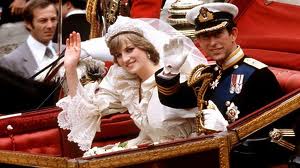
wedding July 29, 1981A worldwide television audience of over 700 million people watch the wedding of Charles, Prince of Wales, and Lady Diana Spencer at St Paul’s Cathedral in London on July 29, 1981.

Tidbits of History, July 28

July 28 is:

National Milk Chocolate Day
National Hamburger Day

Maximilien Robespierre and Louis Antoine de Saint-Just were executed by guillotine in Paris, France in 1794 during the French Revolution.

Birthday of Beatrix Potter (July 28, 1866), English author and illustrator of “The Tale of Peter Rabbit”

In 1868, the 14th Amendment to the United States Constitution is certified, establishing African American citizenship and guaranteeing due process of law.

From Today in Science
Earl Silas Tupper (born July 28, 1907 at Berlin, New Hampshire) was an American inventor and manufacturer who introduced Tupperware. In the 1930’s, Tupper invented a flexible, lightweight material that was used to make plastic gas masks during World War II. From working at DuPont (1937-38), he gained experience in plastics design and struck out on his own. In the ’40s, plastic products had a reputation for being brittle, greasy, smelly and generally unreliable. Tupper’s contributions were twofold. First, he developed a method for purifying black polyethylene slag, a waste product produced in oil refinement, into a substance that was flexible, tough, non-porous, non-greasy and translucent. Second, he developed the Tupper seal, an airtight, watertight lid modeled on the lid for paint containers. Together, these innovations laid the foundations for the future success of Tupperware as a consumer product. His company had great success by marketing through Brownie Wise’s idea of Tupperware parties. Earl Tupper died 5 Oct 1983 at age 76.

Jacqueline Kennedy, born July 28, 1929 Birthday of Jacqueline Bouvier Kennedy Onassis (July 28, 1929), wife of John F Kennedy; first lady 1961-1963.

Save

Tidbits of History, July 27

July 27 is:

Bagpipe Appreciation Day
Take Your Pants for a Walk Day Today is about getting out and getting exercise.
National Scotch Day

In 1663, the English Parliament passed the second Navigation Act, requiring that all goods bound for the American colonies have to be sent in English ships from English ports.

1775 – Founding of the U.S. Army Medical Department: The Second Continental Congress passed legislation establishing “an hospital for an army consisting of 20,000 men.” The U.S. Army Medical Department Museum — or AMEDD Museum — is located at Fort Sam Houston, San Antonio, Texas.

In 1789, the first U.S. federal government agency, the Department of Foreign Affairs, was established (it will be later renamed Department of State).

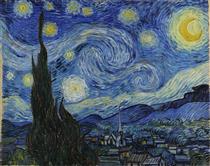
The Starry Night by Van GoghJuly 27, 1890, Vincent van Gogh shot himself and died two days later. According to Wikipedia:

“On 22 February 1890, Van Gogh suffered a new crisis that was ‘the starting point for one of the saddest episodes in a life already rife with sad events’. From February until the end of April he was unable to bring himself to write, though he did continue to draw and paint, which follows a pattern begun the previous May… For a year he ‘had fits of despair and hallucination during which he could not work, and in between them, long clear months in which he could and did, punctuated by extreme visionary ecstasy.’

On 27 July 1890, aged 37, Van Gogh is believed to have shot himself in the chest with a revolver (although no gun was ever found). There were no witnesses…. Biographer David Sweetman writes that the bullet was deflected by a rib bone and passed through his chest without doing apparent damage to internal organs—probably stopped by his spine. He was able to walk back to the Auberge Ravoux, and there was attended by two physicians; however, without a surgeon present, the bullet could not be removed. After tending to him as best they could, the two physicians left Van Gogh alone in his room, smoking his pipe. The following morning (Monday), Theo (his brother) rushed to be with Van Gogh as soon as he was notified, and found him in surprisingly good shape, but within hours Van Gogh began to fail due to an untreated infection caused by the wound. Van Gogh died in the evening, 29 hours after he supposedly shot himself. According to Theo, his brother’s last words were: “The sadness will last forever.”

See Wikiart for examples of paintings by VanGogh.

In 1921, insulin was isolated at Toronto University by Canadians Sir Frederick Banting and Charles Best. It proved an effective treatment for diabetes.

July 27, 1940 – The animated short A Wild Hare was released, introducing the character of Bugs Bunny.

per Mark Steyn, August 1, 2015:

“Bugs Bunny turned 75 earlier this week. Like the Queen, he has official and unofficial birthdays. Unofficially, Looney Tunes introduced a rabbit to the cast of characters in “Porky’s Hare Hunt” (1938), but the anthropomorphized lagomorph looked nothing like Bugs and, although he was voiced by Mel Blanc, he sounded more like Woody Woodpecker. So, officially, Bugs made his debut in the form we know him today on July 27th 1940 in Chuck Jones’ “A Wild Hare”.

July 27, 1953: The Korean War ended, though an official state of war still exists between North Korea and South Korea.

Tidbits of History, July 26

All or Nothing Day -From Examiner.com: “July 26 is the perfect day to either “go for it” or “forget it.” It is the day to quit making excuses and silence the beliefs that prevent you from moving forward. Go on and fully own your choices. Either forget them or embrace what you want and just do it.”

National Talk in an Elevator Day
Aunt and Uncle Day
National Coffee Milkshake Day
National Bagelfest

Feast day of Saint Anne, patron saint of Canada, patroness of housewives and of miners, mother of the Virgin Mary, wife of Joachim.

July 26, 1775, United States Post Office (U.S.P.O.) was created in Philadelphia under Benjamin Franklin.

New York headerNew York Ratification Day in 1788 New York became the eleventh state

  • Capital: Albany
  • Nickname: Empire State/Excelsior State
  • Bird: Bluebird
  • Flower: Rose
  • Tree: Sugar maple
  • Motto: Ever Upward

See our page for more interesting facts and trivia about New York.

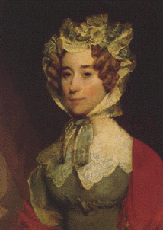
Louisa Adama, Born July 26, 1797Birthday of Louisa Johnson Adams (1797), wife of John Quincy Adams, first lady 1825-1829. Born in England, she was the only First Lady born outside the U.S. until Melania Trump, wife of President Donald Trump.

In 1847, the legislature of Liberia declared the nation an independent state. The American Colonization Society (ACS; in full, “The Society for the Colonization of Free People of Color of America”), established in 1817 by Robert Finley of New Jersey, was the primary vehicle to support the return of free African Americans to what was considered greater freedom in Africa. It helped to found the colony of Liberia in 1821–22 as a place for freedmen. From 1821, thousands of free black Americans moved to Liberia from the United States. Over twenty years, the colony continued to grow and establish economic stability.

Birthday of George Bernard Shaw (July 26, 1856), Irish-English dramatist, critic, novelist. Author of “Candida”, “Pygmalion” and many more.

July 26, 1878, in California, the poet and American West outlaw calling himself “Black Bart” makes his last clean getaway when he steals a safe box from a Wells Fargo stagecoach. The empty box will be found later with a taunting poem inside. He was later identified as British-born Charles Earl Bowles. (Read an interesting article about Black Bart at BenneyDavis.com.)

July 26, 1908, United States Attorney General Charles Joseph Bonaparte issued an order to immediately staff the Office of the Chief Examiner (later renamed the Federal Bureau of Investigation).