Tidbits of History, July 22

July 22 is:
Hammock Day – Hammocks are a symbol of summer, leisure, relaxation and simple easy living.

Ratcatcher’s Day, commemorating the myth of the “Pied Piper of Hamelin” by Robert Browning

Spoonerism Day Spoonerisms are words or phrases in which letters or syllables get swapped. This often happens accidentally in slips of the tongue (or tips of the slung as Spoonerisms are often affectionately called!): For example:

  • Tease my ears (Ease my tears)
  • A lack of pies (A pack of lies)
  • It’s roaring with pain (It’s pouring with rain)
  • Wave the sails (Save the whales)

National Penuche Fudge Day Penuche is a fudge-like candy made from brown sugar, butter, and milk, using no flavorings except for vanilla.

Colony of Roanoke: a second group of English settlers arrived on Roanoke Island off North Carolina in 1587 to re-establish the deserted colony.

The Acts of Union of 1707 are agreed upon by commissioners from the Kingdom of England and the Kingdom of Scotland, which, when passed by each country’s Parliaments, led to the creation of the Kingdom of Great Britain.

On July 22, 1796, surveyors of the Connecticut Land Company named an area in Ohio “Cleveland” after Gen. Moses Cleaveland, the superintendent of the surveying party.

dedicated Oct 28, 1886Birthday of Emma Lazarus (July 22, 1849), American poet who wrote “The New Colossus”, the last part of which is engraved on a plaque and mounted inside the pedestal of the Statue of Liberty.:

Give me your tired, your poor,
Your huddled masses yearning to breathe free;
The wretched refuse of your teeming shore,
Send these, the homeless,
Tempest-tossed to me
I lift my lamp beside the golden door!

July 22, 1893, Katharine Lee Bates wrote “America the Beautiful,” in Colorado.

Birthday of Stephen Vincent Benét (July 22, 1898), American poet and novelist who was best known for “his book-length narrative poem of the American Civil War, ‘John Brown’s Body’ (1928), for which he won a Pulitzer Prize in 1929, and for two short stories, ‘The Devil and Daniel Webster‘ (1936) and ‘By the Waters of Babylon‘ (1937).

Tidbits of History, July 21

July 21 is:

National Junk Food Day
National Creme Brulee Day
National Ice Cream Day

Mrs. Cleveland born July 21, 1864Birthday of Frances Folsom Cleveland (July 21, 1864), wife of Grover Cleveland;  First lady 1885-1889 and 1893-1897. On June 2, 1886, Grover Cleveland, at age 49, married twenty-one year old Frances Folsom. It remains the only wedding at the White House of a sitting president. Upon leaving the White House in 1889, Mrs. Cleveland told the staff to take good care of things because “we will come back.” They did, in 1893.

July 21,1865 – In the market square of Springfield, Missouri, Wild Bill Hickok shot and killed Davis Tutt in what is regarded as the first western showdown.

According to factinate.com “Tutt and Wild Bill did not get along. They chased the same women and gambled fiercely with one another. Eventually, Wild Bill lost a gold watch to Tutt in a poker game. The watch was special to Hickok, so he asked Tutt not to wear it in public—but of course, Tutt refused. Tensions boiled over and on July 21, 1865, the two of them met in Springfield’s town square. What happened next is believed to have been one of the first quick-draw duels in history.
Tutt missed. Wild Bill didn’t. He shot his rival through the heart, and was subsequently arrested for murder. But this was a different time, and after a lengthy trial, a jury cleared Hickok of all charges.”

At Adair, Iowa, on July 21, 1873, Jesse James and the James-Younger Gang pulled off the first successful train robbery in the American Old West.

Birthday of Ernest Hemingway (July 21, 1899), American novelist, author of “The Old Man and the Sea” and “For Whom the Bell Tolls” and many others.

Willis Carrier created the first air conditioner in Buffalo, New York in 1902.

1925 – Scopes Trial: In Dayton, Tennessee, high school biology teacher John T. Scopes was found guilty of teaching evolution in class and fined $100.

The United States Senate ratified the North Atlantic Treaty in 1949.

At -89.2 degrees Celsius, the coldest-ever recorded temperature was measured in Antarctica on July 21, 1983 (equal to -128.6 Fahrenheit).

Harry Potter and the Deathly Hallows, the fastest-selling novel ever was published in 2007. It sold 15 million copies in the first 24 hours of its release.

July 21, 2011: End of the Space Shuttle program.

Tidbits of History, July 20

July 20 is:

Moon Day
Ugly Truck Day
National Lollipop Day
Fortune Cookie Day

Feast day of Saint Margaret; patron saint of all women in childbirth.

Birthday of Alexander the Great (356 BC), Macedonian king.

Birthday of Francesco Petrarca (July 20, 1304), commonly called “Petrarch”, Italian scholar and poet. He rediscovered Cicero’s letters and is often credited with initiating the Renaissance.

Canadian explorer Pierre Gaultier de Varennes et de La Vérendrye reached the western shore of Lake Michigan in 1738.

Nicéphore Niépce was awarded a patent by Napoleon in 1807 for the Pyréolophore, the world’s first internal combustion engine, after it successfully powered a boat upstream on the river Saône in France.

Birthday of Gregor Mendel (1822), Czech geneticist.

British Columbia joined the confederation of Canada in 1871.

Sitting BullSitting Bull, Sioux Indian chief ,surrendered to Major David H. Brotherton, commanding officer of Fort Buford, North Dakota . See History.com for 10 things you may not know about Sitting Bull.

Birthday of Edmund Hillary (1919), New Zealand mountaineer and explorer. On 29 May 1953, Hillary and Sherpa mountaineer Tenzing Norgay became the first climbers confirmed to have reached the summit of Mount Everest.

World War II: Adolf Hitler survived an assassination attempt on July 20, 1944 led by German Army Colonel Claus von Stauffenberg.

July 20, 1969 – Apollo program: Apollo 11 successfully made the first manned landing on the Moon in the Sea of Tranquility. Americans Neil Armstrong and Buzz Aldrin become the first humans to walk on the Moon almost 7 hours later. (US Time). Surely one of the most significant events of history in our lifetime.

Tidbits of History, July 19

July 19 is:

National Raspberry Cake Day
National Daiquiri Day

National Flitch Day As far back as 1104 in Dunmow Priory, England, monks offered a side of bacon (flitch) to any married couple, (at least a year and a day after their wedding), that had lived in harmony and fidelity for the past year and had not wished they were single again. Although some web sites state that July 19th is Flitch Day, the Flitch Ceremony in held every four years in mid-July during leap years. Flitch trials are still held in Great Dunmow, England. The jury consists of six maidens and six bachelors. Great Dunmow is believed to be the only location to have preserved the flitch of bacon custom. (A flitch of bacon is a side of “bacon” — half of a pig that has been cut in half lengthwise.)

64 – Great Fire of Rome: a fire begins to burn in the merchant area of Rome and soon burns completely out of control. According to a popular, but untrue legend, Nero fiddled as the city burned.

Lady Jane Grey is replaced by Mary I of England as Queen of England in 1553 after only nine days on the throne.

Nanfan Treaty1701 – Representatives of the Iroquois Confederacy sign the Nanfan Treaty, ceding a large territory north of the Ohio River to England.

Degas - Dance Class at the OperaBirthday of Edgar Degas (Hilaire-Germain-Edgar De Gas) (July 19, 1834), the French Impressionist painter identified with the subject of dance. See Wikiart for samples of his art.

Birthday of Charles Horace Mayo (July 19, 1865), American surgeon, specialist in goiters and preventive medicine, co-founder of the Mayo Clinic

1981 – In a private meeting with U.S. President Ronald Reagan, French Prime Minister François Mitterrand reveals the existence of the Farewell Dossier, a collection of documents showing that the Soviets had been stealing American technological research and development.

Ferraro nominatedCongresswoman Geraldine A. Ferraro of New York won the Democratic nomination for vice president at the party’s convention in San Francisco in 1984. Walter Mondale was the presidential candidate.

Tidbits of History, July 18

July 18 is the 200th day of the year in the Gregorian calendar. There are 165 days remaining until the end of the year.

National Caviar Day

In 1290, King Edward I of England issued the Edict of Expulsion, banishing all Jews (numbering about 16,000) from England; this was Tisha B’Av on the Hebrew calendar, a day that commemorates many Jewish calamities.

Parliament passed an act on July 18, 1536, declaring the authority of the Pope void in England.

Birthday of William Makepeace Thackeray (July 18, 1811), English novelist and satirist, author of “Vanity Fair”

The First Vatican Council of 1870 decreed the dogma of papal infallibility.

In 1914, the U.S. Congress formed the Aviation Section, U.S. Signal Corps, giving official status to aircraft within the U.S. Army for the first time.

Adolf Hitler published his personal manifesto, Mein Kampf, (My Struggle), in 1925.

An army uprising in Spanish Morocco started the Spanish Civil War in 1936.

Intel is founded in Santa Clara, California in 1968.

After a party on Chappaquiddick Island on July 18, 1969, Senator Ted Kennedy from Massachusetts drove an Oldsmobile off a bridge and his passenger, Mary Jo Kopechne, died.

Nadia Comaneci, Jly 18, 1976Nadia Comăneci became the first person in Olympic Games history to score a perfect 10 in gymnastics at the 1976 Summer Olympics.

On this date in 1999, David Cone of the New York Yankees pitched the 14th perfect game in modern major league baseball history in a game against the Montreal Expos.

2013 – The Government of Detroit, Michigan, , with up to $20 billion in debt, filed for the largest municipal bankruptcy in U.S. history.

Tidbits of History, July 17

July 17 is:
Peach Ice Cream Day

Yellow Pig Day

From Days of the Year:
Yellow Pig Day originated in the 1960s when two math students from Princeton spent a long time obsessively analysing the number 17. It seems that they went a little mad eventually. They decided to invent the concept of a yellow pig with 17 toes, 17 teeth, and so forth. Now Yellow Pig Day is an important part of the academic calendar. It is celebrated with cake, carols, parades and general revelry.

In the year 180 AD – Twelve inhabitants of Scillium in North Africa were executed for being Christians. This is the earliest record of Christianity in that part of the world.

1717 – King George I of Great Britain sailed down the River Thames with a barge of 50 musicians. George Frideric Handel’s Water Music was premiered.

Members of the French National Guard under the command of General Lafayette, opened fire on a crowd of radical Jacobins in Paris in 1791. As many as 50 people were killed.

Spain ceded Florida to the United States on this date in 1821.

July 17, 1898, during the Spanish American War, Spaniards surrendered to US at Santiago, Cuba

1917 – King George V issued a Proclamation stating that the male line descendants of the British Royal Family will henceforth bear the surname, Windsor. With the country at war with Germany, the British royal family changed its name from the German Saxe-Coburg Gotha .

July 17, 1918: The Romanov family of Tsar Nicholas II was executed by the Bolsheviks in Russia.

Birthday of Gordon Gould (July 17, 1920), American physicist who coined the word “laser” from “Light Amplification by Stimulated Emission of Radiation”.

1938 – Douglas Corrigan took off from Brooklyn to fly the “wrong way” to Ireland and becomes known as “Wrong Way” Corrigan.

Pottsdam conference, July 17, 1945World War II: the main three leaders of the Allied nations, Winston Churchill of Great Britain, Harry S. Truman of the U.S. and Joseph Stalin of The Soviet Union, met in the German city of Potsdam on July 17, 1945. The conference was to decide the future of a defeated Germany.

Southern Democrats opposed to the party’s position on civil rights, met in Birmingham, Ala. They endorsed South Carolina Gov. Strom Thurmond for president in 1948.

1955 – Disneyland was dedicated and opened by Walt Disney in Anaheim, California.

Tidbits of History, July 16

July 16 is:

National Corn Fritters Day

Feast day of Our Lady of Mount Carmel, the patron saint of fishermen.

Mission San Diego de Alcalá.was founded by Father Junípero Serra in 1769, becoming California’s first mission. It evolved into the city of San Diego, California.

author of Federalist PaperPublication of Federalist Paper #84: Certain General and Miscellaneous Objections to the Constitution Considered and Answered written by Alexander Hamilton in 1788.

In 1790 the District of Columbia was established as the permanent capital of the United States.

(Difference between capitol and capital: The key is this: capitol, the one with an “o,” is very limited in use. Capitol with a capital “C” refers to the particular building in Washington, D.C. where the U.S. Congress meets. It often appears before other nouns in phrases like the Capitol building and Capitol police, and is very frequently used in the term Capitol Hill, which refers both to the legislative branch of the United States government as well as to the location of the Capitol building.
Capital with an “a” is used as capital city, capital punishment, capital letters, business capital, etc.)

During the La Paz revolution of 1809, the city of La Paz, in what is today Bolivia, declared its independence from the Spanish Crown. It formed the Junta Tuitiva, the first independent government in Spanish America and was  led by Pedro Domingo Murillo.

Union troops began a 25 mile march into Virginia at President Abraham Lincoln’s order. This led to the First Battle of Bull Run which was the first major land battle of the war.

The world’s first parking meter was installed in Oklahoma City, Oklahoma on this date in 1935.

Joe DiMaggio hit safely for the 56th consecutive game in 1941, setting a hitting streak that still stands as a MLB record.

1945 –The Atomic Age began when the United States successfully detonated a plutonium-based test nuclear weapon near Alamogordo, New Mexico.

The Catcher in the Rye by J. D. Salinger was published for the first time by Little, Brown and Company in 1951.

Barry M. Goldwater, in accepting the Republican presidential nomination for 1964, said that “Extremism in the defense of liberty is no vice” and “Moderation in the pursuit of justice is no virtue.”

In 1969, the Crew of Apollo XI, Neil A. Armstrong, Edwin E. Aldrin, Jr., and Michael Collins, blasted off from Cape Kennedy on the first manned mission to the surface of the moon.

Saddam Hussein became president of Iraq on this date in 1979.

On this day in 1999,  John F. Kennedy, Jr.  died when his Piper Saratoga aircraft crashed into the Atlantic Ocean off the coast of Martha’s Vineyard. His wife Carolyn Bessette-Kennedy and sister-in-law, Lauren Bessette, were also killed.

July 16 is the birthday of:

  • Mary Baker Eddy (1821), Founder of the Church of Christ.
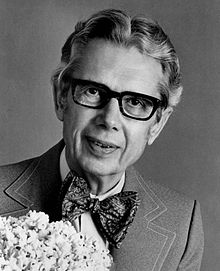
  • Orville Redenbacher (1907), American agronomist and business founder, known as the Popcorn King.
  • Ginger Rogers (1911), American actress and dancer.

Tidbits of History, July 15

July 15 is:

Tapioca Pudding Day
National Gummy Worm Day
Cow Appreciation Day

Feast day of Saint Swithin, known as a weather prophet. Legend has it that, if it rains today, it will continue to rain for 40 days.

Birthday of Rembrandt (Rembrandt Harmenszoon van Rijn), on July 15, 1606. Rembrandt was a Dutch painter, considered to be one of the greatest painters in European art, and the most important in Dutch history. See Wikiart for samples of his works.

Birthday of Clement Clarke Moore (1779), American poet, born in New York, best known for the poem called “A Visit from Saint Nicholas” It is from this poem (published in 1823) that we know Santa has eight reindeer and their names. (Rudolph came later in 1939.)

‘Twas the night before Christmas, when all through the house
Not a creature was stirring, not even a mouse;
The stockings were hung by the chimney with care,
In hopes that St. Nicholas soon would be there;

The children were nestled all snug in their beds,
While visions of sugar-plums danced in their heads;
And mamma in her ‘kerchief, and I in my cap,
Had just settled down for a long winter’s nap,

When out on the lawn there arose such a clatter,
I sprang from the bed to see what was the matter.
Away to the window I flew like a flash,
Tore open the shutters and threw up the sash.

The moon on the breast of the new-fallen snow
Gave the lustre of mid-day to objects below,
When, what to my wondering eyes should appear,
But a miniature sleigh, and eight tiny reindeer,

With a little old driver, so lively and quick,
I knew in a moment it must be St. Nick.
More rapid than eagles his coursers they came,
And he whistled, and shouted, and called them by name;

“Now, DASHER! now, DANCER! now, PRANCER and VIXEN!
On, COMET! on CUPID! on, DONNER and BLITZEN!
To the top of the porch! to the top of the wall!
Now dash away! dash away! dash away all!”

As dry leaves that before the wild hurricane fly,
When they meet with an obstacle, mount to the sky,
So up to the house-top the coursers they flew,
With the sleigh full of toys, and St. Nicholas too.

And then, in a twinkling, I heard on the roof
The prancing and pawing of each little hoof.
As I drew in my hand, and was turning around,
Down the chimney St. Nicholas came with a bound.

He was dressed all in fur, from his head to his foot,
And his clothes were all tarnished with ashes and soot;
A bundle of toys he had flung on his back,
And he looked like a peddler just opening his pack.

His eyes — how they twinkled! his dimples how merry!
His cheeks were like roses, his nose like a cherry!
His droll little mouth was drawn up like a bow,
And the beard of his chin was as white as the snow;

The stump of a pipe he held tight in his teeth,
And the smoke it encircled his head like a wreath;
He had a broad face and a little round belly,
That shook, when he laughed like a bowlful of jelly.

He was chubby and plump, a right jolly old elf,
And I laughed when I saw him, in spite of myself;
A wink of his eye and a twist of his head,
Soon gave me to know I had nothing to dread;

He spoke not a word, but went straight to his work,
And filled all the stockings; then turned with a jerk,
And laying his finger aside of his nose,
And giving a nod, up the chimney he rose;

He sprang to his sleigh, to his team gave a whistle,
And away they all flew like the down of a thistle.
But I heard him exclaim, ere he drove out of sight,
HAPPY CHRISTMAS TO ALL, AND TO ALL A GOOD-NIGHT!

1799 – French Captain Pierre-François Bouchard found The Rosetta Stone in the Egyptian village of Rosetta.Per Wikipedia:

The Rosetta Stone is a rock stele, found in 1799, inscribed with a decree issued at Memphis, Egypt, in 196 BC on behalf of King Ptolemy V. The decree appears in three scripts: the upper text is Ancient Egyptian hieroglyphs, the middle portion is Demotic script, and the lowest is Ancient Greek. Because it presents essentially the same text in all three scripts (with some minor differences among them), the stone provided the key to the modern understanding of Egyptian hieroglyphs.

1834 – The Spanish Inquisition was officially disbanded after nearly 356 years of terror.

1838 – Ralph Waldo Emerson delivered the Divinity School Address at Harvard Divinity School. He discounted Biblical miracles and declared that Jesus a great man, but not God. The Protestant community reacted with outrage.

1870 – Rupert’s Land and the North-Western Territory were transferred to Canada from the Hudson’s Bay Company. The province of Manitoba and the Northwest Territories were established from these vast territories.

1910 – Emil Kraepelin, in his book Clinical Psychiatry, gave a name to Alzheimer’s disease, naming it after his colleague, Alois Alzheimer.

Carter on July 15, 19791979 – U.S. President Jimmy Carter gave his so-called malaise speech. He characterized the greatest threat to the country as “this crisis in the growing doubt about the meaning of our own lives and in the loss of a unity of purpose for our nation” but in which he never uses the word malaise.

2003 – AOL Time Warner disbands Netscape. The Mozilla Foundation was established on the same day.

2006 – Twitter was launched, becoming one of the largest social media platforms in the world.

From Today in Science
In 1869, margarine was patented by Hippolyte Mège Mouriés in France (No. 86489). He won the contest held by Emperor Napoleon III to find a substitute for butter used by the French Navy. His formula included a fatty component that mixed to a pearly luster, so he named his product after the Greek word for pearl – margaritari. His margarine was manufactured from tallow. Although the prize winner, it was not until F. Boudet patented a process for emulsifying it with skimmed milk and water (1872) that margarine was made sufficiently palatable to be a commercial success.

Tidbits of History, July 14

July 14 is:
Pandemonium Day
National Nude Day
Macaroni Day
National Grand Marnier Day

In 1771 Franciscan Friar Junípero Serra founded the Mission San Antonio de Padua in present-day Monterey County, California, near the present-day town of Jolon.

Bastille Day, the national festival of France commemorates the storming of the Bastille in 1789 and the release of political prisoners.

Alexander Mackenzie completed his journey in 1789 to the mouth of a great river. Mackenzie had hoped the river would take him to the Pacific, but it flowed into the Arctic Ocean. Later named after him, the Mackenzie is the second-longest river system in North America.

1798 – Congress passed the Sedition Act which made it a federal crime to write, publish, or utter false or malicious statements about the United States government.

James McNeill Whistler, the famed American-born painter and designer, was born July 14, 1834. For samples of his works (besides “Whistler’s Mother”), see Wikiart

In 1868 Alvin J. Fellows received a U.S. patent for a spring tape measure.

Billy the Kid was shot and killed by Pat Garrett outside Fort Sumner in 1881. I highly recommend Ry Cooder’s song to be found at YouTube.

Irving Stone, American author, was born on July 14, 1903. He is best known for his novels, Lust for Life, a biographical novel about the life of Vincent van Gogh, and The Agony and the Ecstasy, a biographical novel about Michelangelo.

Ford, born July 14 Gerald R. Ford Jr. , the 38th president of the United States, was born in Omaha, Nebraska in 1913. His name at birth was Leslie Lynch King, Jr.; his step-father adopted him and changed his name.

July 14, 1933 – Gleichschaltung: in Germany, all political parties were outlawed except the Nazi Party.

From Today in Science
1933 – The Nazi eugenics begins with the proclamation of the Law for the Prevention of Genetically Diseased Offspring . It called for the compulsory sterilization of any citizen who suffered from alleged genetic disorders.
In 1933, a sterilization law was passed in Nazi Germany, known as Gesetz zur Verhütung erbkranken Nachwuchses (Law for the Prevention of Genetically Diseased Offspring), to be effective 1 Jan 1934. Any German was a target if suffering from any of the following mental conditions that were expected to be hereditary: congenital mental deficiency, schizophrenia or manic-depressive insanity. Other expected herediatry conditions included: epilepsy, Huntington’s chorea, blindness, deafness, any severe hereditary deformity or even severe alcoholism. Within a few years, up to an estimated 400,000 Germans were involuntarily sterilized in pursuit of this national goal of “racial hygiene,” to eliminate handicapped descendants. Most operations, often by female tubal ligations or male vasectomies, were done in 1934-37.

Tidbits of History, July 13

July 13 is:
Barbershop Music Appreciation Day
National French Fries Day
Beans ‘n’ Franks Day

1787 – The Northwest Ordinance was enacted by the Continental Congress. It established governing rules for the Northwest Territory. Also, the Congress also established procedures for the admission of new states and limited the expansion of slavery.

July 13, 1821 – Birthday of General Nathan Bedford Forrest, Confederate cavalry officer. From his obituary published in the New York Times:

…Immediately before the close of the war, the characteristic types of the soldiers of the South were sketched. It was pointed out that while Virginia, and what might be called the “old South,” produced gallant soldiers and dignified gentlemen, the South-west, the rude border country, gave birth to men of reckless ruffianism and cut-throat daring. The type of the first was Gen. Robert E. Lee; that of the latter, Gen. Bedford Forrest.

July 13, 1865 Horace Greeley advised his readers to “”Go west, young man”.

Guglielmo Marconi patented the radio in 1898.

The dedication of the Hollywood Sign on Mount Lee in the Hollywood Hills area of the Santa Monica Mountains above Hollywood, Los Angeles, California in 1923. It originally read “Hollywoodland ” but the four last letters were dropped after renovation in 1949. Afterwards, “HOLLYWOOD” was spelled out in 45-foot-tall white capital letters, and is 350 feet long. It was originally created as an advertisement for a local real estate development.

From Today in Science:
Rubik's cubeErno Rubik was born 13 Jul 1944.
Rubik was a Hungarian mathematician, educator and inventor of the Rubik’s Cube, a popular toy of the 1980s. Rubik’s Cube consists of 26 small cubes that rotate on a central axis; nine coloured cube faces, in three rows of three each, form each side of the cube. When the cube arrangement is randomized, the player must then return it to the original condition of faces with matching colours, which is one among 43 quintillion possible configurations.