
November 26 is:
National Cake Day
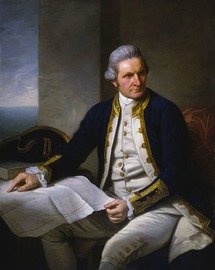 In the Hawaiian Islands, Captain James Cook became the first European to visit Maui in 1778. He was a British explorer, navigator, cartographer, and captain in the British Royal Navy. He made detailed maps of Newfoundland prior to making three voyages to the Pacific Ocean, during which he achieved the first recorded European contact with the eastern coastline of Australia and the Hawaiian Islands, and the first recorded circumnavigation of New Zealand.
First streetcar railway in America starts operating (NYC) (12 cent fare) in 1832.
West Virginia was created in 1861 as a result of dispute over slavery with Virginia. West Virginia was admitted to the Union on June 20, 1863, and was a key border state during the war. West Virginia was the only state to form by separating from a Confederate state, the first to separate from any state since Maine separated from Massachusetts and was one of two states admitted to the Union during the American Civil War (the other being Nevada).
“Alice in Wonderland” by Lewis Carroll was published in 1865.
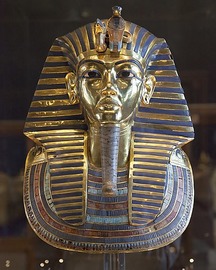 The tomb of Tutankhamun was entered on November 26, 1922. Howard Carter and Lord Carnarvon become the first people to enter the tomb of Pharaoh Tutankhamun in over 3000 years.
 Birthday of Charles Schulz (November 26, 1922), American cartoonist and creator of the “Peanuts” comic strip.
100 of his thought provoking quotes can be found here.
 A classic Thanksgiving tradition!
“Casablanca,” starring Humphrey Bogart and Ingrid Bergman, had its world premiere at the Hollywood Theater in New York on this date in 1942.
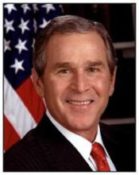 Florida Secretary of State Katherine Harris certified Republican George W. Bush the winner over Democrat Al Gore in the state’s 2000 presidential balloting by 537 votes.
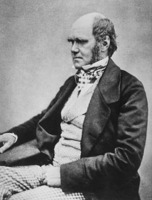 On November 24, 1859 – Charles Darwin published On the Origin of Species, the anniversary of which is sometimes called “Evolution Day”. He was an English naturalist, geologist and biologist, best known for his contributions to the science of evolution. His proposition that all species of life have descended over time from common ancestors is now widely accepted, and considered a foundational concept in science.
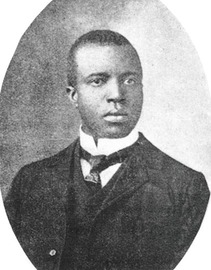 Birthday of Scott Joplin (November 24, 1868), an American composer and pianist. Joplin achieved fame for his ragtime compositions and was dubbed the King of Ragtime. During his brief career, he wrote over 100 original ragtime pieces, one ragtime ballet, and two operas.
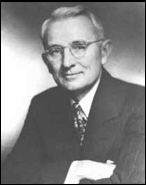 Birthday of Dale Carnegie, (November 24, 1888), an American writer and lecturer, and the developer of courses in self-improvement, salesmanship, corporate training, public speaking, and interpersonal skills. Born into poverty on a farm in Missouri, he was the author of How to Win Friends and Influence People, a bestseller that remains popular today.
 November 24, 1963 – Lee Harvey Oswald, presumed assassin of President John F Kennedy, was shot and killed by Jack Ruby.
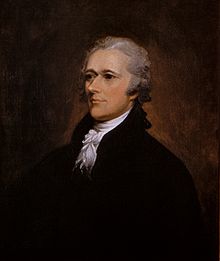 Publication of
 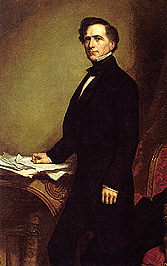 Birthday of
  Former First Lady Abigail Smith Adams was born on November 22, 1744. She was the wife of
 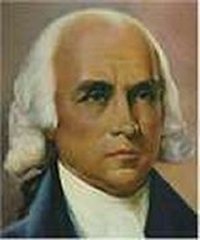 Publication of
 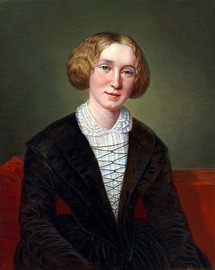 Birthday of George Eliot (Mary Ann Evans) (November 22, 1819). English novelist famous for “Silas Marner”, “Mill on the Floss” and others.
 “Santa Claus Is Comin’ to Town” was first heard on Eddie Cantor’s show on November 22, 1934. It became an instant hit with orders for 500,000 copies of sheet music and more than 30,000 records sold within 24 hours.
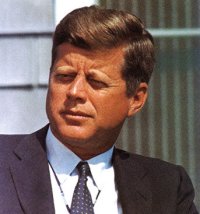 1963 – Death of
 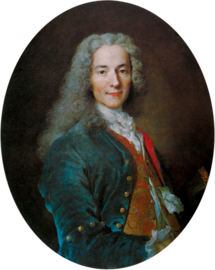 Birthday of Jean Francois Marie Arouet (Voltaire), (November 21, 1694) French Enlightenment author, historian and philosopher. Author of “Candide”. Known for his wit and attacks on the established Church. He was a key figure in the European intellectual movement known as the Enlightenment.
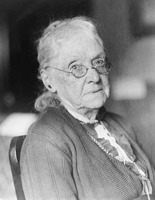 In 1922, Rebecca Latimer Felton of Georgia took the oath of office, becoming the first female United States Senator.
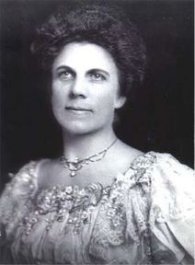 Former First Lady Florence Harding died of renal failure on November 21, 1924, at Marion, Ohio, U.S., wife of
 1942 – Tweety Bird, aka Tweety Pie, debuted in “Tale of Two Kitties”
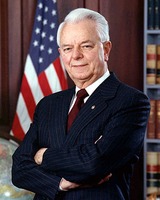 Robert C. Byrd, the longest-serving senator in U.S. history, was born (November 20, 1917) Cornelius Calvin Sale Jr. in North Wilkesboro, N.C. His parents were Cornelius Calvin Sale Sr. and Ada Mae Kirdy. When he was ten months old, his mother died in the 1918 Flu Pandemic. In accordance with his mother’s wishes, his father dispersed their children among relatives. Calvin Jr. was adopted by his aunt and uncle, Titus and Vlurma Byrd, who changed his name to Robert Carlyle Byrd and raised him in the coal-mining region of southern West Virginia. Byrd served as a U.S. Representative from 1953 until 1959. He served as a United States Senator from West Virginia for over 51 years, from 1959 until his death in 2010. In the 1940s, Byrd organized and led a local Klan chapter as its Exalted Cyclops, but he wasn’t a Grand Wizard as his often reported.
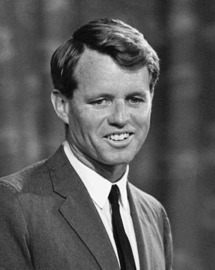 Birthday of Robert F Kennedy (November 20, 1925), U.S. Attorney General and Senator from New York. Brother of President John F. Kennedy. He was a Democratic candidate for president in 1968 when he was assassinated.
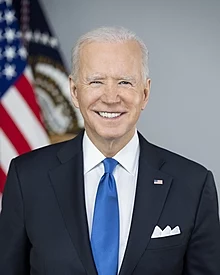 Birthday of President
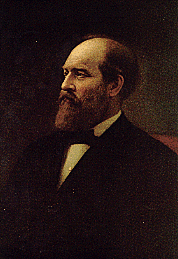 Birthday of
 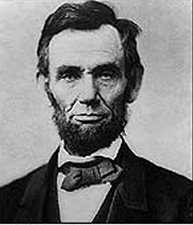 On Nov. 19, 1863,
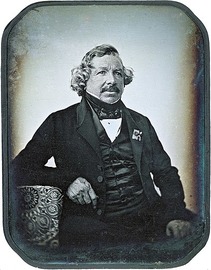 Birthday of Louis Jacques Daguerre (November 18, 1789), French inventor of the “daguerreotype” method of producing permanent pictures.
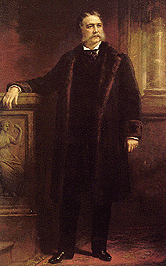 Death of
 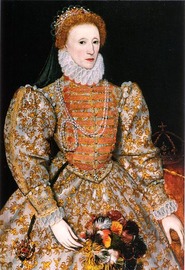 Elizabethan era begins: Queen Mary I of England died on November 17, 1558 and was succeeded by her half-sister, Elizabeth I of England. Sometimes called the Virgin Queen, Gloriana or Good Queen Bess, Elizabeth was the last of the five monarchs of the House of Tudor.
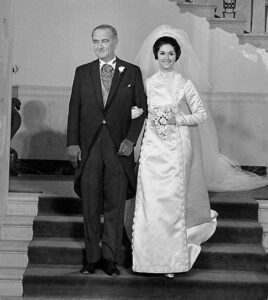 1934
1934  Britney Spears, at 21 years old, becomes the youngest singer to get a star on the Hollywood Walk of Fame.
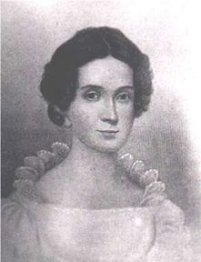 Birthday of Letitia Christian Tyler (November 12, 1790), wife of
 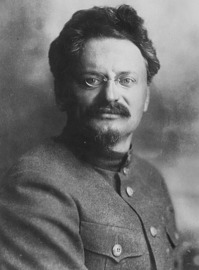 Leon Trotsky expelled from Soviet CP in 1927; Joseph Stalin became undisputed dictator. Lev Davidovich Bronstein, better known as Leon Trotsky, was a Soviet revolutionary, Marxist theorist and politician whose particular strain of Marxist thought is known as