Tidbits of History, June 26

June 26 is Beautician’s Day
Forgiveness Day
National Chocolate Pudding Day

United Nations Charter Day commemorating the signing of the charter in five official languages – Chinese, English, French, Russian and Spanish

From Today in Science
In 1498, the bristle toothbrush was invented in China. Coarse hairs taken from the back of a hog’s neck were used for the bristles, attached at right angles to a bone or bamboo handle (similar to the modern type). The best bristles came from hogs raised in the colder climates of China and Siberia, where the animals grew stouter and firmer hair. Since 3000 BC, ancient civilizations had been cleaning teeth with a “chew-stick” by using a thin twig with a frayed end.

June 26, 1721, Dr Zabdiel Boylston gave first smallpox inoculations in America. He lived in Boston, Massachusetts and he performed the first surgical operation by an American physician, the first removal of gall bladder stones in 1710, and the first removal of a breast tumor in 1718. He was a great-uncle to John Adams.

The Lewis and Clark Expedition reached the mouth of the Kansas River at Kaw Point on June 26, 1804, after completing a westward trek of nearly 400 river miles.

The bicycle was patented by W.K. Clarkson, Jr. on this date in 1819.

1844 – John Tyler took Julia Gardiner as his bride, thus becoming the first U.S. President to marry while in office.

Christmas declared a holiday, June 26On June 26, 1870, the Christian holiday of Christmas was declared a federal holiday in the United States.

The first section of the Boardwalk in Atlantic City, NJ, was opened to the public in 1870.

June 26, 1896 – First movie theater in US opened, charging 10 cents for admission
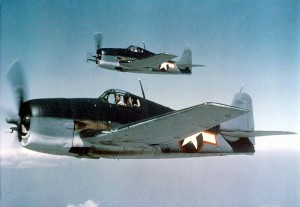
Hellcat, June 26The Grumman F6F Hellcat fighter was flown for the first time on June 26, 1942.

June 25, 1948 – The Berlin Airlift began as the U.S., Britain and France started ferrying supplies to the isolated western sector of Berlin.

1961 – A Kuwaiti vote opposed Iraq’s annexation plans.

1963 – U.S. President John Kennedy announced “Ich bin ein Berliner” (I am a Berliner) at the Berlin Wall.
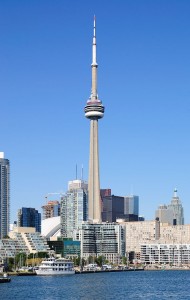
CN Tower, June 261976 – The CN (Canadian National) Tower in Toronto, Canada, opened on June 26, 1976.

On June 26, 1985 Wilbur Snapp, a ballpark organist, was ejected from a game at the Jack Russell Stadium in Clearwater, Florida, for playing “Three Blind Mice” in response to what he thought was a bad call from the umpire, Kevin O’Connor. The umpire pointed up to Snapp, who was sitting at his organ behind first base, then thumbed him out of the game. Snapp stepped away from his keyboard, but spent the remainder of the game twisting balloons into mice for the delighted fans, who began singing “Three Blind Mice.”

1987 – The movie “Dragnet” opened in the U.S.

1998 – The U.S. Supreme Court ruled that employers are always potentially liable for supervisor’s sexual misconduct toward an employee.
Tidbits of History, June 24

June 24 is Swim a Lap Day
International Fairy Day
National Pralines Day
Deaf-Blindness Awareness Week

1374 – A sudden outbreak of St. John’s Dance caused people in the streets of Aachen, Germany, to experience hallucinations and begin to jump and twitch uncontrollably until they collapsed from exhaustion.
From toxipedia.org, “St. John’s Dance was the medieval name for a phenomenon which emerged during the time of the Black Death. It was considered a form of nervous system disorder (apraxia) expressing itself as “dancing rage,” as uncontrolled ecstatic body movements. In the eyes of the church, those suffering from St. John’s Dance were possessed by the devil.”

1497 – Italian explorer John Cabot, sailing in the service of England, landed in North America on what is now Newfoundland, on June 24, 1497. It was the first European exploration of the region since the Vikings.

1509 – Henry VIII and Catherine of Aragon were crowned King and Queen of England.

New Jersey, named after the Isle of Jersey, was founded in 1664.

King Philip’s War began when Indians massacred colonists at Swansee, Plymouth colony on June 24, 1675.

The saxophone was patented by Adolphe Sax in Paris, France on June 24, 1846.

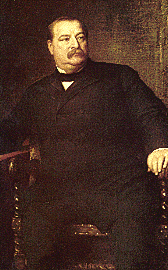
Grover Cleveland, died June 24, 19081908 – Death of Grover Cleveland (born Stephen Grover Cleveland), twenty-second and twenty-fourth President of the United States. He died at Princeton, New Jersey at age 71 of heart failure.

1922The American Professional Football Association took the name of The National Football League.

1948 – Start of the Berlin Blockade: the Soviet Union made overland travel between West Germany and West Berlin impossible.

The first television western, Hopalong Cassidy, was aired on NBC on June 24, 1949. It starred William Boyd.

1982 – The U.S. Supreme Court ruled 5-4 that no president could be sued for damages connected with actions taken while serving as President of the United States.

1993 – Yale computer science professor Dr. David Gelernter lost the sight in one eye, the hearing in one ear, and part of his right hand after receiving a mailbomb from the Unabomber.

Tidbits of History, June 23

June 23 is National Columnists Day
National Pink Day
National Pecan Sandy Day
Laura Ingalls Wilder Pageant

1713 – The French residents of Acadia were given one year to declare allegiance to Britain or leave Nova Scotia, Canada. Those who left went to Louisiana and became “Cajuns”.

1860 – The United States Congress established the Government Printing Office and the Secret Service. They were established to arrest counterfeiters.

1887 – The Rocky Mountains Park Act created Canada’s first national park, Banff National Park, on June 23, 1887.

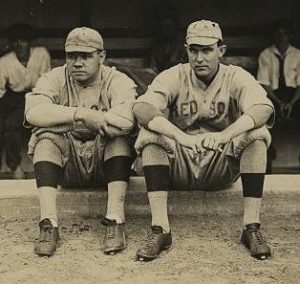
Ernie Shore and Babe Ruth1917 – In a game against the Washington Senators, Boston Red Sox pitcher Ernie Shore retired 26 batters in a row. He had replaced Babe Ruth who had been ejected for punching the umpire. The umpire, Clarence “Brick” Owens, called the first four pitches balls, walking the batter. Ruth thought two of the pitches had been strikes. Ruth reportedly yelled at him, “If you’d go to bed at night, you *expletive*, you could keep your eyes open long enough in the daytime to see when a ball goes over the plate!”
As you might imagine, the umpire didn’t take too kindly to this and told Ruth that if he didn’t shut up and get back to the mound, he’d be thrown out of the game. Ruth then yelled at him, “Throw me out and I’ll punch ya right in the jaw!” Owens then threw him out; Ruth attempted to punch him in the jaw but missed and hit a glancing blow behind the umpire’s ear, knocking Owens down. Ruth was fined $100 (about $1600 today), given a 10 game suspension, and forced to give a public apology. See story at This Day in History.

What made this particularly attacking of an umpire important was that, when Ernie Shore came in to replace Ruth on the mound, the catcher, Sam Agnew, (who incidentally replaced catcher Chester “Pinch” Thomas who was also ejected with Ruth), threw out the runner on first trying to steal second. Shore then retired the next 26 batters in a row without giving up a hit or a walk, winning the game 4-0. As such, this was ruled to be a “perfect game” because Shore had been on the mound for all 27 outs, though in the 1990s, it was downgraded to simply a “combined no-hitter”.

*** Comment from viewer Christy Stone:
Linda-
I missed sending you a story of another baseball no-hitter that was pitched on June 23rd (1971).
Philadelphia right hander Rick Wise no-hit the Reds at Cincinnati’s former home, Riverfront Stadium by a score 4-0.
Two interesting items about this game:
Wise himself drove in three runs by hitting TWO home runs, one a solo and the other a two-run job. Wise hit 15 career home runs.
Last batter retired to complete the no-hitter?
Pete Rose, line drive out to third baseman, John Vukovich.
*** Thanks Christy!

1931 – Wiley Post and Harold Gatty took off from Roosevelt Field, Long Island in an attempt to circumnavigate the world in a single-engine plane.

1947 – The United States Senate followed the United States House of Representatives in overriding U.S. President Harry Truman’s veto of the Taft-Hartley Act on June 23, 1947.

1960 – The United States Food and Drug Administration declared Enovid to be the first officially approved combined oral contraceptive pill in the world on June 23, 1960.

1972 – Sexual discrimination to any educational program receiving federal funds was prohibited by Title IX of the United States Civil Rights Act of 1964

2013 – Nik Wallenda walked across the Grand Canyon on a tight rope on June 23, 2013, becaming the first man to do so successfully .

Tidbits of History, June 22

June 22 is National Chocolate Eclair Day
National Onion Rings Day

English explorer Henry Hudson discovered the Hudson Strait and the immense Hudson Bay on his final expedition, while still searching for the Northwest Passage. On this date in 1611, after wintering on the shore of James Bay, Hudson wanted to press on to the west, but most of his crew mutinied. The mutineers cast Hudson, his son, and seven others adrift; the Hudsons and their companions were never seen again.

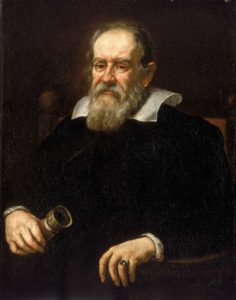
Galileo - June 22, 16331633  Galileo Galilei was forced by the Inquisition to “abjure, curse, and detest” his Copernican heliocentric views. “I, Galileo…do swear that I have always believed, do now believe and, with God’s aid shall believe hereafter, all that which is taught and preached by the … church. I must wholly forsake the false opinion that the sun is the center of the world and moves not, and that the earth is not the center of the world and moves….” He was then condemned to the “formal prison of the Holy Office” for an undetermined amount of time which would be served at the pleasure of his judges, and required to repeat the seven penitential psalms once a week for three years. The next day the Pope specified the prison sentence should be house arrest. Galileo was the first person to reveal that the Milky Way galaxy was composed of stars.

1740 –  King Frederik II of Prussia ended torture and guaranteed religion & freedom of the press.

1774 – The British passed the Quebec Act on June 22, 1774, setting out rules of governance for the colony of Quebec in British North America.

1870 –  The U.S. Congress created the Department of Justice.

1933 – Germany became a one political party country when Hitler banned parties other than the Nazis on June 22, 1933.

A Japanese submarine shelled Fort Stevens at the mouth of the Columbia River in 1942.

U.S. President Franklin Roosevelt signed the “GI Bill of Rights” June 22, 1944 to provide broad benefits for veterans of the war.

From Today in Science
1969 – The Cuyahoga River caught fire, triggering a crack-down on pollution in the river. In Cleveland, Ohio, oil-sodden floating debris on the Cuyahoga River ignited (perhaps by sparks from a passing train) and burned with flames reported up to five stories high. Although fire-fighters extinguished the blaze in a half-hour or so, it caused $50,000 in damage. For a century the river had been an open sewer for industrial waste, through the times when factory production seemed more important than worrying about the environment. Several fires had happened in the prior hundred years, but attitudes changed to outrage as this time, national attention was aroused. It became one of several disasters that led to the Clean Water Act and the Environmental Protection Agency (EPA). Determined remedial action for decades since has resulted in cleaner water, and improving aquatic life.

1970: U.S. President Richard Nixon signed an extension of the Voting Rights Act of 1965. It required the voting age in the United States to be 18.

From Today in Science
In 1978, evidence of the first moon of Pluto was discovered by astronomer James W. Christy of the Naval Observatory in Flagstaff, Ariz. when he obtained a photograph of Pluto that showed the orb to be distinctly elongated. Furthermore, the elongations appeared to change position with respect to the stars over time. After eliminating the possibility that the elongations were produced by plate defects and background stars, the only plausible explanation was that they were caused by a previously unknown moon orbiting Pluto at a distance of about 19,600 kilometers (12,100 miles) with a period of 6.4 days. The moon was named Charon, after the boatman in Greek mythology who took the souls of the dead across the River Styx to Pluto’s underworld.

1992  – The U.S. Supreme Court unanimously ruled that hate-crime laws that ban cross-burning and similar expressions of racial bias violated free-speech rights.

1998 – The U.S. Supreme Court ruled that evidence illegally obtained by authorities could be used at revocation hearings for a convicted criminal’s parole.

Tidbits of History, June 15

June 15 is World Gin Day
Smile Power Day
Fly a Kite Day

Father’s Day

Feast day of Saint Bernard, born about 1020 in France, died in June of 1081. Patron saint of mountaineers, skiers, skateboarding, backpacking and the Alps. Legend has it that he decided to devote himself to the service of the Church and refused an honorable marriage proposed by his father. It is said that he had to sneak out of the castle on the night before an arranged wedding, and that during his flight from the castle, he threw himself from his window, only to be captured by angels and lowered gently to the ground 40 feet below. As an archdeacon, Bernard set up a hospice at the highest point of a pass across the Pennine Alps, 8000 feet above sea level. The pass was used by French and German pilgrims on their way to Rome and was subject to avalanches, and snow drifts. It is because of this that the rescue St. Bernard dogs were named.

Magna Carta Day , anniversary of the day in 1215 that King John signed the Magna Carta.

In 1752, Benjamin Franklin proved that lightning is electricity (traditional date, the exact date is unknown).

1775 – American Revolutionary War: George Washington was appointed commander-in-chief of the Continental Army.

1776 – Delaware Separation Day Delaware voted to suspend government under the British Crown and separate officially from Pennsylvania.

1804 – New Hampshire approves the Twelfth Amendment to the United States Constitution, ratifying the document. The Twelfth Amendment refined the process whereby a President and a Vice President are elected by the electors of the Electoral College.

Arkansas headerArkansas admission day in 1836 as the twenty-fifth state

  • Capital: Little Rock
  • Nickname: The Natural State/Wonder State/Land of Opportunity
  • Bird: Mockingbird
  • Flower: Apple Blossom
  • Tree: Pine
  • Motto: The People Rule

See our page about Arkansas for more interesting facts and trivia about Arkansas.

1846 – The Oregon Treaty established the 49th parallel as the border between the United States and Canada, from the Rocky Mountains to the Strait of Juan de Fuca.

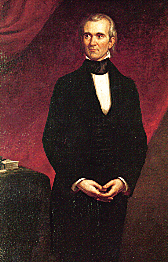
James K. Polk May 11 ,184614Death of ‎James K. Polk , eleventh President of the United States on June 15, 1849. He died in Nashville, Tennessee at age 53. He lived only 103 days after leaving the presidency.

Arlington National Cemetery was established. George Washington Parke Custis, grandson of Martha Washington, acquired the land that now is Arlington National Cemetery in 1802, and began construction of Arlington House. The estate passed to Custis’ daughter, Mary Anna, who had married United States Army officer Robert E. Lee. Upon her death, the Arlington estate passed to her eldest son, George Washington Custis Lee. On July 16, 1862, Congress passed legislation authorizing the U.S. federal government to purchase land for national cemeteries for military dead, and put the U.S. Army Quartermaster General Montgomery C. Meigs in charge of this program. Within weeks, his staff reported that Arlington Estate was the most suitable property in the area. The property was high and free from floods (which might unearth graves), it had a view of the District of Columbia, and it was aesthetically pleasing. It was also the home of the leader of the armed forces of the Confederate States of America, and denying Robert E. Lee use of his home after the war was a valuable political consideration. Meigs formally authorized establishment of burials on June 15, 1864.

Tidbits of History, June 14

June 14 is Flag Day
Pop Goes the Weasel Day
National Strawberry Shortcake Day

June 14, 1642 – First compulsory education law in America was passed by Massachusetts.

American Revolutionary War: the Continental Army was established by the Continental Congress on June 14, 1775, marking the birth of the United States Army.

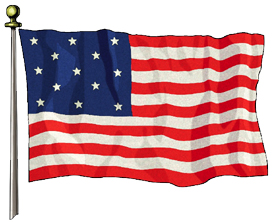
Flag Day established June 14 1777 – The Stars and Stripes was adopted by Congress as the Flag of the United States. (Celebrated as Flag Day)
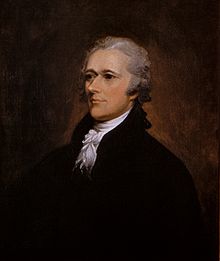
author of Federalist PaperPublication of Federalist Paper #78: The Judiciary Department written by Alexander Hamilton in 1788.

In 1789, whiskey distilled from maize was first produced by American clergyman, the Rev Elijah Craig. It is named Bourbon because Rev. Craig lived in Bourbon County, Kentucky.

Julia Tyler, born June 14Birthday of Julia Gardiner Tyler (June 14, 1816), second wife of ‎John Tyler, first lady 1844-1845. John Tyler fathered eight children with his first wife, Letitia and seven more with his second wife, Julia.

1846 – Bear Flag Revolt begins – Anglo settlers in Sonoma, California, start a rebellion against Mexico and proclaim the California Republic.

Donald J Trump, President1946 – Birthday of ‎President Donald J. Trump, forty-fifth president of the U.S.A.

In 1951, the Univac-1 was unveiled in Washington, DC. and dedicated as the world’s first commercial computer. The Univac was manufactured for the U.S. Census Bureau by Remington Rand Corp. The massive computer was 8 feet high, 7-1/2 feet wide and 14-1/2 feet long. It could retain a maximum of 1000 numbers and was able to add, subtract, multiply, divide, sort, collate and take square and cube roots. Its transfer rate to and from magnetic tape was 10,000 characters per second. This was five years after the ENIAC, the first electronic computer in the U.S., was completed.

1954 – ‎U.S. President Dwight D. Eisenhower signed a bill into law that placed the words “under God” into the United States Pledge of Allegiance.

Disneyland Monorail System opened to the public in Anaheim, California on June 14, 1959, the first daily operating monorail system in the Western Hemisphere.

On June 14, 1972, the insecticide DDT was banned from use in the U.S. after 31 Dec 1972, by executive order of the Environmental Protection Agency.

Save

Tidbits of History, June 13

June 13 is Sewing Machine Day
Kitchen Klutzes of America Day
According to: foodimentary.com Today’s Food History:

on this day in…

1789 Mrs. Alexander Hamilton served a new dessert treat for General George Washington. The highlight of the dinner party was ice cream! And all this time you thought Dolley Madison was responsible.
1817 Richard Lovell Edgeworth died. An Anglo-Irish inventor, among his many inventions and innovations were a turnip cutter, various improvements in agricultural machines, and a velocipede.
1893 African American inventor T.W. Stewart received a patent for a mop.
2010 Jimmy Dean died at age 81. A country music singer he also founded Jimmy Dean Meat Co. in 1969, well known for its Jimmy Dean Sausage brand.

National Lobster Day
Cupcake Lover’s Day

1373 – Anglo-Portuguese Alliance between England (succeeded by the United Kingdom) and Portugal. It is the oldest alliance in the world which is still in force.

June 13, 1525 – Martin Luther married Katharina von Bora, against the celibacy rule decreed by the Roman Catholic Church for priests and nuns.

Georgia provincial governor James Oglethorpe began an unsuccessful attempt to take Spanish Florida during the Siege of St. Augustine on June 13, 1740.

Lewis and Clark Expedition: scouting ahead of the expedition, Meriwether Lewis and four companions sight the Great Falls of the Missouri River on June 13, 1805.

Birthday of Charles Algernon Parsons (1854), inventor of the steam turbine.

“The British engineer Charles Algernon Parsons thought up an excellent way of publicizing his newly devised steam turbine. He waited for Queen Victoria’s Diamond Julilee in 1897, at which time there was a stately review of the British Navy. Parson’s turbine-powered ship Turbinia”, going thirty-five knots with scarcely any vibration of noise, suddenly skimmed past the navy. It was an effective demonstration, and the navies of the world at once began bidding for turbine engines.”

From Asimov, Isaac. Isaac Asimov’s Book of Facts. New York, Bell Publishing Company, 1981

Grover ClevelandOn June 13, 1893, ‎President Grover Cleveland noticed a rough spot in his mouth and on July 1 he underwent a secret, successful surgery to remove a large, cancerous portion of his jaw; operation was not revealed to US public until 1917, nine years after the president’s death.

June 13, 1898 – Yukon Territory was formed, with Dawson chosen as its capital.

June 13, 1966 – The United States Supreme Court ruled in Miranda v. Arizona that the police must inform suspects of their rights before questioning them.

1967 – U.S. President Lyndon B. Johnson nominated Solicitor-General Thurgood Marshall to become the first black justice on the U.S. Supreme Court.

1994 – A jury in Anchorage, Alaska, blames recklessness by Exxon and Captain Joseph Hazelwood for the Exxon Valdez disaster, allowing victims of the oil spill to seek $15 billion in damages.

Save

Tidbits of History, June 12

June 12 is Red Rose Day
National Peanut Butter Cookie Day
International Cachaça Day (a Brazilian distilled spirit made from sugarcane juice.)
National Jerky Day

American Revolution: British general Thomas Gage declared martial law in Massachusetts on June 12, 1775. The British offer a pardon to all colonists who lay down their arms. There would be only two exceptions to the amnesty: Samuel Adams and John Hancock, if captured, were to be hanged.

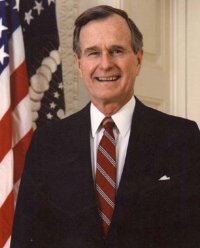
Birthday of G.H.W.Bush, June 12, 1924Birthday of ‎George H W Bush (June 12, 1924), forty-first President of the United States, father of ‎George W Bush, forty-third President of the United States.

On June 12, 1939, the Baseball Hall of Fame opened in Cooperstown, New York.

Civil rights leader Medgar Evers was murdered in front of his home in Jackson, Mississippi by Ku Klux Klan member Byron De La Beckwith on June 12, 1963. According to Wikipedia:

In the early morning of June 12, 1963, just hours after President John F. Kennedy’s nationally televised Civil Rights Address, Evers pulled into his driveway after returning from a meeting with NAACP lawyers. Emerging from his car and carrying NAACP T-shirts that read “Jim Crow Must Go”, Evers was struck in the back with a bullet fired from an Enfield 1917 rifle; the bullet ripped through his heart. He staggered 30 feet (9.1 meters) before collapsing. He was taken to the local hospital in Jackson, Mississippi where he was initially refused entry because of his race. His family explained who he was and he was admitted; he died in the hospital 50 minutes later.

The state twice prosecuted De La Beckwith for murder in 1964, but both trials ended with hung juries. He was eventually convicted of the crime in 1994, almost 30 years after the murder. He died in prison on January 21, 2001.

In 1967, The United States Supreme Court in Loving v. Virginia declared all U.S. state laws which prohibit interracial marriage (miscegenation) to be unconstitutional.

1987 – Cold War: At the Brandenburg Gate ‎U.S. President Ronald Reagan publicly challenges Mikhail Gorbachev to “tear down this (the Berlin) Wall.

In 1991, Russians elected Boris Yeltsin as the president of the republic.

June 12, 1994, Nicole Brown Simpson and Ronald Goldman were murdered outside her home in Los Angeles, California. O.J. Simpson was later acquitted of the killings, but is held liable in wrongful death civil suit.

Save

Tidbits of History, June 11

June 11 is National German Chocolate Cake Day
German chocolate cake, originally German’s chocolate cake, is a layered chocolate cake…filled and topped with a coconut-pecan frosting. It owes its name to an English-American chocolate maker named Samuel German, who developed a formulation of dark baking chocolate that came to be used in the cake recipe. The recipe for the cake was developed by a Mrs. George Clay of Dallas, Texas and was published as the “Recipe of the Day” in The Dallas Morning News on June 3, 1957 and became quite popular. General Foods, which owned the Baker’s brand at the time, took notice and distributed the cake recipe to other newspapers in the country. Sales of Baker’s Chocolate are said to have increased by as much as 73% and the cake would become a national staple. The possessive form (German’s) was dropped in subsequent publications, forming the “German Chocolate Cake” identity and giving the false impression of a German origin.

According to calculations by Eratosthenes, Troy was sacked and burned on June 11, 1184 B. C.

Alexander the Great died in the palace of Nebuchadnezzar II in Babylon on June 11, 323 B.C. He was 32 years old and his cause of death has been speculated to be poisoning, malaria, pancreatitis, typhoid, or West Nile virus. It was reported that Alexander’s health may have been in general decline after years of heavy drinking and severe wounds.

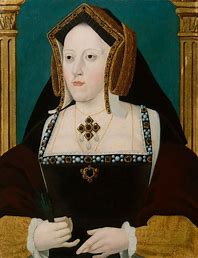
Catherine of AragonOn June 11, 1509, Henry VIII of England married Catherine of Aragon, his first wife.  She was the daughter of Isabella I of Castile and Ferdinand II of Aragon who supported and financed Christopher Columbus’ explorations.
Birthday of Ben Jonson (June 11, 1572), English playwright and poet, contemporary of William Shakespeare. One quote from Johnson is “The road to Hell is paved with good intentions.” ‘Father Christmas’ first appeared in his 1616 play first performed at the court of King James I. Ben Jonson was buried standing up in Westminster Abbey. Because he could only afford to buy a tiny amount of space in the abbey, Jonson was buried in an upright position. Now is he buried in Poets’ Corner where so many other famous English writers are interred.

In 1742, Benjamin Franklin invented the Franklin stove. The wood fuel burns on an iron surface over a cold air duct which heats air which then passes through baffles in the back wall. The heated air is released through vents on each side of the stove. Rather than patent it, he chose to write about it in a book so that others could freely copy his design. As he wrote, “That as we enjoy great Advantages from the Inventions of others, we should be glad of an Opportunity to serve others by any Invention of ours, and this we should do freely and generously. From: June 11 – Today in Science.

In 1770, the British explorer, Captain James Cook, ran aground on the Great Barrier Reef.

June 11, 1776 – The Continental Congress appointed Thomas Jefferson, John Adams, Benjamin Franklin, Roger Sherman, and Robert R. Livingston to the Committee of Five to draft a declaration of independence. Speaking of these “old white men”, Jefferson was 33 years old; Adams was 41; Franklin was 70; Sherman was 55; and Livingston was 30.

In 1793, the first American patent for a stove designed of cast iron was granted to Robert Haeterick of Pennsylvania.

Birthday of Jacques-Yves Cousteau (1910), French oceanographer, marine biologist. Co-Inventer of the aqualung which made SCUBA diving possible.

1935 – Inventor Edwin Armstrong gave the first public demonstration of FM broadcasting in the United States at Alpine, New Jersey.

The Presbyterian Church of America was founded at Philadelphia on June 11, 1936.

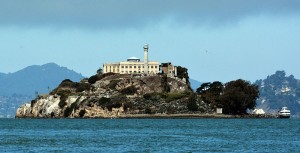
Escape from Alcatraz, June 11, 19621962 – Frank Morris, John Anglin and Clarence Anglin allegedly became the only prisoners to escape from the prison on Alcatraz Island .
‎President John F. Kennedy addressed Americans from the Oval Office in 1963, proposing the Civil Rights Act (passed in 1964) that would revolutionize American society. It proposed equal access to public facilities, to end segregation in education and to guarantee federal protection for voting rights.

1982 – the movie “ET the Extra-Terrestrial” was released.

Save

Tidbits of History, June 8

June 8 is Best Friends Day
Name Your Poison Day
National Jelly-Filled Doughnut Day

June 8, 632 – Muhammad, Islamic prophet, died in Medina and was succeeded by Abu Bakr who becomes the first caliph of the Rashidun Caliphate.

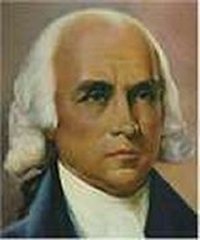
James Madison, born March 16, 1751In 1789, James Madison introduced twelve proposed amendments to the United States Constitution in the House of Representatives; by 1791, ten of them were ratified by the state legislatures and become the Bill of Rights; another was eventually ratified in 1992 to become the 27th Amendment.
June 8, 1794, Robespierre inaugurated the French Revolution’s new state religion, the Cult of the Supreme Being, with large organized festivals all across France. Though he was no admirer of Catholicism, he had a special dislike for atheism. He thought that belief in a supreme being was important for social order, and he liked to quote Voltaire: “If God did not exist, it would be necessary to invent him”. With Robespierre’s death at the guillotine on July 28, 1794, the cult disappeared.

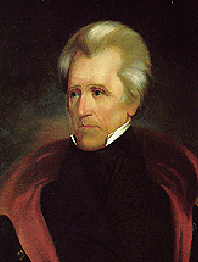
June 8, 1845, death of Andrew JacksonJune 8,1845: Death of ‎Andrew Jackson , seventh President of the United States. He died at Nashville, Tennessee aged 78. On the last day of his presidency, Jackson admitted that he had but two regrets, that he “had been unable to shoot Henry Clay or to hang John C. Calhoun.” His death was due to chronic tuberculosis, dropsy, and heart failure.

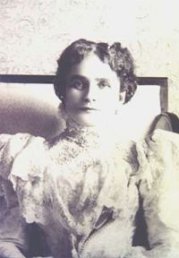
Ida Saxton McKinley, born June 8, 1847Birthday of Ida Saxton McKinley (1847), wife of
William McKinley,
first lady 1897-1901

In 1856, a group of 194 Pitcairn Islanders, descendants of the mutineers of HMS Bounty, arrived at Norfolk Island, commencing the Third Settlement of the Island.

June 8, 1887, Herman Hollerith applied for US patent #395,791 for the ‘Art of Applying Statistics’ – his punched card calculator.

On June 8, 1906, ‎President Theodore Roosevelt signed the Antiquities Act into law, authorizing the President to restrict the use of certain parcels of public land with historical or conservation value.

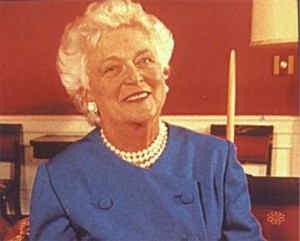
Barbara Pierce Bush, born June 8, 1925Birthday of Barbara Pierce Bush (1925), wife of ‎George H.W. Bush, mother of ‎George W. Bush, first lady 1989-1993. She died on Apr 17, 2018.
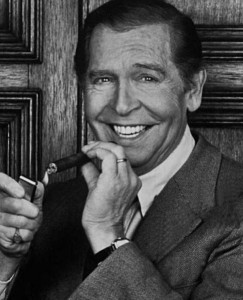
Milton BerleMilton Berle hosted the debut of Texaco Star Theater on June 8, 1948. It aired until 1956. Milton Berle became known as “Mr. Television”.

George Orwell’s Nineteen Eighty-Four was published on June 8, 1949.

Birthday of Tim Berners-Lee (June 8, 1955), English computer scientist who invented the World Wide Web and director of the World Wide Web Consortium, (W3C) which oversees its continued development. In 1984, he took up a fellowship at CERN, to work on distributed real-time systems for scientific data acquisition and system control. While there, he proposed (1989) a global hypertext project, to be known as the World Wide Web, which permitted people to collaborate by sharing knowledge in a web of hypertext documents. On 6 Aug 1991, the first World Wide Web site was made available to the Internet at large, giving information on a browser and how to set up a Web server.

June 8, 2009, General Motors filed for chapter 11 bankruptcy. It was the fourth largest United States bankruptcy in history.